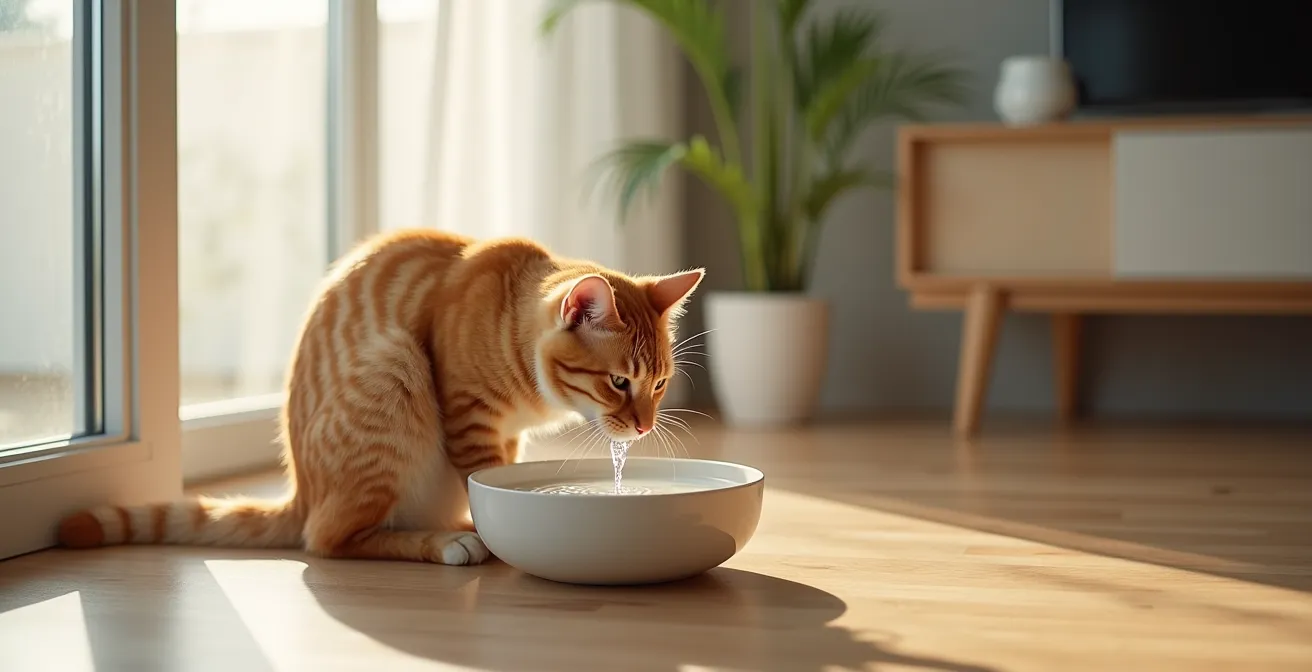
A water fountain is your single most powerful tool to prevent a life-threatening urinary blockage in your male cat.
- It taps into their evolutionary instinct for moving water, drastically increasing hydration and promoting healthy urinary flow.
- Material choice (stainless steel or ceramic) is crucial to prevent the bacterial growth and micro-scratches that harbor contaminants.
Recommendation: Implement a full ‘hydration ecosystem’ by optimizing the fountain’s material, cleaning protocol, and placement to ensure continuous, stress-free urinary flow and overall health.
For any owner of a male cat, the term “urinary blockage” is a source of deep anxiety. Due to their long, narrow urethra, male cats are uniquely susceptible to this painful, life-threatening emergency. The common advice is straightforward: increase their water intake, often by switching to wet food. While this is a critical first step, it only addresses part of the problem. Many cats, especially those accustomed to a dry food diet, still have a dangerously low thirst drive, leaving them chronically dehydrated and at risk.
This is where the conversation usually stops. But what if the true key to prevention lies not just in offering more water, but in fundamentally changing how water is presented? The solution isn’t just about hydration; it’s about engineering a complete hydration ecosystem centered around a single, powerful tool: the water fountain. This goes far beyond simply providing a water source. It involves understanding feline biology, material science, and the subtle environmental stressors that can discourage a cat from drinking.
This article will deconstruct the science behind why a fountain works and how to optimize it for maximum effect. We will move beyond the superficial to explore how to create a system that promotes the consistent, life-saving flow of water necessary to protect your cat. We’ll examine the biological triggers for thirst, the critical importance of hygiene and material choice, and how to create a stress-free environment that turns drinking from a chore into a natural, frequent behavior.
To fully grasp how these elements work together, this guide breaks down every critical aspect of creating an optimal hydration ecosystem for your cat. The following sections will provide a detailed roadmap, from the science of feline thirst to the practicalities of maintenance and placement.
Summary: Why Switching to a Water Fountain Can Save Your Male Cat from a Blockage?
- Why cats prefer moving water over stagnant bowl water biologically?
- How to clean the pump motor to prevent bacterial slime buildup?
- Plastic vs Ceramic vs Stainless Steel: Which fountain prevents chin acne?
- The “Humming” Complaint: How to silence a noisy pump in the bedroom?
- Where to place the fountain: Why next to the food bowl is the wrong spot?
- How to adjust urine pH through diet to dissolve struvite crystals?
- Why your plug-in pest repeller might be torture for your dog’s hearing?
- How to Collect a Sterile Urine Sample at Home Without Stressing Your Pet?
Why cats prefer moving water over stagnant bowl water biologically?
A cat’s aversion to a stagnant bowl of water is not a quirky preference; it’s a deeply ingrained survival instinct. In the wild, standing water is a breeding ground for bacteria and parasites, representing a significant health risk. Their ancestors learned that moving water—from a stream or spring—is almost always fresher, cooler, and safer to drink. This evolutionary programming persists powerfully in domestic cats today. The sight and sound of flowing water act as a potent biological trigger, signaling “safety” and “freshness” to their brain.
This instinct is the cornerstone of why a water fountain is so effective. It doesn’t just offer water; it presents it in a way that aligns with their innate programming. The gurgling sound and visible movement pique their curiosity and stimulate their thirst drive in a way a silent, still bowl never can. By mimicking a natural water source, a fountain encourages more frequent “drive-by” sips throughout the day. This continuous, low-level hydration is precisely what’s needed to maintain healthy flow dynamics within the urinary tract.
Ultimately, the goal is to keep the urinary system constantly flushed to prevent minerals from concentrating and forming dangerous crystals or stones. A standard water bowl relies on the cat overcoming its natural reluctance. A fountain, by contrast, works with their nature, transforming the act of drinking from a necessity into an appealing, instinct-driven behavior. This shift is fundamental to preventing the conditions that lead to a blockage.
How to clean the pump motor to prevent bacterial slime buildup?
The very feature that makes a fountain attractive—the moving water—can also become its greatest liability if not maintained. The pump motor, the heart of the fountain, is a warm, moist environment, making it the perfect incubator for biofilm. This slimy layer, often pink or clear, is a complex matrix of bacteria, including the notorious Serratia marcescens, which can cause gastrointestinal upset. If this biofilm builds up, it not only contaminates the water but can also clog the pump’s delicate impeller, reducing water flow and eventually causing the motor to burn out.
A simple rinse is insufficient to combat this. The pump must be fully disassembled and scrubbed to remove biofilm from its internal components. This process is less daunting than it sounds and is the single most important maintenance task for ensuring your cat’s water is clean and the fountain functions correctly. Neglecting this step means your cat could be drinking from a source teeming with micro-contaminants, undermining the entire purpose of the fountain.
Regular, deep cleaning of the pump prevents the accumulation of this bacterial slime, ensuring the water remains fresh and the motor operates efficiently and quietly. It transforms the fountain from a potential health hazard into a reliable source of clean, flowing water.
Action Plan: Deep Cleaning Your Fountain Pump
- Unplug the fountain and completely remove it from its power source. Safety first.
- Disassemble the fountain components and locate the pump. The front plate or cover of the pump usually snaps off with a fingernail.
- Carefully remove the magnetic impeller, which often looks like a tiny propeller. It may be held in place by a small magnet.
- Use a dedicated pipe cleaner or a small, stiff brush (like an interdental brush) to thoroughly scrub inside the impeller tunnel where slime accumulates.
- Soak the pump components and the impeller in a solution of one part white vinegar to one part water for 20-30 minutes to dissolve mineral scale (limescale).
- Rinse all components meticulously with fresh water to remove any vinegar residue, and reassemble the pump and fountain once completely dry.
Plastic vs Ceramic vs Stainless Steel: Which fountain prevents chin acne?
The material of your cat’s water fountain is not merely an aesthetic choice; it is a critical factor in long-term hygiene and health. Plastic, while inexpensive, is the most problematic material. Over time, it develops microscopic scratches from cleaning and use. These tiny crevices are impossible to fully sanitize and become a breeding ground for bacteria. When a cat drinks, its chin rubs against this contaminated surface, which can lead to a frustrating and painful condition known as feline chin acne.
In contrast, high-quality, non-porous materials like stainless steel, ceramic, and glass offer a far superior and more hygienic surface. They are scratch-resistant, easy to clean, and do not harbor bacteria in the same way as plastic. This dramatically reduces the risk of chin acne and ensures the water itself stays cleaner for longer. While they represent a higher initial investment, their durability and health benefits make them a much wiser choice for any cat, especially those with sensitive skin.
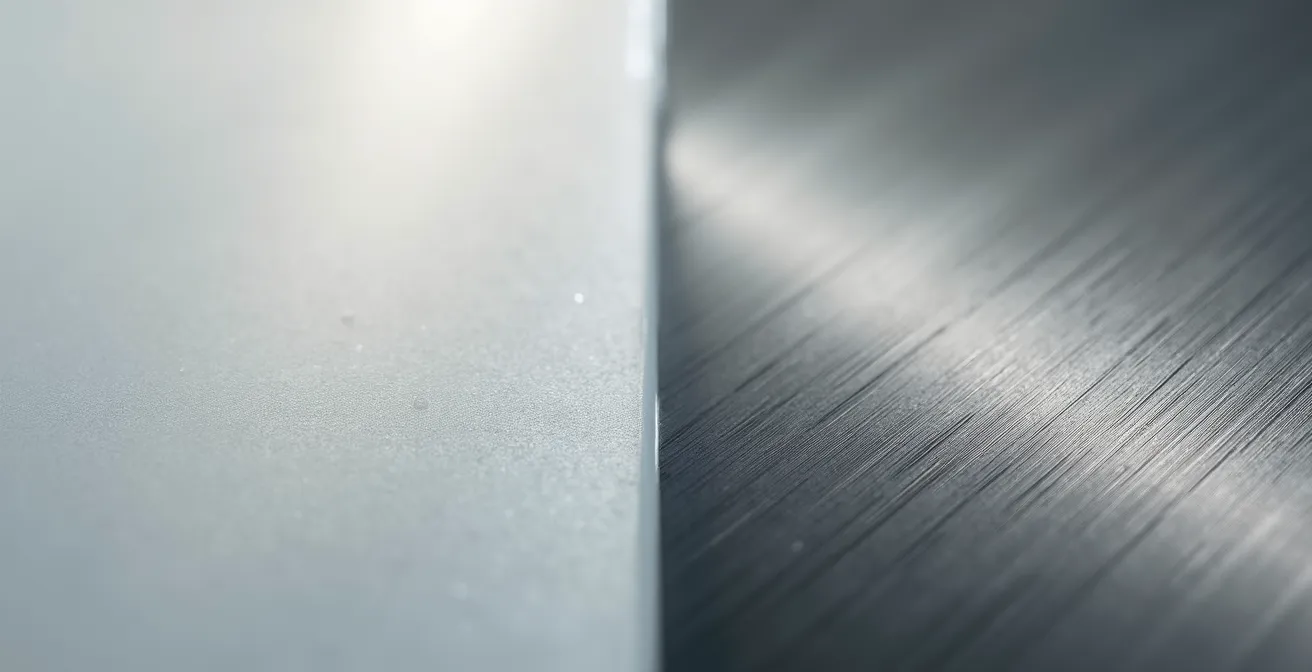
As the comparison below highlights, the link between material, bacterial risk, and chin acne is clear. The smooth, impenetrable surfaces of ceramic and stainless steel provide nowhere for bacteria to hide, making them the gold standard for a safe and clean hydration station.
This comparative analysis, based on data from veterinary and pet care experts, clearly illustrates why material selection is so important. As a thorough review of fountain materials confirms, plastic’s high porosity makes it a high-risk choice for long-term use.
| Material | Porosity | Bacterial Risk | Durability | Price Range | Chin Acne Risk |
|---|---|---|---|---|---|
| Plastic | High (develops micro-scratches) | High | Low-Medium | $15-40 | High |
| Ceramic | Low (if unglazed) | Low | Medium (can chip) | $40-80 | Low |
| Stainless Steel | None | Very Low | High | $50-100 | Very Low |
| Glass | None | Very Low | Low (fragile) | $60-120 | Very Low |
The “Humming” Complaint: How to silence a noisy pump in the bedroom?
A common complaint that leads owners to abandon a water fountain is the noise. What starts as a gentle trickle can evolve into an annoying hum or rattle, especially disruptive in a quiet space like a bedroom. This noise is not just an annoyance for you; it can be a source of stress for your cat, creating a negative association with the fountain and discouraging them from drinking. A key element of a successful hydration ecosystem is ensuring it provides sensory security, and a loud pump violates that principle.
Fortunately, most pump noise is fixable and falls into two categories. A low, vibrating hum is typically caused by the pump’s vibrations transferring to the fountain body and then to the floor. A louder grinding or rattling noise is almost always a sign of either a low water level or a clogged impeller. Addressing the root cause can restore tranquility and ensure the fountain remains an inviting, stress-free resource. For owners seeking the quietest experience, many modern fountains are specifically engineered for silence, with some of the best models operating at a level below 20 decibels, which is quieter than a whisper.
Before giving up on a noisy fountain, work through these diagnostic steps. A few simple adjustments can often make the difference between a disruptive appliance and a silent, effective hydration tool.
- Identify the noise type: A low hum indicates vibration that needs dampening, while a rattle or grinding sound points to a problem with low water or a clogged impeller.
- Silence vibrations: If you hear a hum, place the fountain on a dense silicone mat or a folded towel. This will decouple it from the floor and absorb the vibrations.
- Check the water level: A grinding noise is the pump’s cry for help. Check the water level immediately and refill to the “max” line if it is low.
- Deep clean the impeller: If the noise persists after refilling, it’s a clear sign that hair or biofilm is clogging the impeller. Follow the deep cleaning protocol from the previous section.
- Reposition the fountain: Avoid placing the fountain in a corner or directly against a wall, as this can amplify the sound.
Where to place the fountain: Why next to the food bowl is the wrong spot?
One of the most common and critical mistakes owners make is placing the water fountain right next to the food bowl. While it seems logical to us, it triggers a powerful, negative instinct in cats. As Dr. Kelly, DVM, of City By The Sea Veterinary Hospital explains, “In the wild, a water source near a kill (food) is at high risk of being contaminated by the carcass.” This deep-seated instinct warns them that water near food is potentially unclean, causing many cats to avoid it, no matter how thirsty they are.
The ideal placement creates a dedicated “hydration station” in a location that provides sensory security. This means choosing a spot that is:
- Separate from food: Place the fountain in a different room or at least several feet away from food and litter boxes.
- Quiet and low-traffic: Cats are vulnerable when they drink. They need to feel secure, away from loud noises, sudden movements, or the path of children and other pets.
- Along their patrol routes: Observe where your cat typically walks. Placing a fountain along one of these natural pathways encourages frequent, opportunistic sips as they go about their day.
In multi-cat households, this strategy is even more crucial. Resource guarding is a common source of stress, and a single water station can become a point of conflict. The solution is to create multiple hydration stations in different areas of the home. This prevents one cat from blocking access and ensures all cats can drink peacefully, dramatically increasing the overall water consumption of the group. Creating these secure, dedicated zones is a cornerstone of a well-designed hydration ecosystem.
How to adjust urine pH through diet to dissolve struvite crystals?
While a water fountain is essential for flushing the urinary system, diet plays a direct role in shaping the internal “urinary environment.” The pH of a cat’s urine is a critical factor in the formation of crystals. The most common type, struvite crystals, form in alkaline (high pH) urine. Conversely, calcium oxalate crystals tend to form in overly acidic (low pH) urine. The goal is to maintain a weakly acidic urine that prevents the formation of either type of crystal.
For cats prone to struvite stones, the dietary strategy focuses on acidification. Most commercial therapeutic diets are specifically formulated to achieve this. They are restricted in minerals like magnesium (a component of struvite) and contain ingredients that naturally lower urine pH. According to veterinary guidelines, the optimal urine pH should be maintained between 6.3 and 6.6 to keep minerals dissolved. A high-moisture diet, such as canned wet food, is paramount as it provides hydration and helps dilute the urine, making it harder for crystals to form.
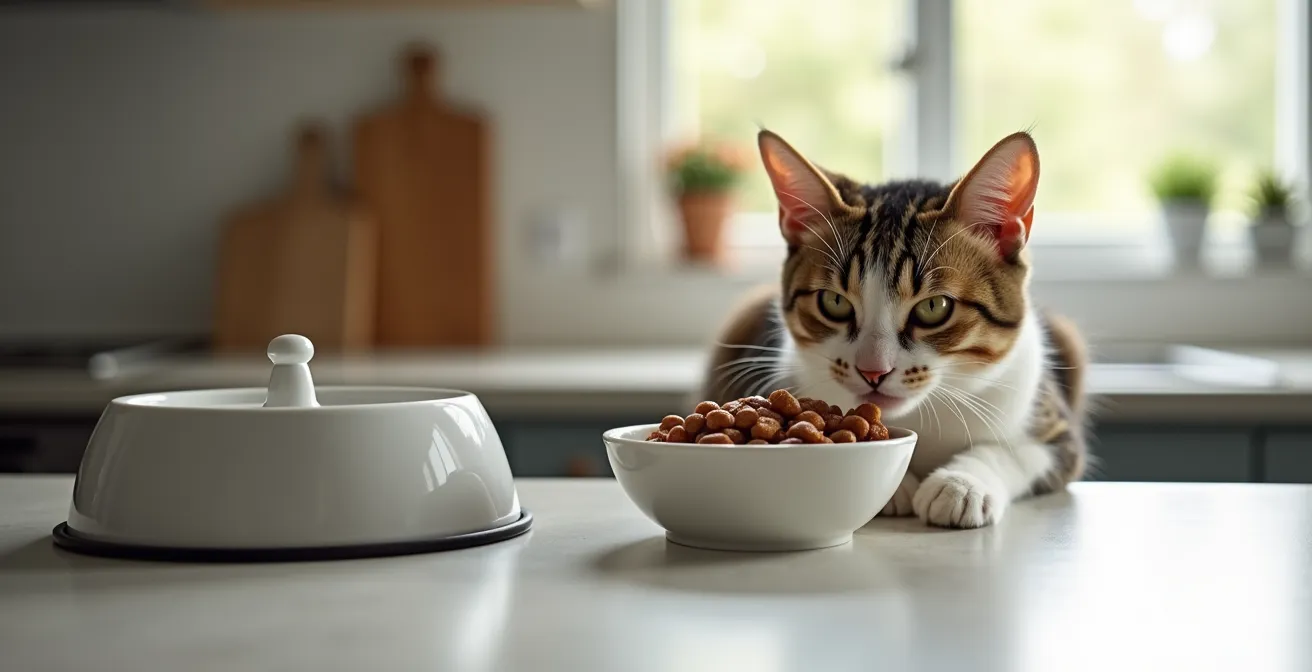
However, this must be done carefully and under veterinary supervision. As the Cornell Feline Health Center warns, over-acidification is also dangerous. Supplementing a therapeutic diet with additional acidifiers is strongly discouraged, as metabolic acidosis, impaired kidney function, and mineral imbalances can occur. The right diet, combined with the increased water intake from a fountain, creates a urinary environment that is inhospitable to crystal formation.
Why your plug-in pest repeller might be torture for your dog’s hearing?
When building a stress-free hydration ecosystem, we must consider the invisible stressors in our homes. One of the most overlooked culprits is the ultrasonic plug-in pest repeller. While their high-frequency sound is inaudible to humans, it falls directly within the hearing range of cats and dogs. These devices emit a constant, high-pitched noise, often above 20,000 Hz (20kHz), which can be a source of chronic, inescapable stress for our pets.
This is critically relevant to urinary health. It is well-documented that environmental stress is a major contributing factor to Feline Lower Urinary Tract Disease (FLUTD). Stress can trigger inflammation of the bladder wall (cystitis) and urethral spasms, both of which can lead to a urinary blockage. A cat living with the constant auditory torture of an ultrasonic device is a cat living under immense stress, making it far more susceptible to these conditions.
To provide true sensory security, it’s essential to audit your home for these hidden stressors. The hydration station should be a sanctuary, far away from any such devices, loud appliances, or high-traffic areas. Removing these invisible sources of anxiety is a simple but profound step toward lowering your cat’s overall stress load, which in turn helps protect its vulnerable urinary system. What seems like a harmless pest solution could be directly undermining your efforts to keep your cat healthy.
Key Takeaways
- Flow is Life: A water fountain’s moving water taps into feline instinct, significantly increasing hydration and promoting the constant urinary flow necessary to prevent blockages.
- Material Matters: Choosing a non-porous stainless steel or ceramic fountain is crucial for preventing bacterial buildup and chronic issues like chin acne associated with plastic.
- The Ecosystem is Everything: Prevention requires a holistic approach, where the fountain is part of a system that includes proper placement, diligent cleaning, a balanced diet, and a low-stress environment.
How to Collect a Sterile Urine Sample at Home Without Stressing Your Pet?
Even with the best prevention strategy, proactive monitoring is key. For cats with a history of urinary issues, regular urinalysis allows your vet to check for crystals, blood, and pH imbalances before they become a full-blown emergency. The challenge is collecting a clean urine sample at home without causing more stress for you and your cat. Fortunately, there are several low-stress methods that can make this process manageable.
The goal is to obtain a sample that is not contaminated by the litter itself. This can be achieved by temporarily altering the litter box environment. The first urination of the morning is often the most concentrated and provides the most accurate results. By being prepared and using one of the methods below, you can become a proactive partner in your cat’s health management. Given that studies show urinary blockages have a 30-50% recurrence rate, this monitoring is not just helpful—it’s essential.
- Use non-absorbent litter: Your vet can provide special plastic litter beads or you can purchase kits designed for urine collection. Simply replace the normal litter with these beads.
- The empty box method: For some cats, an empty but spotlessly clean litter box is enough. They will urinate on the bare plastic surface, allowing you to collect the sample.
- The plastic wrap method: Line the litter box with plastic wrap, securing it tightly around the edges, and add a very thin layer of litter on top. The urine will pool on the plastic.
Once your cat has urinated, use a clean pipette or syringe to transfer the sample into a sterile container provided by your vet. Be sure to reward your cat immediately with a treat or affection to create a positive association with the process.
Ultimately, preventing a urinary blockage is an active, ongoing process. By implementing a complete hydration ecosystem—combining the right fountain with diligent cleaning, strategic placement, and a supportive diet—you are creating an environment that works with your cat’s nature to promote health from the inside out. Take these steps today to become a proactive guardian of your cat’s well-being and ensure their long-term urinary health.
Frequently Asked Questions About Cat Fountains and Urinary Health
How often should I clean my cat’s water fountain?
For optimal performance and hygiene, it’s recommended to do a full cleaning, including disassembling and scrubbing the pump, at least once a week. Most high-quality ceramic or stainless steel fountains feature components that are dishwasher-safe, simplifying the process.
Why does pink slime form in water fountains?
The pink slime is a biofilm created by Serratia marcescens, an airborne bacteria that thrives in moist environments. If ingested in large quantities, it can cause gastrointestinal issues. Weekly cleaning with vinegar and water is the best way to prevent its growth.
Can I put fountain parts in the dishwasher?
It depends on the material. The ceramic or stainless steel bowl and main cover are typically dishwasher safe. However, do not put any plastic or rubber components, and especially not the pump motor itself, in the dishwasher, as the high heat can warp or damage them.
How does stress contribute to urinary blockages?
Environmental stress, obesity, and a sedentary lifestyle are known risk factors. Stress can trigger urethral spasms and sterile cystitis (inflammation of the bladder), which can narrow the urethra and lead to a blockage. Providing a calm, stable environment is highly beneficial.
What household items might stress cats?
Beyond obvious stressors, items like ultrasonic pest repellers emit high-frequency sounds (above 20kHz) that are inaudible to humans but can cause chronic stress in cats. This constant auditory irritation can directly contribute to stress-related urinary disorders.
How can I create a stress-free hydration zone?
Place fountains in quiet, low-traffic areas away from food bowls, litter boxes, ultrasonic devices, and loud appliances. Cats need to feel secure and unthreatened while they drink to encourage frequent use.