
Skipping your pet’s winter flea treatment is a classic example of false economy that almost guarantees a more expensive and stressful infestation by spring.
- The vast majority (95%) of a flea population isn’t on your pet; it’s an accumulating “environmental debt” of eggs, larvae, and pupae in your home.
- Centrally heated homes provide the perfect year-round breeding ground, allowing this hidden population to multiply exponentially while you “save” on two or three doses.
Recommendation: Maintain year-round parasite prevention as a non-negotiable insurance policy against the far greater cost of eradicating an established home infestation.
As a veterinary parasitologist, I frequently encounter a well-intentioned but financially flawed logic from pet owners: “It’s winter. The fleas are gone. Why would I spend money on prevention my pet doesn’t need right now?” On the surface, it seems like a savvy way to trim the budget. You save the cost of a few monthly doses, and what’s the harm? The harm, unfortunately, is rooted in a fundamental misunderstanding of parasite biology. This “saving” is not a saving at all; it’s a high-interest loan you take out from a future infestation, with the principal growing silently in your carpets and furniture.
The common advice is simply that “fleas can survive indoors.” While true, this statement fails to convey the scale of the problem. It doesn’t explain the concept of the “pupal window”—a period where flea pupae can lie dormant for months, completely immune to sprays and bombs, just waiting for the right conditions to hatch. It also overlooks the myriad of other parasite-related risks that don’t conveniently disappear with the first frost, from tick-borne illnesses on a warm winter day to the deadly consequences of using the wrong product in a multi-pet household. The real issue isn’t just that fleas survive; it’s that they are actively building an invisible army in your home while you’ve let your guard down.
This article will dismantle the false economy of skipping winter parasite control. We will move beyond the platitudes and dissect the biological and environmental mechanisms that turn a winter pause into a springtime crisis. We will explore the hidden 95% of the flea population, the correct way to apply treatments so your money isn’t wasted, the critical safety differences between products for families with children, and why seemingly unrelated topics like grooming and indoor-only status are inextricably linked to effective, year-round parasite management. The goal is to replace wishful thinking with a practical, economic understanding of risk, empowering you to make a decision that protects both your pet and your wallet in the long run.
This guide breaks down the critical aspects of year-round parasite control, revealing why a continuous strategy is not an expense, but an essential investment in your pet’s health and your home’s safety. Explore the sections below to understand the complete picture.
Summary: The Unseen Dangers of Seasonal Parasite Control
- Why 95% of the flea population lives in your carpet, not on your dog?
- How to apply spot-on treatments so they actually absorb without being rubbed off?
- Oral Chews vs Seresto Collars: Which is safer for households with toddlers?
- The Permethrin Error: Why using dog flea meds on cats is fatal within hours?
- When to start tick prevention before hiking in Lyme disease endemic areas?
- Why your short-haired dog needs a coat at 45°F even if they run?
- Why matting causes painful hematomas when removed incorrectly at home?
- Which Core Vaccinations Are Legally Required for Apartment Pets Who Never Go Outside?
Why 95% of the flea population lives in your carpet, not on your dog?
The single most critical concept pet owners must grasp is what I call the “95% Environmental Debt.” When you see a flea on your dog or cat, you are only seeing the tip of the iceberg—the 5% of the adult population. The other 95% exists in your home environment as eggs, larvae, and pupae. Recent veterinary research confirms that this hidden majority thrives in carpets, bedding, and furniture. An adult female flea lays up to 50 eggs per day, which fall off your pet and into your house. In a warm, centrally heated home, these eggs hatch into larvae, which then spin cocoons to become pupae. This is where the real danger lies.
The flea pupa is a biological fortress. Inside its sticky, resilient cocoon, it is protected from insecticides, vacuuming, and environmental changes. A pupa can remain dormant for many months—this is the “pupal window.” They are triggered to hatch by warmth, carbon dioxide, and vibrations, all signals of a nearby host. When you skip winter prevention, you are allowing this environmental debt to accumulate. By spring, you have a home seeded with thousands of these tiny time bombs, all ready to hatch simultaneously, creating an explosive infestation that a single dose of prevention cannot possibly contain. This is how a “small problem” becomes a massive, expensive eradication effort involving exterminators, daily cleaning, and months of stress.
The most effective strategy against this environmental debt is not just treating the pet, but managing the home. A study from Ohio State University provides powerful evidence for this, showing that routine vacuuming is surprisingly effective. The research demonstrated that the physical trauma of the brushes and airflow within a vacuum cleaner kills 96% of adult fleas and 100% of immature fleas mechanically. This proactive environmental control is crucial to breaking the life cycle and preventing the accumulation of your environmental debt.
Action Plan: Seizing Control of the Flea Environment
- Vacuum Everything Daily: During an active problem, vacuum carpets, rugs, and furniture daily. Focus on pet resting areas and immediately dispose of the bag outside.
- Wash Bedding Hot: Wash all pet bedding, blankets, and washable toys weekly in water at a minimum of 130°F (54°C) to kill all life stages.
- Steam Clean Carpets: For stubborn infestations, use a steam cleaner on carpets and upholstery. The high heat is lethal to fleas at all stages.
- Target Dark Crevices: Pay special attention to baseboards, under furniture, and in cracks where light-avoiding larvae hide.
- Maintain Pet Treatment: Environmental control only works if you stop new eggs from being laid. Continue your pet’s preventative medication without fail.
How to apply spot-on treatments so they actually absorb without being rubbed off?
Choosing the right preventative is only half the battle; applying it correctly is essential to avoid wasting your money. Topical “spot-on” treatments are designed to be absorbed into the skin’s oil layer (sebum) and distributed across the body surface. If the product is applied onto the fur instead of the skin, or in a place the animal can lick, its efficacy plummets. The goal is to get the medication directly onto the skin in a location the pet cannot reach—typically high up between the shoulder blades.
To do this effectively, use your fingers or the tip of the applicator to part the fur until you can see a clear line of skin. Apply the entire dose directly onto this exposed skin. For larger dogs, it’s often recommended to apply the product in several spots along the spine, from the shoulder blades to the base of the tail, again ensuring each application is on the skin, not the fur. It’s crucial to prevent the pet—and any other pets in the household—from licking the area for at least a few hours until it has dried. Furthermore, avoid bathing your pet for at least 48 hours before and after application, as this can strip the natural oils needed for the medication to spread effectively.
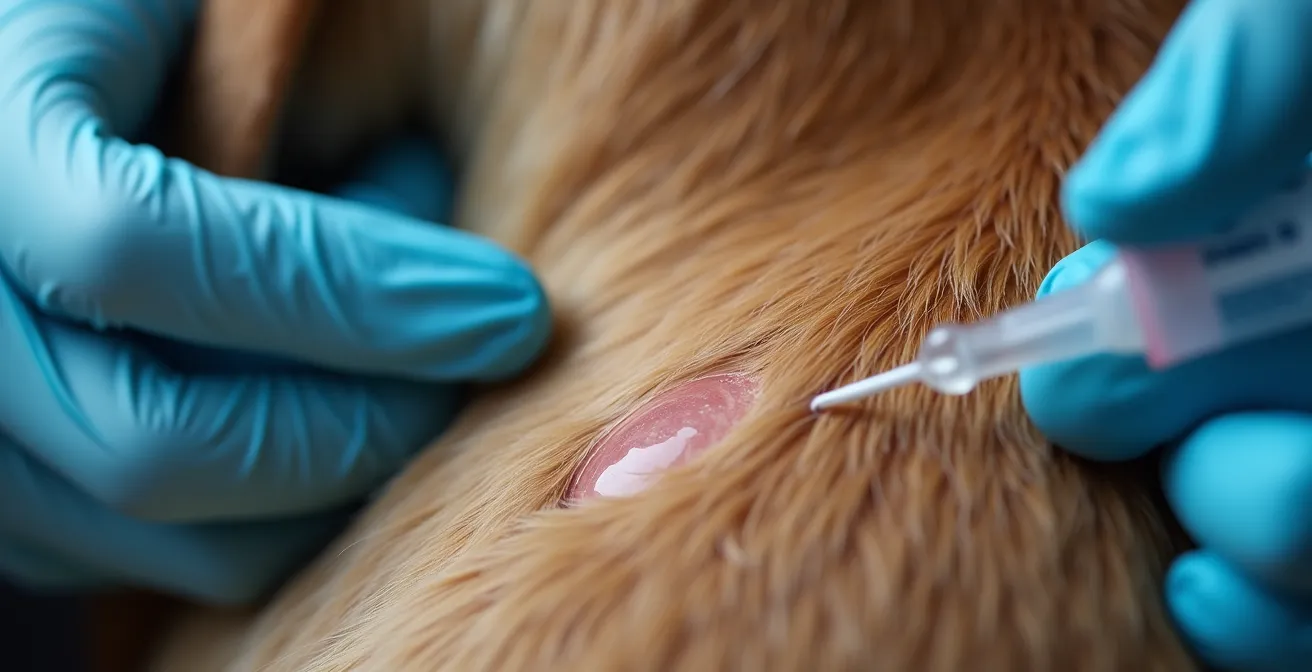
As the illustration demonstrates, the target is the skin itself. The liquid medication should create a pathway through the sebum, using the body’s natural oils as a distribution network. It’s also important to understand the specific mechanism of your chosen product. Many owners mistakenly believe all topicals repel parasites. As Dr. Aly Cohen of Cornell University’s College of Veterinary Medicine points out, this is not always the case. She clarifies the function of one common ingredient:
Topical products with fipronil do not repel or prevent tick attachment. It will not kill ticks until after attachment for 24 hours.
– Dr. Aly Cohen, Cornell University College of Veterinary Medicine
This highlights why even with proper application, you may still see ticks on your pet. The product is working by killing them after they bite, thereby preventing disease transmission, not by creating an impenetrable force field. Understanding this manages expectations and reinforces the need for regular body checks after outdoor activities.
Oral Chews vs Seresto Collars: Which is safer for households with toddlers?
When there are young children in the house, the choice of flea and tick prevention becomes a critical safety decision. The primary concern is the potential for a toddler to come into contact with the active ingredients. This is where oral chews and medicated collars differ fundamentally in their mode of action and risk profile. Oral preventatives, which contain active ingredients from the isoxazoline class, work systemically. The medication is absorbed into the pet’s bloodstream and is only present internally. There is zero risk of pesticide transfer to a child who is petting, hugging, or even being licked by the dog.
In contrast, collars like Seresto work topically. The collar slowly releases its active ingredients (imidacloprid and flumethrin) into the lipid layer of the pet’s skin and fur. While this is effective for the pet, it means the pesticide residue is present on the animal’s coat. For a toddler who frequently touches the pet and then puts their hands in their mouth, this creates a direct pathway for potential ingestion. While the risk can be managed with strict handwashing and teaching the child not to touch the collar, the risk of exposure is inherently higher than with an oral product.
The safety of oral isoxazolines for mammals is well-established. Their mechanism is highly specific. A report from Tufts University notes that isoxazolines specifically target invertebrate nervous systems, which is why they are effective against fleas and ticks but have a very high safety margin for dogs, cats, and humans. The primary safety concern with oral chews is simply keeping the medication stored securely away from pets and children, just as you would any other medicine.
| Factor | Oral Chews (Isoxazolines) | Seresto Collars |
|---|---|---|
| Active Ingredient Location | Systemic (bloodstream only) | Topical (on fur/skin) |
| Transfer Risk to Children | None – medication internal | Possible through petting |
| Primary Safety Concern | Pet ingestion only | Direct contact with collar |
| Duration | 1-3 months per dose | Up to 8 months |
| Toddler Safety Protocol | Store medication securely | Teach no-touch rule, handwashing |
For households with toddlers, the conclusion from a risk-assessment perspective is clear: oral chews offer a superior safety profile by eliminating the risk of pesticide transfer through contact.
The Permethrin Error: Why using dog flea meds on cats is fatal within hours?
The most tragic form of “false economy” I witness is when a well-meaning owner in a multi-pet household decides to save money by using a dog’s flea medication on their cat. This is not a minor mistake; it is often a fatal one. The issue lies in a common insecticide found in many over-the-counter canine spot-on products: permethrin. While dogs can metabolize this chemical safely, cats cannot. It is a potent, fast-acting neurotoxin for felines.
The reason for this lethal difference is a specific metabolic pathway. A 2009 article in the Journal of Feline Medicine and Surgery by Lara A. Boland and John M. Angles explains the precise biochemical incompatibility:
Cats lack sufficient Glucuronosyltransferase, an enzyme crucial for breaking down permethrin. For them, it’s not a medicine but a potent, unmetabolizable neurotoxin.
– Lara A Boland & John M Angles, Journal of Feline Medicine and Surgery
Without this enzyme, the toxin builds up rapidly in the cat’s system, leading to severe and often irreversible neurological damage. The clinical signs are dramatic and distressing, appearing within hours of exposure. A retrospective study of 42 cases of feline permethrin toxicosis at a Sydney hospital paints a grim picture. The most common signs included severe tremors or muscle fasciculations (in 86% of cats), twitching (41%), extreme sensitivity to touch (41%), and seizures (33%). Even with aggressive and expensive emergency veterinary care, complications like hypothermia and pneumonia occurred in a third of the cases, and the prognosis can be poor.
Case Study: The Devastating Reality of Permethrin Toxicity
The study of 42 cats exposed to canine permethrin products revealed the horrifying speed and severity of the poisoning. Most cases involved owners directly applying the dog product to their cat, believing it was safe. The resulting neurological signs required immediate hospitalization, intensive care with intravenous fluids, muscle relaxants, and anti-seizure medications. One-third of these cats suffered serious complications, and one cat had to be euthanized due to the severity of its condition. This highlights that the attempt to save a few dollars on a separate cat product can result in thousands of dollars in veterinary bills and a high risk of losing the pet.
The rule is absolute: never use a product labeled “for dogs only” on a cat. Always read the active ingredients and warnings on any over-the-counter flea medication. The financial and emotional cost of this error is immeasurable.
When to start tick prevention before hiking in Lyme disease endemic areas?
While fleas are a year-round indoor threat, ticks present a different, seasonally influenced outdoor risk. However, with climate change, the “tick season” is becoming longer and less predictable. Ticks can become active on any winter day where the temperature rises above freezing. Therefore, the old wisdom of starting tick prevention on a specific calendar date is obsolete. The modern, safer approach is to maintain prevention year-round, especially if you live in or travel to areas with a high incidence of Lyme disease or other tick-borne illnesses.
Understanding the transmission window is key to appreciating the urgency of prevention. A tick does not transmit Lyme disease (caused by the bacterium Borrelia burgdorferi) the instant it bites. According to health authorities like Pfizer, a leading vaccine researcher, ticks must be attached for 24-48 hours to transmit the bacterium. This fact underscores the power of preventative products. Products that kill ticks within hours of attachment effectively shut this transmission window, acting as a crucial line of defense. Relying on manual removal alone is risky; it’s easy to miss a small, embedded tick, especially on a long-haired dog.

The symbolic landscape of a forest edge meeting a suburban lawn perfectly illustrates the expanding risk. Ticks are no longer confined to deep woods; they thrive in the transitional zones we and our pets frequent, like parks, trails, and even backyards. Starting prevention *before* you begin hiking in the spring is too late. The risk exists on that first unseasonably warm day in February when you decide to take your dog for a walk. Therefore, the only truly safe strategy is continuous, year-round prevention, which ensures your pet is protected whenever a temperature-driven “risk threshold” is crossed, anticipated or not.
Why your short-haired dog needs a coat at 45°F even if they run?
Another common winter misconception is that a dog’s natural fur coat is sufficient protection against the cold, especially if they are active and running. This is a dangerous generalization that ignores critical factors like breed, size, body fat, and coat type. For many dogs, particularly small breeds, short-haired breeds like Greyhounds or Vizslas, and those with very little body fat, this is simply not true. Their ability to retain body heat is significantly lower than that of a Siberian Husky or a Newfoundland.
Veterinary guidelines establish a clear “risk threshold” for these vulnerable dogs. According to experts at Virginia Tech, when the temperature drops, preventative measures are needed. They affirm that veterinary guidelines recommend protection below 45°F (7°C), especially for smaller or thin-coated dogs. Below this temperature, these dogs can struggle to maintain their core body temperature, putting them at risk for discomfort and, in more extreme conditions, life-threatening hypothermia. The argument that “they’re running and generating heat” is only partially true; once they stop moving, their body temperature can plummet rapidly if they are not adequately insulated.
Providing a coat is not about “dressing up” your pet; it’s a functional piece of safety equipment. An insulated, well-fitting coat traps a layer of warm air against the body, acting as the insulation their natural fur lacks. When choosing a coat, consider the following to ensure it provides genuine protection:
- Insulation: Look for coats with a fleece or quilted lining for warmth.
- Water Resistance: A waterproof or water-resistant outer shell is crucial to keep the dog dry, as being wet rapidly accelerates heat loss.
- Coverage: The coat should cover the dog’s back from the neck to the base of the tail and also protect the chest and belly.
- Breed-Specific Needs: Be aware of your dog’s specific tolerances. A Chihuahua will feel the cold long before a Labrador Retriever does.
- Warning Signs: Always watch for signs of cold stress, such as shivering, anxiety, whining, or a reluctance to walk. These are clear indicators that your dog is too cold and needs to go inside.
Ignoring these needs is another form of false economy; it risks the animal’s health and potential veterinary bills for cold-related illnesses to save the small cost of a proper coat.
Why matting causes painful hematomas when removed incorrectly at home?
Proper grooming is not just about aesthetics; it’s a crucial component of health and, surprisingly, parasite control. When a pet’s fur becomes matted, it creates a cascade of painful and dangerous problems. Mats are dense tangles of fur that pull tightly on the delicate skin underneath. This constant tension can severely restrict blood flow to the affected area. When an owner tries to cut out a severe mat at home, they often cause a serious injury known as a post-clipping hematoma.
The Professional Grooming Association explains the painful mechanism behind this injury. The prolonged constriction from the mat damages the tiny blood vessels (capillaries) in the skin. When the mat is finally cut away, the pressure is suddenly released. This causes a rapid, forceful rush of blood back into the compromised, fragile capillaries.
Severely tightened mats pull on delicate skin, constricting blood flow for weeks or months. When cut away, the sudden rush of blood into damaged capillaries causes them to burst.
– Professional Grooming Association, Veterinary Grooming Safety Guidelines
This bursting of blood vessels leads to bleeding under the skin, forming a large, swollen, and extremely painful hematoma. It’s also incredibly easy for an owner to cut the skin hidden beneath the mat, as it is often pulled up into the tangled fur, leading to a severe laceration that requires emergency veterinary care. Attempting to save the cost of a professional groomer by tackling severe mats at home often results in a far more expensive vet bill for wound repair or hematoma treatment.
Study: Matted Fur as a Flea Paradise
Beyond the direct physical pain, matted fur creates a perfect, hidden breeding ground for fleas, directly tying back to our central theme. A Cornell University resource explains that matted fur creates ideal microenvironments for fleas. The trapped moisture, warmth, and organic debris provide both shelter and food for developing flea larvae. A female flea lays around 40 eggs per day, and these eggs get trapped in the mats instead of falling into the environment, concentrating the infestation directly against the pet’s already irritated skin. This makes a matted pet a walking flea factory, perpetuating the cycle of infestation in the home.
Severe matting is a veterinary issue, not a DIY project. The only safe way to remove it is by having a veterinarian or professional groomer shave the area with specialized clippers.
Key takeaways
- Year-round flea prevention is an economic necessity, not a luxury. The cost of treating an established home infestation far outweighs the cost of 12 monthly doses.
- The vast majority (95%) of a flea problem lies dormant in your home environment (carpets, bedding), making a winter “pause” in treatment a recipe for a spring population explosion.
- Product safety is paramount. Never use dog-specific flea medication containing permethrin on a cat, as it is a fatal neurotoxin to them. In households with toddlers, oral preventatives eliminate the risk of pesticide transfer from the pet’s fur.
Which Core Vaccinations Are Legally Required for Apartment Pets Who Never Go Outside?
A final area where pet owners often try to apply cost-saving logic is with vaccinations for indoor-only pets. The reasoning seems sound: “My cat lives on the 10th floor and never goes outside. Why does she need a rabies vaccine?” This logic, however, fails to account for legal requirements, public health risks, and the unpredictable nature of life. In most jurisdictions, rabies vaccination is legally mandated for all cats and dogs, regardless of their indoor or outdoor status. This is not about protecting your pet from the wild; it’s about protecting the public. If your indoor pet were to bite a visitor or escape during an emergency, proof of rabies vaccination is a legal necessity to avoid quarantine or even euthanasia.
Furthermore, the “indoor-only” status is not a perfect shield against disease. Many serious viruses are airborne or can be carried into the home on clothing, shoes, or even on other visiting pets. Studies show that up to 60% of disease transmission in some contexts can occur without direct animal-to-animal contact, especially in multi-unit buildings with shared ventilation systems. Viruses like feline panleukopenia or canine distemper are hardy and can survive in the environment, posing a real threat to an unvaccinated indoor pet. An open window, a contaminated delivery box, or particles on your shoes are all potential vectors.
Finally, consider the possibility of an emergency. If your pet suddenly needs to be hospitalized for any reason—a blockage, an injury, or a sudden illness—most veterinary facilities will require proof of current core vaccinations for admission. This policy is in place to protect other vulnerable patients in the hospital. Being forced to update vaccinations in a crisis situation adds stress and cost to an already difficult scenario. Maintaining core vaccinations is a small, predictable expense that provides a crucial safety net against legal trouble, unexpected exposure, and barriers to emergency care.
Frequently asked questions about Year-Round Parasite Control
Is rabies vaccination legally required for indoor-only pets?
Yes, rabies vaccination is legally mandated in most jurisdictions regardless of indoor/outdoor status, as it’s a public health requirement.
Can airborne diseases reach apartment pets?
Yes, viruses like canine distemper and feline panleukopenia can travel through ventilation systems and on clothing or shoes.
What if my pet needs emergency veterinary care?
Most veterinary facilities require current core vaccinations for admission, even in emergencies, to protect other patients.