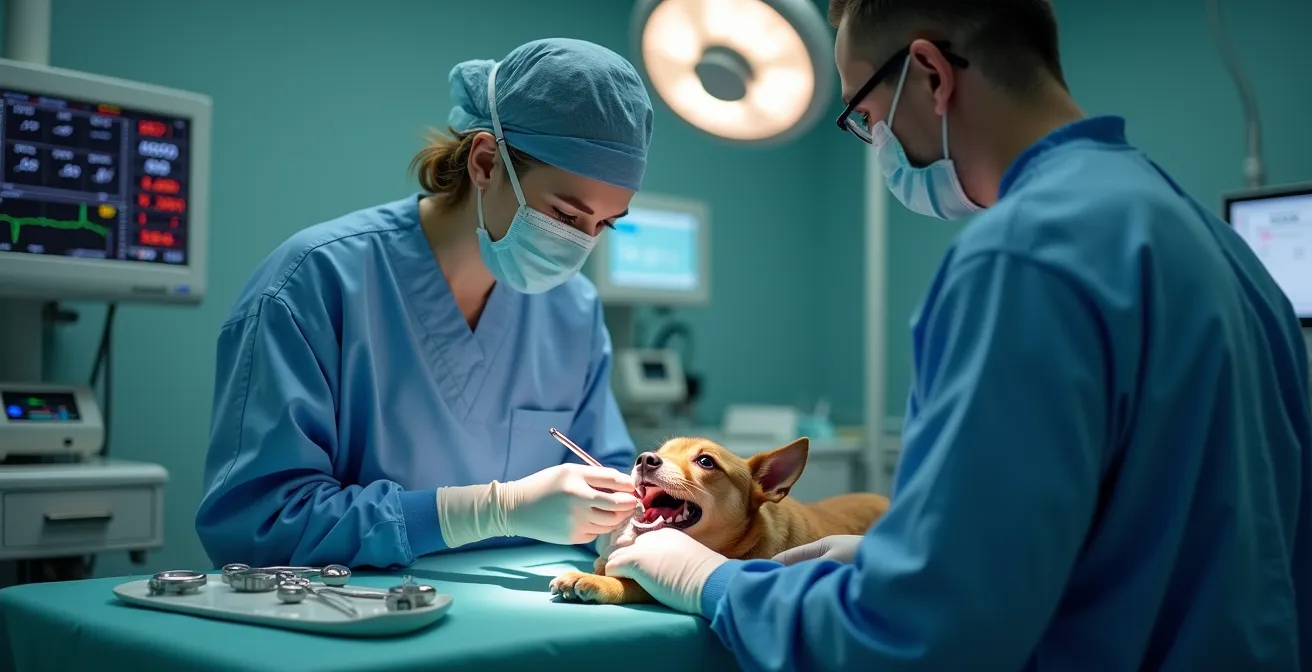
Contrary to the belief that anesthesia-free cleaning is a safer choice, it’s a dangerous myth that masks the true threat to your pet’s life: invisible disease below the gumline.
- Anesthesia-free procedures only clean the visible tooth surface, leaving the source of infection—subgingival plaque and tartar—untouched.
- This untreated infection releases a constant “bacterial shower” into the bloodstream, directly damaging the heart, kidneys, and liver.
Recommendation: The only safe and effective method to protect your pet’s systemic health is a Comprehensive Oral Health Assessment and Treatment (COHAT) performed by a veterinarian under general anesthesia.
As a pet owner, your greatest fear is subjecting your companion to unnecessary risk. The thought of general anesthesia, with its inherent dangers, is understandably daunting. This fear has fueled the rise of anesthesia-free dental cleaning services, marketed as a gentle, safe, and cost-effective alternative. They promise sparkling white teeth without the anxiety of a medical procedure. It sounds like the perfect solution, addressing the cosmetic issue of tartar buildup while avoiding the primary concern of anesthesia.
But this is where a critical, and often fatal, misunderstanding occurs. The focus on visible tartar is a dangerous distraction. Periodontal disease is not a cosmetic problem; it is a serious infection that festers deep below the gumline. The true danger isn’t the yellow plaque you can see, but the destructive bacterial biofilm in the subgingival zone that you can’t. Anesthesia-free cleaning is incapable of reaching this area. It’s like painting over a rotted wall—it looks better, but the structural decay underneath continues to worsen, silently and catastrophically.
This article will dismantle the myth of “safe” non-anesthetic cleanings from a veterinary dentist’s perspective. We will not just state that it’s ineffective; we will explain the precise biological mechanisms by which untreated subgingival disease leads to heart, kidney, and liver failure. The goal is to reframe your understanding of risk: the small, controlled risk of a monitored anesthetic procedure is infinitely preferable to the certain, progressive danger of untreated periodontal disease. Protecting your pet’s life requires looking beyond the visible crown of the tooth to confront the invisible infection that truly threatens their well-being.
This guide will navigate the scientific evidence connecting oral health to systemic disease, provide practical strategies for at-home care, and clarify when a professional procedure is non-negotiable. By understanding the ‘why’ behind veterinary recommendations, you can make an informed decision based on science, not fear.
Summary: The Science Behind Safe Pet Dental Care
- Why periodontal disease causes kidney failure in cats over age 10?
- How to brush a stubborn dog’s teeth in 2 minutes without getting bitten?
- Water Additives vs Enzymatic Toothpaste: Which Actually Removes Plaque?
- The Hard Chew Toy Mistake That Breaks Premolars in Aggressive Chewers
- When to schedule a COHAT procedure before irreversible bone loss occurs?
- Why postponing blood work for a “healthy” pet hides stage 1 kidney failure?
- The Tylenol Error: Why human painkillers are deadly for cats?
- Why Spending on Preventive Veterinary Medicine Saves You $2,000 in Long-Term Emergency Costs?
Why periodontal disease causes kidney failure in cats over age 10?
The link between a dirty mouth and failing kidneys is not a vague correlation; it is a direct biological pathway of destruction. Periodontal disease is a chronic infection caused by bacteria accumulating in the space between the teeth and gums. Every time an affected animal chews or even grooms, these bacteria are released into the bloodstream, an event known as bacteremia or a “bacterial shower.” These circulating bacteria and their inflammatory byproducts travel throughout the body, but they have a particular affinity for organs with high blood flow and intricate filtering systems, like the kidneys.
The kidneys act as the body’s sophisticated filtration plant. When they are constantly bombarded by oral bacteria, they become sites of chronic inflammation and damage. This process, called glomerulonephritis, impairs the kidneys’ ability to filter waste products from the blood. Over time, this sustained damage leads to irreversible loss of function and, ultimately, chronic kidney failure. Research confirms this connection is not trivial; data shows that dogs with advanced periodontal disease were found to be 2.3x more likely to develop kidney disease.
Case Study: The Oregon State University Study
A landmark 2021 prospective study from Oregon State University provided clear evidence of this link. Researchers examined 62 pets with periodontal disease, measuring key kidney function biomarkers before and after a professional dental cleaning under anesthesia. They found a direct correlation between the severity of the dental disease and elevated levels of kidney damage markers, particularly SDMA. This demonstrates that the oral infection is not just a local problem but an active, systemic process causing measurable renal damage, which can be mitigated with proper dental treatment.
This is why anesthesia-free cleanings are so dangerous. By only scraping the visible part of the tooth, they leave the subgingival bacterial factory completely intact, allowing the silent assault on the kidneys to continue unabated while giving the owner a false sense of security.
How to brush a stubborn dog’s teeth in 2 minutes without getting bitten?
The single most effective thing an owner can do to prevent periodontal disease is daily tooth brushing. However, for an owner of a “stubborn” or fearful dog, this advice can feel impossible and even dangerous. The key is to abandon the idea of restraint and force, and instead embrace the principles of cooperative care. This approach reframes brushing from a battle to be won into a collaborative activity your dog chooses to participate in.
The foundation of cooperative care is teaching a “consent behavior,” like a chin rest. The dog learns that placing their chin in your hand is what starts the activity, and lifting their head is what stops it—no questions asked. This gives them control and dramatically reduces anxiety and aggression. The next step is to make the experience positive through a process called flavor-chaining. You start by letting them lick a high-value, meat-flavored treat (like pet-safe chicken paste) from your finger for a few days, then from a piece of gauze wrapped around your finger, and finally from the bristles of a soft toothbrush. This associates the tools with a reward, not a threat.
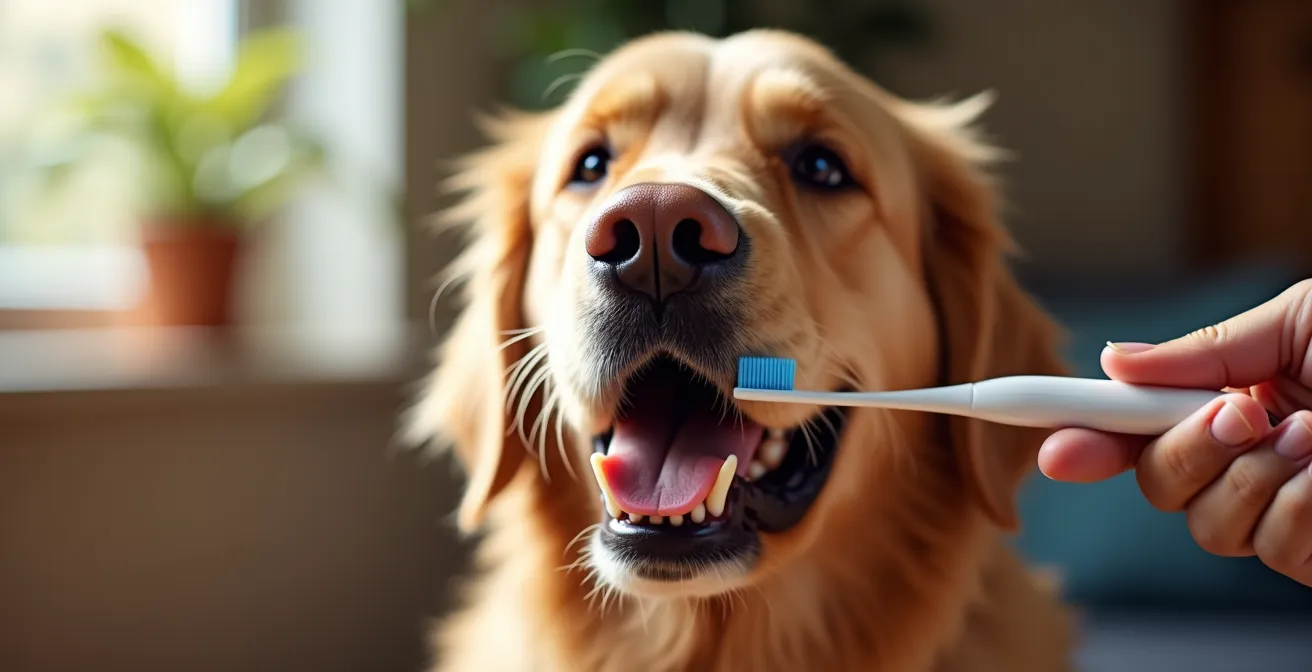
Instead of trying to brush the whole mouth at once, which is overwhelming, implement a quadrant-a-day system. Focus on just the outside of the upper left teeth on Monday, the upper right on Tuesday, and so on. A few seconds of effective brushing on a small area each day is far more beneficial than a weekly wrestling match. It is absolutely critical to watch for stress signals like “whale eye” (showing the whites of the eyes), lip licking, or turning the head away. These are your dog’s signals to stop immediately. Honoring these signals builds the trust necessary for long-term success.
Action Plan: Auditing Your Dog’s Brushing Readiness
- Consent Signal Check: Have you established a clear, voluntary consent behavior? Teach your dog to rest their chin in your palm. If they won’t offer it willingly, you are not ready to proceed.
- Tool Desensitization: Inventory your tools (finger, gauze, brush). Introduce them one at a time over several days, paired only with a high-value treat, without attempting to brush.
- Zone Tolerance Test: Gently touch the outside of your dog’s lip for one second, then reward. Can you progress to lifting the lip for one second? Identify which quadrant of the mouth is most tolerated.
- Stress Signal Awareness: Create a mental checklist of your dog’s specific stress signals (yawning, lip licking, turning away). During any interaction, your primary job is to watch for these signals, not to brush.
- Action Plan: Based on the tolerance test, start with the easiest quadrant for only 5-10 seconds. Your goal for the first week is not clean teeth, but a positive, stress-free interaction.
Water Additives vs Enzymatic Toothpaste: Which Actually Removes Plaque?
Plaque forms on tooth surfaces within 24 hours of complete cleaning, and lack of homecare for just 1 week can result in gingivitis in some patients.
– Today’s Veterinary Practice, Periodontal Disease: Utilizing Current Information
The pet care market is flooded with products promising easy dental health. Among the most popular are water additives, which claim to clean teeth and freshen breath with zero effort from the owner. In contrast, enzymatic toothpastes require the mechanical action of brushing. For a busy or weary owner, the allure of a “pour and forget” solution is powerful. However, when it comes to actually removing plaque, the science is unequivocal: there is no substitute for mechanical disruption.
Plaque is not just a stain; it is a complex, sticky matrix of bacteria called a biofilm. This biofilm adheres tightly to the tooth surface. Water additives, which are consumed in seconds, simply cannot achieve the contact time or force required to break down this established structure. At best, they may offer a temporary cosmetic benefit by neutralizing odor-causing compounds, but they do not address the underlying bacterial infection. Enzymatic toothpaste, on the other hand, works in tandem with the bristles of a toothbrush. The enzymes help break down plaque, but it is the physical brushing action that mechanically disrupts and removes the biofilm from the tooth surface, especially at the critical gumline.
The Veterinary Oral Health Council (VOHC) awards its Seal of Acceptance to products that have met pre-set standards of plaque and tartar retardation. An analysis of their approved products is telling. While a multitude of enzymatic toothpastes and dental chews carry the seal, very few water additives do, highlighting the difference between marketing claims and proven efficacy. The following table breaks down the fundamental differences in how these products function.
| Factor | Water Additives | Enzymatic Toothpaste |
|---|---|---|
| Plaque Removal | Minimal (cosmetic only) | Effective with brushing |
| Contact Time | Seconds (swallowed quickly) | Minutes (held by brush) |
| Biofilm Disruption | Cannot disrupt established biofilm | Mechanically disrupts with brushing |
| VOHC Approval Rate | Few products approved | Multiple products approved |
| Primary Function | Breath freshening | Plaque/tartar control |
The Hard Chew Toy Mistake That Breaks Premolars in Aggressive Chewers
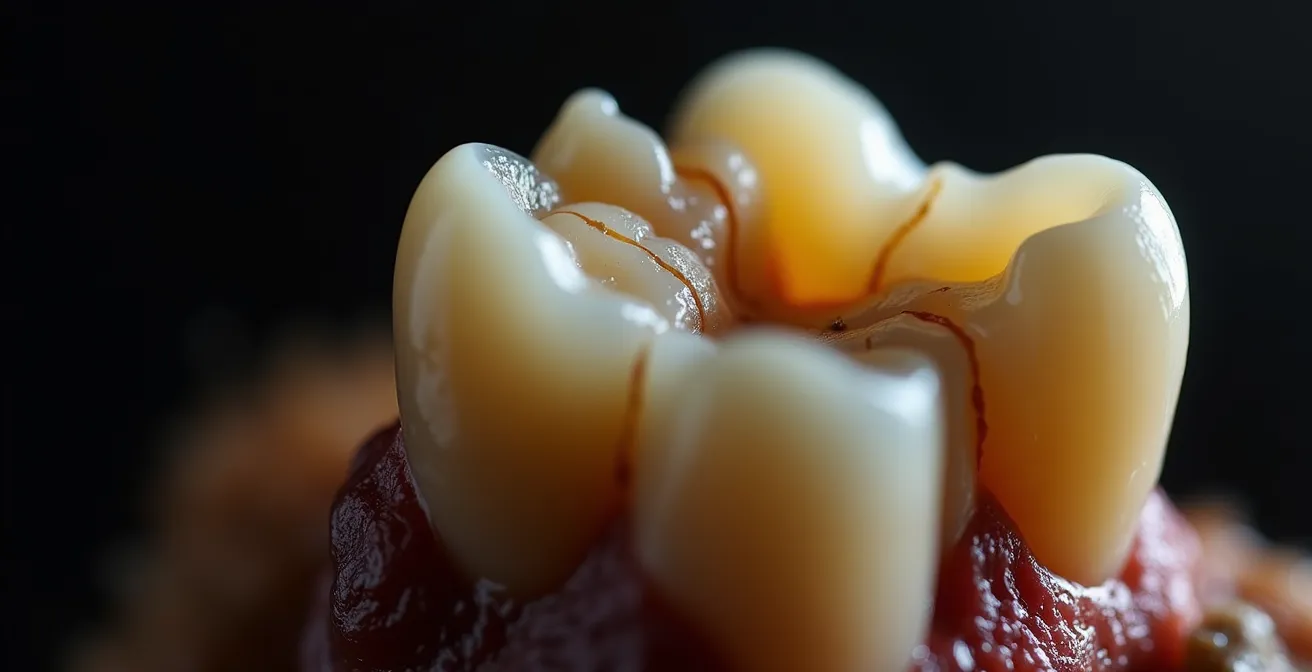
Providing chew toys is an excellent way to support a dog’s mental health and contribute to dental hygiene. However, a common and devastating mistake made by well-intentioned owners is providing chews that are too hard. Aggressive chewers can exert tremendous force, and when that force meets an unyielding object, the tooth is what gives way. The most common victims are the large upper fourth premolars, known as the carnassial teeth, which are essential for shearing. They are prone to a specific type of injury called a slab fracture, where a piece of the tooth shears off vertically.
This type of fracture is incredibly painful and almost always exposes the sensitive pulp cavity, creating a direct pathway for bacteria to infect the root and jawbone. Items like real bones, antlers, hard nylon toys, and even ice cubes are common culprits. Another surprisingly damaging item is a tennis ball; the abrasive fuzz acts like sandpaper, wearing down enamel over time. A slab fracture is a veterinary emergency that often requires complex root canal therapy or surgical extraction to resolve—both costly procedures performed under general anesthesia.
To avoid this painful and expensive mistake, veterinary dentists recommend two simple, effective rules for assessing a toy’s safety: the “Thumbnail Test” and the “Kneecap Test.” These tests empower you to quickly determine if a toy is dangerously hard before you give it to your dog.
- The Thumbnail Test: Press your thumbnail firmly into the surface of the toy. If you cannot make a dent or indentation, the material is too hard for your dog’s teeth. A safe toy should have some “give.”
- The Kneecap Test: Take the toy and tap it against your own kneecap. If it would hurt you, it’s too hard to give to your dog. This simple test provides an immediate, intuitive sense of the impact force involved.
Instead of risky items, opt for safe alternatives like durable, dense-molded rubber toys (from reputable brands) or chews that carry the VOHC seal, which are specifically designed to be tough but flexible enough to prevent fractures.
When to schedule a COHAT procedure before irreversible bone loss occurs?
The most dangerous misconception about periodontal disease is that it is a problem of old age. The reality is that the disease process starts shockingly early. Scientific data shows that by the age of two, over 80% of dogs and 70% of cats already have some stage of periodontal disease. It begins as gingivitis—reversible inflammation of the gums—but if left untreated, it quickly progresses to periodontitis, where the supporting structures of the tooth are destroyed. This destruction includes the periodontal ligament and, most critically, the alveolar bone of the jaw. This bone loss is permanent and irreversible.
So, when is the point of no return? The answer lies in the “periodontal pocket,” the space between the gum and the tooth. In a healthy mouth, this pocket is very shallow (1-3mm in dogs, 0.5-1mm in cats). As bacteria destroy the attachments, this pocket deepens. A Comprehensive Oral Health Assessment and Treatment (COHAT) under anesthesia is the only way to accurately measure these pocket depths with a periodontal probe. This is the definitive diagnostic step that cannot be performed on an awake animal.
For most dogs, a pocket depth over 3mm is the objective sign that the periodontal ligament has been destroyed and irreversible bone loss has begun.
– Merck Veterinary Manual, Periodontal Disease in Small Animals
Therefore, you should schedule a COHAT not based on your pet’s age or the visible tartar on their teeth, but on the first signs of gingivitis (red, swollen gums or bleeding during brushing) or persistent bad breath. Waiting until a pet is a “senior” is often waiting until they have advanced, irreversible bone loss requiring multiple painful extractions. The goal of a COHAT is not just to clean teeth, but to intervene *before* gingivitis becomes periodontitis, preserving the integrity of the jaw and preventing the need for extensive surgery later in life.
Why postponing blood work for a ‘healthy’ pet hides stage 1 kidney failure?
One of the most common reasons owners decline pre-anesthetic blood work is the belief that their pet is “perfectly healthy.” They see a vibrant, active animal and assume that internal function must be equally sound. This is a dangerous assumption, especially concerning kidney function. The kidneys are remarkably resilient and can compensate for damage for a long time. Traditional blood markers, such as creatinine and BUN, often do not show an increase until a staggering 75% of kidney function is already lost. By the time these values are “abnormal,” the pet is already in a state of significant, irreversible kidney failure.
This is why modern veterinary medicine has adopted a more sensitive biomarker: Symmetric Dimethylarginine (SDMA). SDMA is a game-changer for early detection. It can identify kidney dysfunction when as little as 25-40% of function has been lost. This provides a crucial window for intervention—allowing veterinarians to implement dietary changes, medications, and other strategies to slow the progression of the disease and preserve the remaining kidney function for years.
Case Study: The Power of SDMA in Early Detection
The same 2021 Oregon State study that linked dental disease to kidney damage also highlighted the diagnostic power of SDMA. In their cohort of 62 pets with periodontal disease, several animals showed elevated SDMA levels despite having completely normal creatinine and BUN values. These pets were in Stage 1 or early Stage 2 kidney disease, a condition that would have been completely missed by a traditional blood panel. For these patients, the COHAT procedure was not just about cleaning teeth; it was about removing the source of inflammation that was actively damaging their kidneys, a fact only revealed by the more sensitive SDMA test.
Postponing blood work on a “healthy” pet isn’t saving money; it’s choosing to remain blind to the earliest, most treatable stages of a fatal disease. For a pet undergoing a dental procedure—a known source of bacteremia that can stress the kidneys—knowing their baseline SDMA is a non-negotiable part of anesthetic safety and long-term health management.
The Tylenol Error: Why human painkillers are deadly for cats?
When a pet is in pain, it is a natural human instinct to want to provide immediate relief. An owner might notice their cat is sore after a minor fall or seems uncomfortable due to dental pain and reach for a common human painkiller like Tylenol (acetaminophen). This is a well-intentioned but potentially fatal mistake. Cats are not small dogs or small humans; they have a unique metabolism that makes them extremely susceptible to acetaminophen toxicity.
The critical difference lies in a specific enzyme pathway. Humans and dogs primarily metabolize acetaminophen using an enzyme called glucuronyl transferase. Cats lack a sufficient amount of this enzyme. As a result, a toxic byproduct accumulates that causes a devastating condition called methemoglobinemia. In this state, the iron in the red blood cells is altered, turning the blood a characteristic chocolate-brown color. These damaged cells can no longer carry oxygen. Even a fraction of a single regular-strength Tylenol tablet can be enough to trigger this crisis.
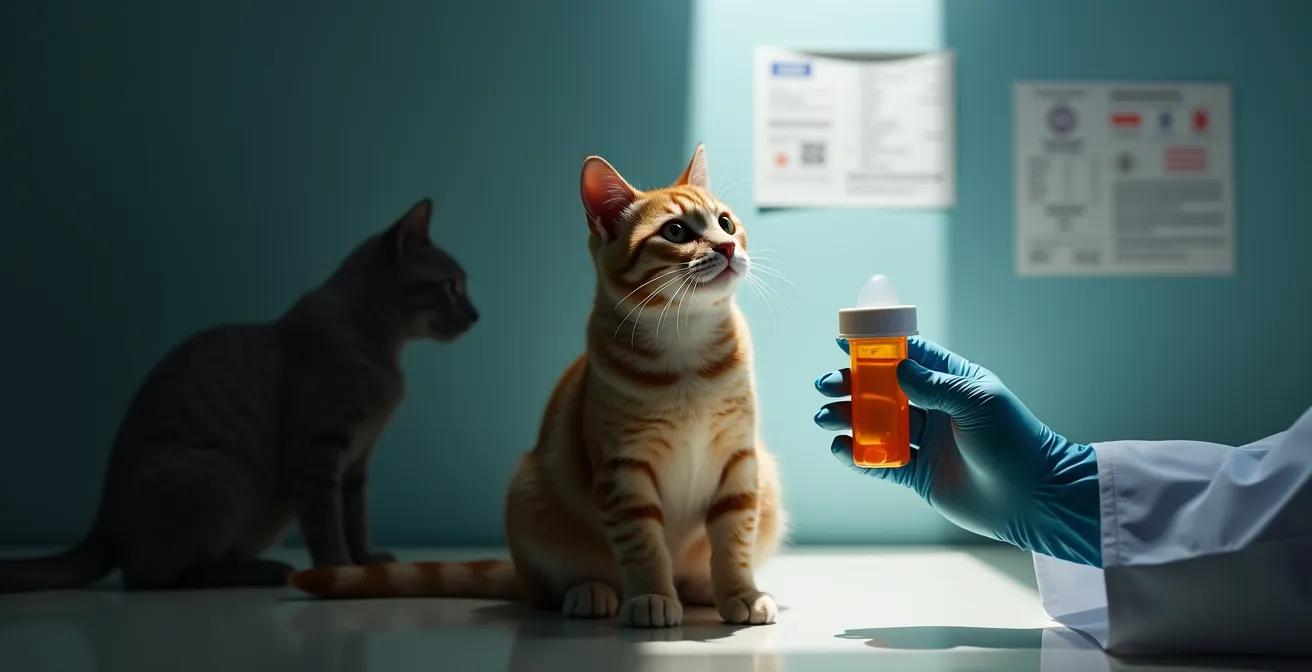
The clinical signs of acetaminophen toxicity in cats are rapid and severe: labored breathing, facial and paw swelling, and gums that appear brown or blue (cyanotic) instead of pink. Without immediate, aggressive veterinary intervention, including hospitalization and specific antidotes, death from oxygen deprivation can occur within hours. There is absolutely no “safe” dose of Tylenol for a cat.
Pain Management Protocol: Safety First
Safe and effective pain management for cats is possible, but it must be directed by a veterinarian. Never administer any human medication to a cat without explicit veterinary guidance. The safest approach is to have a proactive discussion with your veterinarian about a pain management plan *before* an emergency occurs. They can prescribe cat-safe medications, such as robenacoxib or buprenorphine, to have on hand. If you ever suspect your cat has accidentally ingested a human painkiller, contact your veterinarian or a pet poison helpline immediately—do not wait for symptoms to appear, as by then it may be too late.
Key Takeaways
- The real danger of periodontal disease is the invisible infection below the gumline (subgingival), which anesthesia-free cleanings cannot address.
- Untreated oral infections release bacteria into the bloodstream, directly causing irreversible damage to the heart and kidneys.
- Prevention through daily brushing and safe chews, combined with professional COHAT procedures, is not an expense but a crucial investment in your pet’s longevity.
Why Spending on Preventive Veterinary Medicine Saves You $2,000 in Long-Term Emergency Costs?
The final pillar of the argument against ineffective “cosmetic” cleanings is a pragmatic one: finance. While a preventive Comprehensive Oral Health Assessment and Treatment (COHAT) under anesthesia represents an upfront cost, it is a sound financial investment that pales in comparison to the cost of emergency treatment for advanced, systemic disease. Allowing periodontal disease to progress unchecked is not saving money; it is deferring a smaller, predictable cost for a much larger, catastrophic one.
The “bacterial shower” from an infected mouth doesn’t just damage the kidneys; it also attacks the heart. Bacteria can colonize the heart valves, leading to a serious condition called endocarditis. In fact, studies show that dogs with advanced periodontal disease face a 6.3x higher risk of developing this life-threatening heart infection. Treatment for endocarditis or chronic kidney failure involves extensive hospitalization, advanced diagnostics, and long-term medication, with costs easily running into many thousands of dollars—often with a poor prognosis.
When you compare the cost of an annual or biennial preventive COHAT to the cost of treating its consequences, the financial case becomes clear. A preventive cleaning is a proactive measure to stop disease. An emergency procedure for a tooth root abscess, a fractured jaw from bone loss, or treatment for systemic organ failure is a reactive, far more expensive, and emotionally draining experience.
The following table, based on typical veterinary costs, illustrates the stark financial difference between proactive prevention and reactive emergency care. While specific costs vary, the order of magnitude does not.
| Preventive Care | Cost | Emergency Treatment | Cost |
|---|---|---|---|
| Annual COHAT procedure | $800-1000 | Tooth root abscess treatment | $2000-2500 |
| Regular dental cleanings | $400-600 | Multiple extractions | $1500-3000 |
| Professional scaling | $300-500 | Jaw fracture repair | $3000+ |
| SDMA kidney screening | $50-75 | Kidney failure treatment | $5000-10000 |
| Preventive antibiotics | $30-50 | Endocarditis treatment | $4000+ |
Ultimately, the decision rests on a clear understanding of risk versus reward. The path of anesthesia-free cleaning offers the illusion of safety while guaranteeing the progression of disease. The path of professional veterinary dental care, guided by science, is the only one that truly protects your pet’s health and longevity. The next logical step is to move from understanding to action. Schedule a dedicated oral health consultation with your veterinarian to assess your pet’s specific needs and create a proactive care plan.