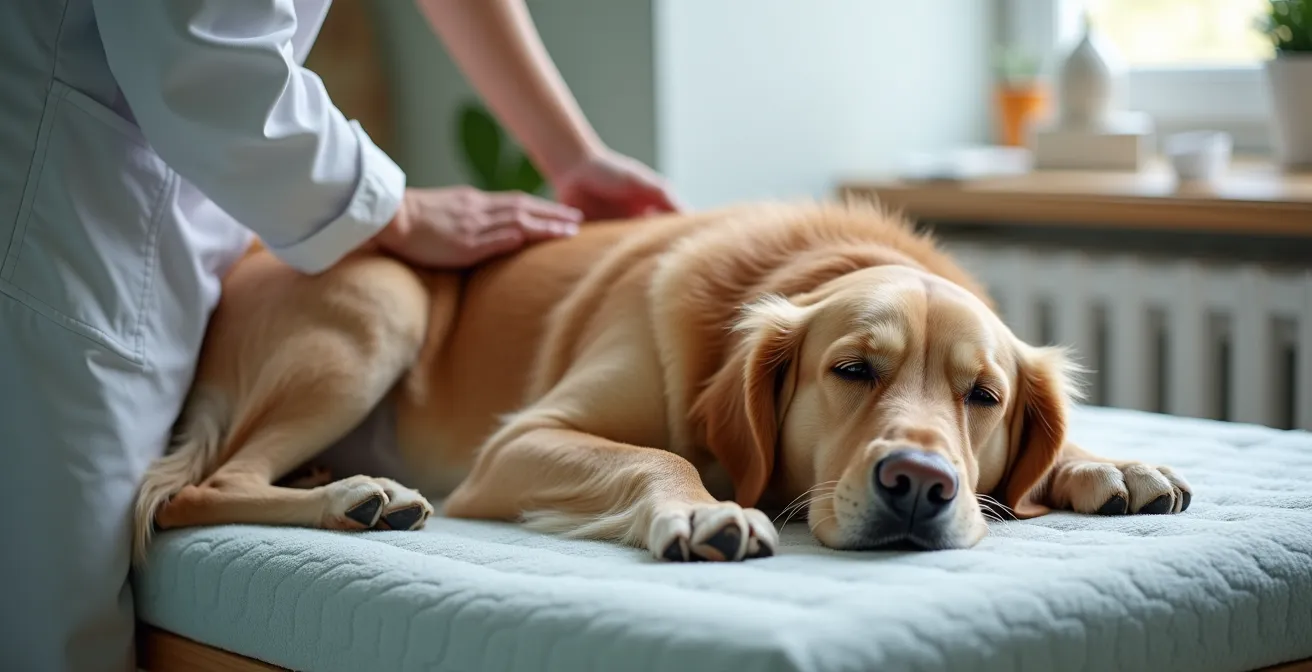
When a single pain pill like Carprofen no longer manages your senior dog’s arthritis, it’s not because the drug has failed; it’s because the nature of the pain has changed. Chronic pain rewires the nervous system, creating a state of hypersensitivity that a lone medication cannot address. Effective relief requires a multimodal strategy, targeting pain from multiple angles—from the joint to the brain—to improve your dog’s comfort and quality of life.
Watching a beloved senior dog slow down and struggle with the chronic pain of arthritis is one of the most difficult experiences a pet owner can face. For years, a daily non-steroidal anti-inflammatory drug (NSAID) like Rimadyl or Carprofen may have been the cornerstone of their comfort. But now, you notice the familiar signs of pain creeping back in: stiffness after a nap, reluctance to climb stairs, or even a new grumpiness. You’re left wondering, what’s next? Is the medication no longer working?
The common approach is to focus solely on the inflamed joint, treating it with a single type of medication. While NSAIDs are excellent for managing the initial inflammatory pain, they are only one tool in a much larger toolbox. The reality is that chronic pain is not a static condition. Over months and years, it evolves from a simple ache in a joint into a complex, self-perpetuating cycle that involves the nerves, the spinal cord, and even the brain itself. The pain system becomes over-reactive and learns to amplify signals.
The breakthrough in modern veterinary pain management is the understanding that we can no longer treat this complex problem with a simple solution. This is where the principle of multimodal pain management becomes essential. It’s a strategic and holistic approach that shifts the goal from simply “giving a pill” to dismantling the entire pain experience. It’s not about abandoning medication, but about augmenting it with other therapies that target different parts of the pain pathway.
This guide will walk you through the “why” and “how” of this comprehensive strategy. We will explore how chronic pain physically changes the nervous system, how to identify subtle pain signals, and the various layers of treatment—from at-home care to advanced veterinary therapies—that can be combined to give your dog the comfort and quality of life they deserve.
To help you navigate this comprehensive approach, this article details the key components of a successful multimodal strategy. The following sections break down the science, the behavioral signs, and the practical therapies you can discuss with your veterinarian.
Summary: A Vet’s Guide to Managing Chronic Canine Arthritis
- Why untreated pain rewires the brain to feel pain more intensely later?
- Why sudden aggression in an older dog is usually pain, not personality change?
- How to use heat packs and massage at home for spinal pain?
- When to upgrade to an orthopedic bed: The pressure point test
- Laser Therapy vs Acupuncture: Which works better for hip dysplasia?
- When to give nerve pain medication relative to activity for best effect?
- The Tylenol Error: Why human painkillers are deadly for cats?
- How to Survive the 2-Week Post-Op Recovery Period Without Sedatives?
Why untreated pain rewires the brain to feel pain more intensely later?
When pain from arthritis first begins, it’s a straightforward signal: the damaged joint sends a message to the brain saying, “Ouch.” This is called nociceptive pain. However, if this signal is constant and poorly managed, something profound happens. The nervous system itself begins to change. This dangerous phenomenon is called central sensitization, or “pain wind-up.” In essence, the nervous system gets so accustomed to the barrage of pain signals that it becomes hypersensitive, learning to overreact to even minor stimuli.
Imagine the pain system is like a fire alarm. In a healthy dog, it only goes off when there’s a real fire. With central sensitization, the alarm’s sensitivity is turned all the way up. Now, a puff of smoke or even a warm breeze can trigger a full-blown siren. For a dog, this means a gentle touch can feel painful (a condition called allodynia) or a mildly painful movement can feel excruciating (hyperalgesia). This is why a single NSAID, which targets inflammation at the joint, eventually becomes insufficient. It’s trying to put out a fire in the kitchen, but the entire house’s alarm system is now haywired.
This process is not just a theory; it involves physical changes in the spinal cord and brain. Specialized nerve cells called glial cells, which normally support neurons, transform into pain amplifiers. In a state of chronic pain, these cells release a cascade of inflammatory chemicals that create neuroinflammation, further sensitizing the nerves and sustaining the pain cycle. As one scientific review notes, this rewiring has devastating consequences.
Reorganization of cortical neurotransmitters occurs after injury and this can induce central sensitization, hyperalgesia, and allodynia. Changes in the brain as a result of chronic pain can impact cognitive and emotional health, resulting in poor welfare states.
– Frontiers in Veterinary Science, How does chronic pain impact the lives of dogs
Ultimately, chronic pain becomes a disease in itself, separate from the original arthritis. It affects mood, sleep, and behavior. This neurological shift is the fundamental reason why a multimodal approach is not just beneficial, but medically necessary. We must use different therapies to calm the “fire alarm” at every level—the joint, the nerves, the spinal cord, and the brain.
Why sudden aggression in an older dog is usually pain, not personality change?
One of the most heartbreaking changes owners report in their senior dogs is a sudden shift in temperament. A once-sweet, patient companion may start growling when petted, snapping when another dog gets too close, or becoming generally irritable. It’s easy to misinterpret this as a “personality change” or “old dog grumpiness.” However, in the overwhelming majority of cases, this sudden aggression is a direct and logical response to chronic, uncontrolled pain.
This isn’t malicious behavior; it’s a defensive, almost panicked, form of communication. From the dog’s perspective, their world has become a minefield of potential pain. A child’s loving hug could press on a sore back. A friendly pat on the head could jostle a stiff neck. The dog isn’t trying to be mean; it’s trying to prevent an action it anticipates will hurt. The growl is a desperate plea: “Please don’t touch me there, it hurts.” As veterinary behavior experts have confirmed, this link is undeniable.
Pain lowers an animal’s tolerance threshold for everything – touch, noise, other animals. The aggression isn’t malicious; it’s a defensive, panicked reaction to an anticipated or actual painful stimulus.
– International Veterinary Behavior Meeting, Pain and Problem Behavior in Cats and Dogs
Dogs are masters at hiding overt signs of pain like whining or limping, as this would show weakness in the wild. Instead, they communicate their discomfort through more subtle behavioral cues. Before a growl or a snap ever occurs, a painful dog will often display a series of “calming signals” that are actually signs of anxiety and stress. Learning to recognize these is key to identifying pain before it escalates to aggression.
If you notice these behaviors, especially in combination, it’s a strong indicator that your dog’s pain is not well-managed and a veterinary consultation is needed. These are not signs of a “bad dog,” but of a good dog in pain.
- Lip licking when not eating or thirsty
- Yawning when not tired
- Showing the whites of the eyes (“whale eye”)
- A suddenly stiff or rigid body posture
- A lowered head and tail
- Withdrawing from social interactions or hiding
How to use heat packs and massage at home for spinal pain?
One of the most effective and nurturing ways to provide immediate relief for a dog with chronic arthritis, especially pain originating from the spine, is through the gentle application of heat and massage. These therapies are a cornerstone of at-home care in a multimodal plan. Heat works by increasing blood flow to stiff muscles, improving circulation, and relaxing tight tissues. This not only eases pain but also improves flexibility before a short walk or activity.
It’s crucial, however, to apply heat safely. A dog’s skin is more sensitive than ours, and they can’t always tell us if something is too hot. Never use electric heating pads, which can cause severe burns if a dog lies on them for too long. Instead, opt for microwaveable gel packs or discs specifically designed for pets, and always follow a strict safety protocol. Combining heat with a gentle massage technique like effleurage (long, gliding strokes) can further enhance the benefits by warming up the muscles and promoting relaxation.
While heat is excellent for chronic stiffness, it’s important not to use it on an acute injury or an area that is already red, hot, and swollen. In those cases, cold therapy is more appropriate to reduce inflammation. Understanding the difference is key to providing the right kind of relief.
| Condition | Therapy Type | Application Time | Key Benefits |
|---|---|---|---|
| Chronic stiffness | Heat therapy | 10-15 minutes | Increases circulation, relaxes muscles |
| Acute inflammation | Cold therapy | 5-10 minutes | Reduces swelling, numbs pain |
| Muscle soreness | Heat therapy | 10-15 minutes | Improves flexibility, reduces tension |
| Post-injury swelling | Cold therapy | 5-10 minutes | Constricts blood vessels, limits inflammation |
By incorporating a safe heat and massage routine into your dog’s daily life, you provide not only physical comfort but also strengthen your bond through gentle, therapeutic touch. For spinal arthritis, this is a simple yet profound way to improve their well-being.
Your Action Plan: Safe Home Heat Therapy Protocol
- Use microwaveable gel packs or discs specifically designed for pets, always wrapped in a towel. Never use electric heating pads.
- Test the temperature on the inside of your wrist for 10 seconds before applying it to your pet. It should feel warm, not hot.
- Apply for a maximum of 15 minutes at a time (the “15-Minute Rule”) to prevent skin damage.
- Focus on the large muscle groups along the back and hips, avoiding direct application over bony prominences like the spine itself.
- Combine with gentle effleurage (long, gliding strokes with an open palm) to warm muscles and enhance relaxation.
- Monitor your pet’s response closely. Remove the pack immediately if they show any signs of discomfort, such as shifting away, panting, or restlessness.
When to upgrade to an orthopedic bed: The pressure point test
Sleep is not a luxury; for a dog with arthritis, it is a critical period of healing and recovery. During sleep, the body works to reduce inflammation and repair tissue. However, if your dog is sleeping on a surface that doesn’t provide adequate support, this process is compromised. A flimsy or worn-out bed forces their joints into uncomfortable angles and creates pressure points, exacerbating pain and stiffness. An arthritic dog on a poor bed will wake up feeling worse, not better, negating the benefits of other therapies.
Upgrading to a high-quality orthopedic bed is one of the most impactful environmental changes you can make. A true orthopedic bed is made from dense, supportive memory foam that conforms to the body’s contours, distributing weight evenly and eliminating pressure points on sore hips, shoulders, and elbows. This alignment supports the spine and joints, allowing muscles to fully relax and promoting restorative sleep. It’s not just about softness; it’s about structural support.
But how do you know if your current bed is failing? Many beds that are marketed as “orthopedic” are simply filled with cheap, shredded foam or fiberfill that quickly compresses and “bottoms out.” There’s a simple, effective test you can perform at home to assess the true support of your pet’s bed.
The Pressure Point Test Protocol:
- Kneel on the floor next to your pet’s current bed.
- Press your elbow firmly into the surface of the bed, simulating the pressure of a dog’s hip or shoulder joint.
- Pay close attention: If you can easily feel the hard floor through the padding, the bed is failing the test. It lacks the density to support your dog’s weight.
- Check multiple spots, especially the center where the bed gets the most use and any visible indentations where the foam has permanently compressed.
- If the bed fails this test at any point, it is no longer providing therapeutic support and it is time for an upgrade.
Investing in a proper orthopedic bed is an investment in your dog’s daily comfort and long-term health. It ensures that the 8-12 hours they spend resting are actively contributing to their pain management plan, not working against it.
Laser Therapy vs Acupuncture: Which works better for hip dysplasia?
When at-home care isn’t enough, your veterinarian may recommend professional therapies like laser therapy or acupuncture. These are two of the most powerful non-pharmaceutical tools in multimodal pain management, especially for chronic conditions like hip dysplasia. While both are effective, they work through different mechanisms and may be better suited for different aspects of pain. The choice isn’t always about which is “better,” but which is right for your dog’s specific symptoms.
Laser therapy, or photobiomodulation, uses specific wavelengths of light to penetrate deep into tissues. This light energy stimulates cellular activity, increasing circulation, reducing inflammation, and accelerating healing. It’s like providing a direct energy boost to damaged cells. The experience is gentle and warm, and many dogs find it very relaxing. It is particularly effective for reducing swelling, alleviating deep muscle stiffness, and managing the inflammatory component of arthritis.
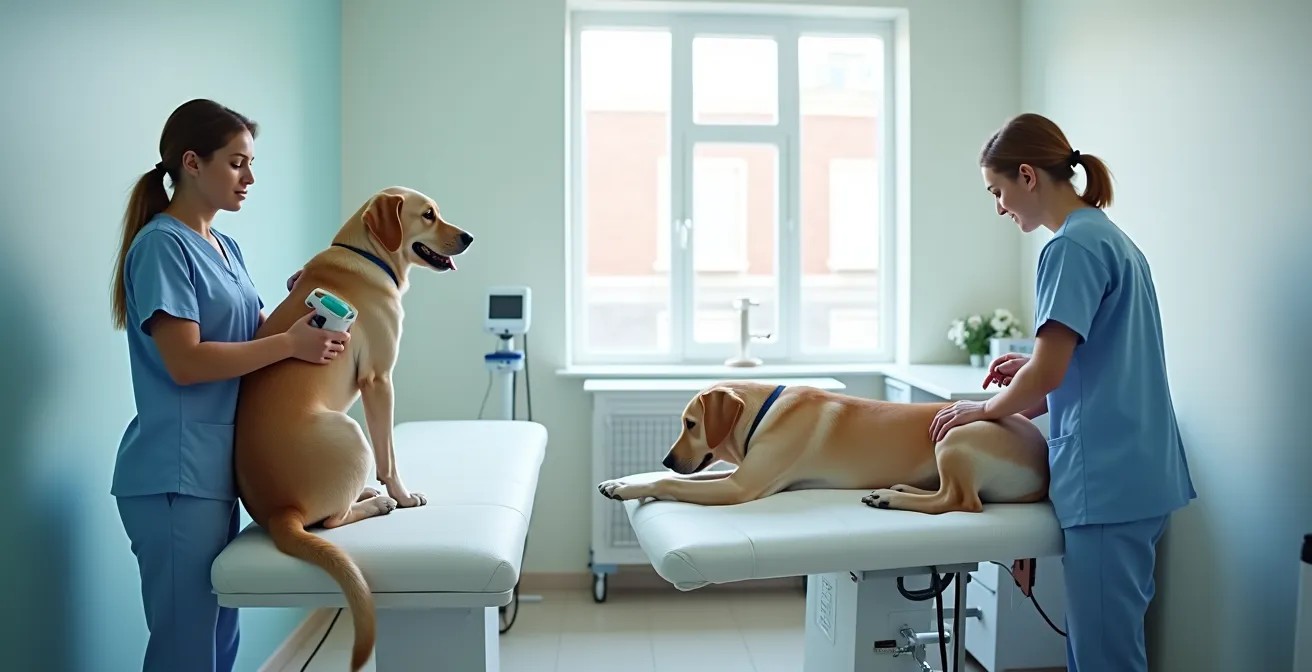
Acupuncture, a practice rooted in traditional Chinese medicine, involves inserting very fine needles into specific points on the body. From a modern scientific perspective, this stimulates the nervous system, prompting the release of the body’s own natural pain-relieving chemicals like endorphins. It also helps to deactivate painful trigger points and modulate nerve signals, making it exceptionally good for treating neuropathic pain (the “misfiring” nerve pain associated with central sensitization) and muscle twitching.
For a condition as complex as hip dysplasia, the best approach often involves using both therapies, either in rotation or together. A veterinarian trained in both modalities can create a tailored plan. For instance, laser therapy might be used to address the deep joint inflammation, while acupuncture targets the compensatory muscle tension and nerve pain in the lower back that develops as the dog alters its gait.
| Treatment Aspect | Laser Therapy | Acupuncture |
|---|---|---|
| Best for | Inflammation, swelling, stiffness | Nerve pain, trigger points, muscle twitching |
| Pet Experience | Gentle warming sensation | Needles often not felt |
| Initial Sessions | 2-3 times weekly for 2-3 weeks | Weekly for 4-6 weeks |
| Maintenance | Monthly or as needed | Monthly to quarterly |
| Session Duration | 10-30 minutes | 20-30 minutes |
When to give nerve pain medication relative to activity for best effect?
As chronic pain evolves, the initial inflammatory pain is often joined by a second, more insidious type: neuropathic pain. This is the “misfiring” nerve pain that stems from central sensitization. It doesn’t respond well to traditional NSAIDs. To combat this, veterinarians often add medications like Gabapentin or Amantadine to the multimodal plan. However, simply giving the medication is not enough; when you give it is critical for its effectiveness.
The goal of these medications is to “pre-empt” the pain. They work by calming the over-excited nervous system. To be most effective, the medication needs to be at its peak concentration in the bloodstream *before* the activity that typically causes pain. Giving it after the dog is already sore is like trying to board up a window during a hurricane. Giving it 60-90 minutes before a walk, a physical therapy session, or a car ride allows the drug to build up a “shield” against the anticipated pain signals.
Furthermore, maintaining a consistent level of medication in the body is key to preventing pain wind-up. Research and clinical experience have shown that dosing frequency is often more important than dose amount. For example, expert consensus suggests Gabapentin is most effective when given every 6 to 8 hours, rather than the more convenient every 12 hours, to maintain adequate serum concentrations for analgesia. This prevents peaks and troughs, providing a steady state of relief.

To optimize this timing, keeping a simple pain and activity diary is an invaluable tool. Note when you give the medication, when activities occur, and your dog’s comfort level throughout the day. This log helps you and your veterinarian identify patterns and fine-tune the schedule. Does your dog get stiff in the late afternoon? Perhaps an extra dose around lunchtime is needed. This data-driven approach transforms medication from a routine task into a strategic intervention.
The Tylenol Error: Why human painkillers are deadly for cats?
In a moment of desperation, watching a beloved pet in pain, it can be tempting to reach into your own medicine cabinet for a solution. This is a catastrophic and often fatal mistake, especially for cats. Human painkillers like acetaminophen (Tylenol) are highly toxic to pets, and cats are uniquely and exquisitely sensitive to its effects. What might be a safe dose for a human infant can be lethal for a full-grown cat.
The danger lies in a fundamental difference in metabolism. The feline liver lacks a specific enzyme, glucuronyl transferase, which is essential for safely breaking down acetaminophen. Without this enzyme, the drug is converted into toxic byproducts that wreak havoc on the body. This is not an overdose in the traditional sense; it is a metabolic poisoning.
Case Study: The Metabolic Incompatibility of Acetaminophen in Cats
When a cat ingests acetaminophen, its body cannot process it correctly. Toxic metabolites accumulate and cause two life-threatening events. First, they destroy liver cells, leading to acute liver failure. Second, they damage red blood cells by converting hemoglobin to methemoglobin, which cannot carry oxygen. The blood literally turns brown and can no longer supply the body’s tissues with oxygen. This is why giving a cat Tylenol is often compared to giving someone with a severe nut allergy a peanut butter sandwich; their body simply cannot handle it.
The toxic dose is terrifyingly small. According to veterinary toxicology data, even part of a single 250mg acetaminophen tablet can be fatal to a cat. Dogs are also susceptible, though less so than cats. Other human NSAIDs like ibuprofen (Advil) and naproxen (Aleve) are also highly toxic, causing severe stomach ulcers and kidney failure in pets. The rule is absolute: never give your pet any human medication without explicit direction from your veterinarian.
If you suspect your pet has ingested a human painkiller, this is a medical emergency. Contact your veterinarian or an animal poison control center immediately. Recognizing the signs of toxicity is critical for rapid intervention.
- Brown or muddy-colored gums (a sign of methemoglobinemia)
- Labored or difficulty breathing
- Swelling of the face or paws (edema)
- Excessive drooling or vomiting
- Hiding, depression, or unusual lethargy
Key Takeaways
- Chronic arthritis pain is a neurological disease, not just a joint problem. It physically rewires the nervous system to be hypersensitive.
- Sudden behavioral changes like grumpiness or aggression in an older dog are often a primary sign of uncontrolled pain.
- A true multimodal plan combines at-home care, environmental changes, professional therapies, and strategic medication to target pain from multiple angles.
How to Survive the 2-Week Post-Op Recovery Period Without Sedatives?
The two-week post-operative recovery period, often involving strict crate rest, can be one of the most challenging times for both a pet and their owner. Keeping an active dog calm and confined is difficult, and the go-to solution is often heavy sedation. However, relying solely on sedatives can have drawbacks, including grogginess, disorientation, and sometimes paradoxical excitement. A multimodal approach, focusing on pain control and mental enrichment, offers a safer and more humane way to navigate this critical healing phase.
The foundation of a smooth recovery is excellent pain management. A dog that is comfortable is far less likely to be restless and anxious. This means adhering strictly to the prescribed pain medication schedule. But beyond that, mental stimulation is your most powerful tool. A bored dog is a destructive and anxious dog. The key is to tire their brain, not their body. Just 15 minutes of focused brain games can be as tiring as a 30-minute walk.
Case Study: Non-Sedative Calming Alternatives for Post-Surgery Recovery
Many veterinary practices have great success using non-sedative calming aids during post-op recovery. Supplements containing L-theanine or Tryptophan can help promote a sense of calm without heavy sedation. Pheromone diffusers (like Adaptil for dogs) release synthetic maternal pheromones that are clinically proven to reduce anxiety. Combining these with a dedicated “Recovery Zone”—a comfortable crate with non-slip flooring and a rotating selection of enrichment toys—creates a secure, low-stress environment that encourages rest and healing naturally.
Rotating through a variety of simple, crate-appropriate mental enrichment activities can prevent boredom and keep your dog happily engaged. These activities don’t need to be complex; they just need to tap into your dog’s natural instincts to sniff, forage, and problem-solve. According to guidelines from veterinary surgeons, this mental work is a crucial part of the recovery process.
- Puzzle Toys: Start with easy-level food puzzles and gradually increase the difficulty as your dog recovers.
- Snuffle Mats: Hide their kibble or low-calorie treats in the fabric folds for 10-15 minute “sniffing” sessions.
- “Find the Treat” Games: Hide a treat under one of three cups while your pet watches, then let them indicate the correct one.
- New Trick Training: Teach calm commands that can be done while lying down, like “touch” (nose to hand), “watch me,” or “gentle.”
The journey of managing chronic pain in a senior dog is a marathon, not a sprint. It requires a partnership between you and your veterinarian, built on observation, communication, and a willingness to adapt. By embracing a multimodal approach, you move beyond simply masking a symptom and begin to actively manage a complex disease, ensuring your loyal companion can enjoy their golden years with the comfort and dignity they deserve. The next logical step is to schedule a consultation with your veterinarian to design a personalized multimodal pain plan for your companion.