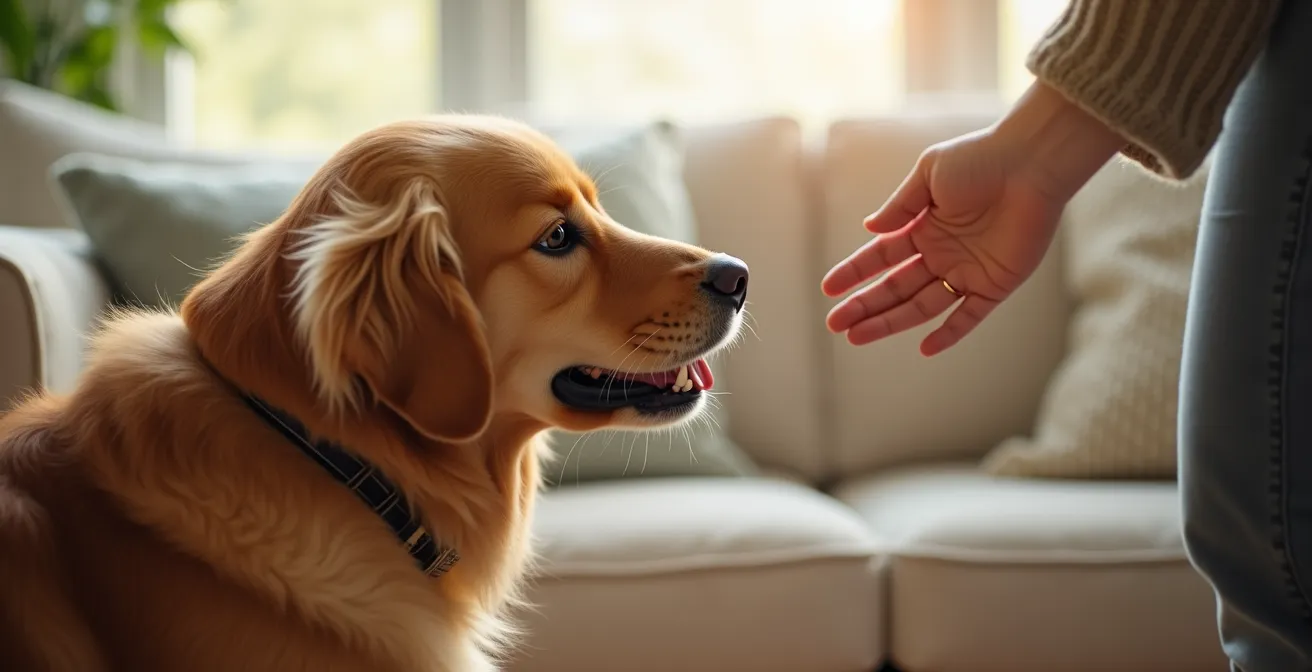
Many families mistake a dog’s stress signals for bad behavior, but these are actually polite requests for space.
- Signals like looking away or yawning are active de-escalation tools, not signs of disobedience or aloofness.
- Context is everything: a lip lick means something different at dinner time than it does when a child approaches for a hug.
Recommendation: Use the 3-second “Consent Test” before and during petting to turn interactions into a respectful conversation rather than a one-sided action.
As a family dog mediator, I often see the same scene: a child, full of love, rushes to embrace the family dog. The parents smile, seeing a heartwarming bond. But I see something else. I see the dog’s body stiffen, his mouth close, and his eyes widen for a split second. These are not signs of a happy, relaxed dog. They are quiet, desperate pleas for space, whispered in a language most humans don’t understand. And in a home with children, not understanding this language can lead to avoidable conflicts.
The common advice is to “always supervise kids and dogs,” which is crucial. But supervision without understanding is simply watching a problem unfold. The real solution is to move beyond management and toward mutual respect. This involves learning to listen to your dog’s subtle but clear attempts to de-escalate a situation that makes them uncomfortable. These “calming signals” are not passive symptoms of stress; they are an active, sophisticated vocabulary used to prevent conflict.
Forgetting the myth that a stressed dog is a “bad” dog is the first step. Instead, we must reframe our perspective: these signals are your dog’s way of politely saying, “I’m a little overwhelmed right now, can I have some room?” When we ignore these requests, a dog may feel they have no choice but to “shout” by growling or snapping. This article is your translation guide. We will explore the polite gestures your dog uses to communicate discomfort, decode the complex messages in their ears and tail, and give you the tools to build a foundation of trust and safety for everyone in your family.
This comprehensive guide will walk you through the most misunderstood canine signals. By learning to observe and interpret these subtle cues, you can transform your relationship with your dog, ensuring every interaction is built on a foundation of trust and mutual understanding.
Summary: How to Listen When Your Dog Politely Asks for Space: A Guide to Calming Signals
- Why looking away is a polite gesture in dog language, not ignoring you?
- How to use “slow blinks” to bond with a fearful rescue cat?
- Lip Licking: Anticipation of food vs Sign of extreme anxiety?
- The Hugging Mistake: Why embracing a dog often triggers a freeze response
- When to intervene: 3 subtle signals a dog gives before a growl
- Pricked vs Pinned Ears: What the angle tells you about immediate intent?
- Play Growl vs Warning Growl: The frequency difference you can hear
- How to Read the “Tail Wag” to Know if a Dog is Friendly or Ready to Bite?
Why looking away is a aolite gesture in dog language, not ignoring you?
When you call your dog and they briefly turn their head away, it’s easy to feel slighted or ignored. In human culture, avoiding eye contact can be seen as rude or dismissive. In the world of dogs, however, it’s the exact opposite. A deliberate head turn or averting their gaze is one of the most common and polite ways a dog de-escalates social pressure. It’s a beautifully subtle signal that says, “I see you, I acknowledge you, and I mean no harm.” It’s a peace offering, especially when a person or another dog is approaching too directly or intensely.
This behavior is fundamental to canine communication. Dogs use it to pacify a perceived threat, to calm another dog (or person), or to calm themselves down when they feel anxious. Instead of interpreting it as disobedience, see it as a request for a less direct approach. This is particularly true when a dog is feeling cornered or crowded. They aren’t ignoring your command; they’re managing their emotional state in the face of pressure. True understanding comes from recognizing this as a dialogue, not a monologue where only your commands matter.
Case Study: Building Trust with a Feral Dog
Rescuers working with Sky, a dog who had lived wild in a cemetery, successfully earned her trust over four days by using this very principle. The rescuer sat on the ground, showing non-threatening body language, and crucially, avoided direct eye contact. By observing Sky through a phone camera and tossing treats, the rescuer respected her need for space and her use of calming signals. This non-confrontational approach eventually allowed Sky to feel safe enough to eat from the rescuer’s hand, a breakthrough made possible by understanding that looking away is a request, not a rejection.
To put this into practice and ensure all interactions are welcome, you can use a simple consent test. This turns petting from something you *do to* your dog into something you *do with* your dog.
Action Plan: The Canine Consent Test
- Pet your dog gently for exactly 3 seconds on their chest or shoulder, counting “one one-thousand, two one-thousand, three one-thousand.”
- At the 3-second mark, completely remove your hand and return it to a neutral position by your side.
- Wait and observe. If your dog nudges your hand, leans in, or moves closer, they are giving enthusiastic consent for more petting.
- If your dog looks away, stays still, licks their lips, or moves away, they are politely saying “no, thank you.” Respect this signal and give them space.
- Repeat this test periodically during any petting session to ensure your dog remains comfortable and that the consent is ongoing.
How to use “slow blinks” to bond with a fearful rescue cat?
While the “slow blink” is famously associated with felines as a sign of trust, dogs possess their own powerful version of this “I come in peace” message: the “soft eye.” Understanding and mirroring this subtle gesture is a cornerstone of building a bond with any dog, but it’s especially vital for a fearful one. A direct, hard stare is confrontational in the canine world. In contrast, a soft eye—where the eyes are relaxed, slightly squinted, and almond-shaped—communicates safety and trustworthiness. It tells a dog you are not a threat.
You can actively use this. When interacting with a nervous dog, soften your own gaze. Avoid staring directly, and instead, blink slowly, look slightly to the side, and keep your facial muscles relaxed. This mimics their own calming signals and can dramatically lower their stress levels. As canine behaviorist Turid Rugaas notes, other signals can be used for this purpose too. She explains that dogs use yawning to calm themselves and others, suggesting, “Yawning at your dog [can] provide comfort during stressful moments, such as a vet visit.” These are not just passive tics; they are active tools of communication you can use to build a bridge of trust.
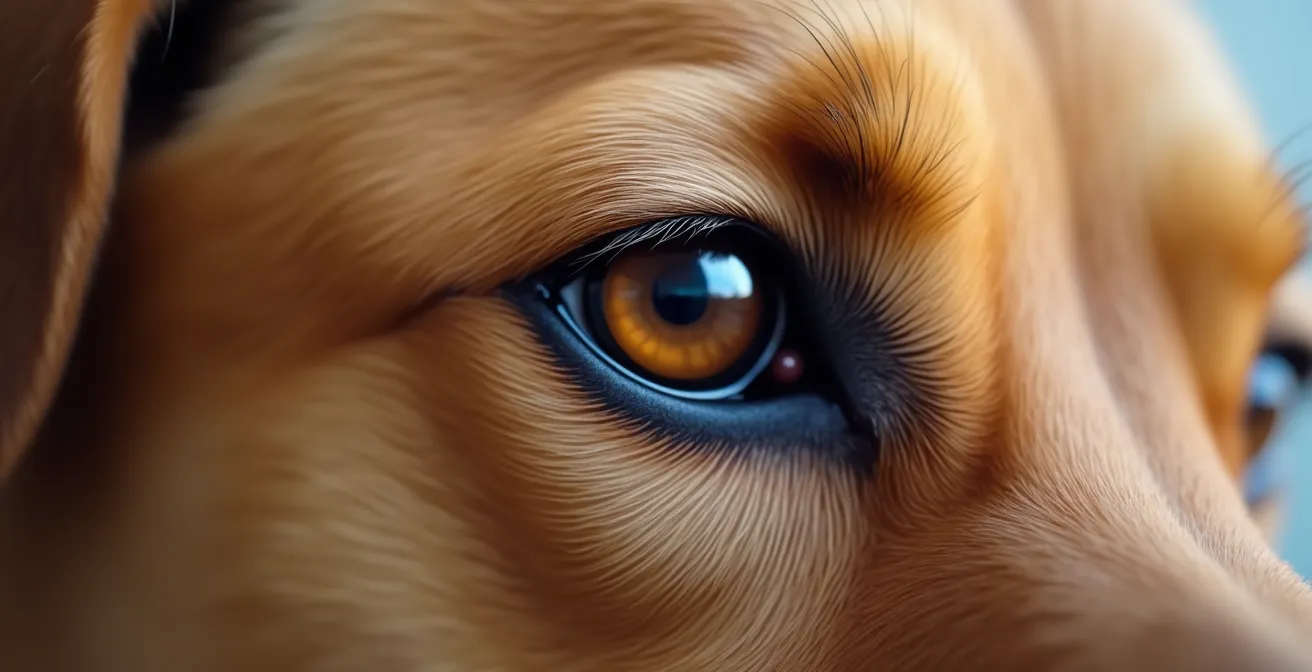
The physiological impact of these calm, respectful interactions is profound. It’s not just about making a dog “feel” better; it creates measurable changes in both human and animal. For instance, electroencephalogram research from 2024 demonstrates that human brain alpha power spectra significantly increase during gentle activities like playing and walking with dogs, which is a clear indicator of enhanced relaxation. By creating these peaceful moments, you are literally calming both your own and your dog’s nervous system.
Lip Licking: Anticipation of food vs Sign of extreme anxiety?
A dog licking its lips is one of the most context-dependent signals and a frequent point of confusion for owners. Is he simply anticipating a tasty treat, or is he communicating deep-seated anxiety? The answer lies in observing the entire “package”—the speed of the lick, the context of the situation, and the other body language signals that accompany it. A dog about to receive a piece of cheese will often perform a slow, deliberate lick around its entire mouth, accompanied by soft eyes and an eager posture. This is a clear sign of food anticipation.
However, the stress lick is vastly different. It’s a rapid, almost invisible flick of the tongue that darts out and quickly disappears, often just to the nose. This signal frequently appears when a dog feels social pressure, such as when a child approaches too quickly or a stranger reaches down to pet them. It’s an unconscious response to anxiety, a self-soothing gesture that indicates the dog is feeling uncomfortable with the interaction. Ignoring this quick-flick lick, especially when it’s part of a sequence of other signals like a yawn or a head turn, means you’re missing a critical, early request for space.
To help differentiate these signals, it’s useful to consider the complete picture. The following table breaks down the key differences, helping you become a more accurate interpreter of this subtle but significant signal, as explained by the American Kennel Club’s guide to body language.
| Type of Lip Lick | Physical Characteristics | Accompanying Signals | Context | Meaning |
|---|---|---|---|---|
| Stress Lick | Quick tongue flick, barely visible | Pinned ears, low body posture, avoidance | Vet visits, new environments, confrontations | Anxiety or stress |
| Food Anticipation | Slower, deliberate lick of entire nose/chops | Soft eyes, wagging tail, alert posture | Near kitchen, meal times, treat presence | Excitement for food |
| Medical Issue | Chronic, repetitive licking | May occur in isolation | Outside obvious stress/food contexts | Possible nausea, dental pain, or GI discomfort |
The Hugging Mistake: Why embracing a dog often triggers a freeze response
For humans, a hug is the ultimate expression of affection. For dogs, it can be the ultimate trigger for anxiety. When a person, especially a child, wraps their arms around a dog’s neck and shoulders, they are performing two actions that are inherently threatening in the canine world: restraining movement and invading personal space from above. This combination can quickly push a dog past their comfort threshold, causing them to employ a last-ditch calming signal before a potential snap: the “freeze.”
The freeze is exactly what it sounds like. The dog becomes completely still, their muscles tense, their mouth closes, they may hold their breath, and they might show “whale eye” (the whites of their eyes are visible). They have stopped all other signals—no more head turns or lip licks. They are communicating, “The polite requests didn’t work, so I am stopping everything in the hopes that this alarming stillness will make you stop.” This is not a moment of calm submission; it is a red-alert warning that a bite is imminent if the pressure is not removed immediately.
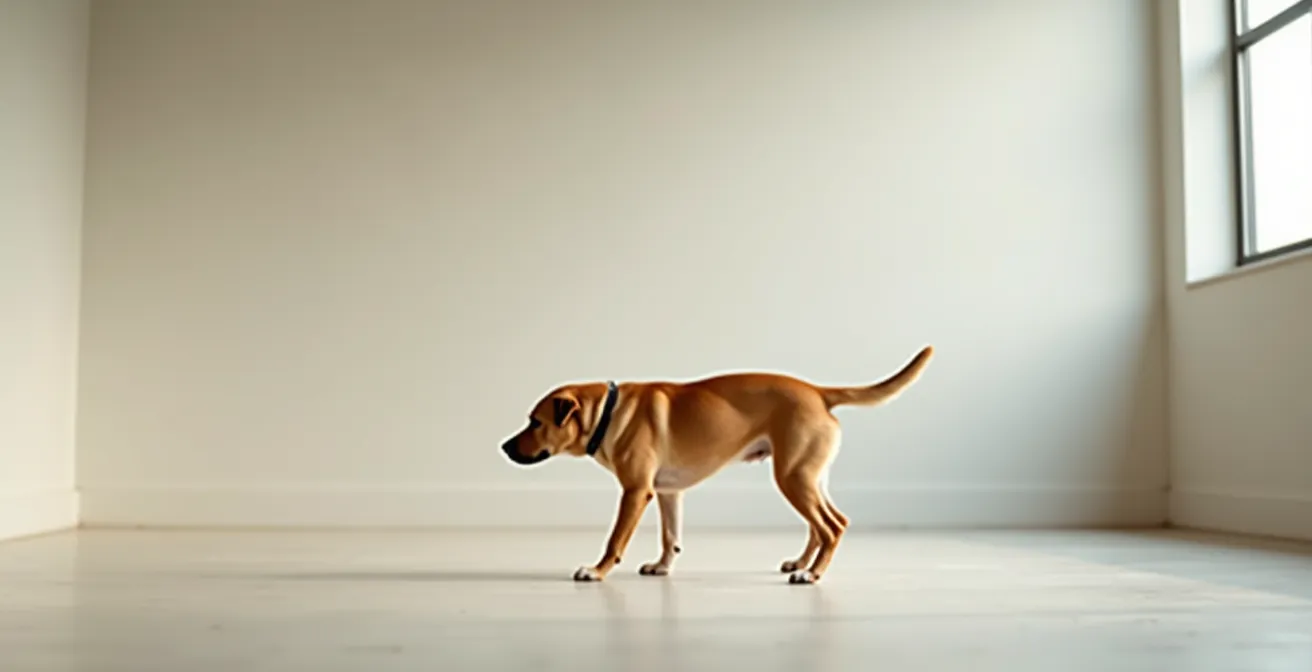
This response is amplified by our own emotional state. We approach for a hug with excited, high energy, but the dog interprets this as predatory pressure. In fact, our stress directly impacts them. Fascinatingly, Queen’s University Belfast research reveals that changes in an owner’s heart rate can directly predict changes in their dog’s heart rate, a phenomenon known as emotional contagion. When you hug your dog, your own excitement can literally raise their heart rate and stress level. Instead of hugs, show affection in ways that respect their language: offer gentle chest scratches, invite them onto your lap without holding them down, or simply sit quietly with them.
When to intervene: 3 subtle signals a dog gives before a growl
A growl is not the beginning of a problem; it is the end of a long, silent conversation that we have failed to hear. Before a dog ever feels the need to make an audible warning, they offer a cascade of subtle signals to express their discomfort. As a family mediator, my goal is to teach you to intervene at the “whisper” stage, so your dog never has to “shout.” Missing these whispers is a common factor in bite incidents. Indeed, bite prevention research shows that many bites are linked to a human’s failure to recognize preceding stress signs like a stiff posture or averted gaze.
Learning to spot “signal stacking” is the most critical skill. This is when a dog displays multiple calming signals in rapid succession. One yawn could just mean they’re tired. But a yawn, followed by a lip lick, followed by a head turn, all within ten seconds of a child approaching, is a full sentence that screams, “I am uncomfortable!” Here are three micro-signals to watch for that often precede a freeze or a growl:
- Sudden Mouth Closure and Tense Muzzle: A happy, relaxed dog often has a soft, slightly open mouth. When they suddenly close their mouth and the muscles around their jaw and eyes harden, it’s a sign that their stress level has just spiked.
- Subtle Weight Shift: This is easy to miss. The dog may not walk away, but they will subtly shift their weight to their back legs or lean away from the person or thing causing them anxiety. It’s a physical preparation for flight.
- The “Shake Off”: Often seen after a stressful encounter (like a vet visit or an unwanted hug), a dog will perform a full-body shake as if they’re wet. This is a physical mechanism to literally shake off the stress and reset their nervous system. Seeing this tells you the preceding event was, in fact, stressful for them.
When you see these signs, especially when they are stacked together, it is your cue to intervene calmly and confidently. Don’t scold the dog. Instead, create space. Call the dog away cheerfully, use your body to block the child’s approach, or teach your child to recognize these signs and back away themselves. This proactive intervention validates the dog’s communication and prevents escalation.
Pricked vs Pinned Ears: What the angle tells you about immediate intent?
A dog’s ears are like satellite dishes, constantly moving to gather information and broadcast their emotional state. Understanding their position is key to predicting their immediate intent. As the renowned expert Turid Rugaas states, “Dogs have about 30 calming signals, perhaps even more. Some of these signals are used by most dogs, while other dogs have an incredibly rich ‘vocabulary’. It varies from dog to dog.” The ears are a huge part of this vocabulary. It’s a mistake to look at them in isolation; you must read them as part of the whole-body context.
Pricked, forward-facing ears indicate alertness and focus. But is it curious focus or predatory focus? The rest of the body tells the story. If the mouth is soft, the body is loose, and the tail is wagging gently, the dog is likely interested and curious about a sound. However, if those same forward ears are paired with a hard, closed mouth, a stiff body, and a rigid tail, the dog is in a state of high arousal and intense focus that could precede a chase or an attack. This is a dog on high alert, and the situation needs careful management.
On the other end of the spectrum, ears pinned flat against the head are an unambiguous sign of fear or extreme stress. This dog is trying to make itself smaller and appear non-threatening. This posture is often accompanied by a tucked tail, a low body, and avoidance behaviors. This is not a dog to be approached, as a fearful dog is an unpredictable one who may bite if they feel they have no other option. “Airplane ears,” held out to the side, are a sign of appeasement or uncertainty—the dog is worried but trying to be social.
| Ear Position | Direction | Combined Body Signals | Emotional State | Likely Response |
|---|---|---|---|---|
| Pricked Forward | Forward/Alert | Soft mouth + loose body | Curiosity/Interest | Approach/Investigate |
| Pricked Forward | Forward/Alert | Hard mouth + stiff body | Intense/Predatory Focus | Potential Chase/Attack |
| Airplane Ears | To the Side | Low body + slow movements | Appeasement/Uncertainty | Avoidance/Submission |
| Fully Pinned | Back Against Head | Tail tucked between legs | Fear/Extreme Stress | Flight or Freeze |
| Relaxed/Neutral | Natural Position | Loose body + soft eyes | Calm/Content | Normal Behavior |
Play Growl vs Warning Growl: The frequency difference you can hear
The growl is perhaps the most alarming sound a dog can make, but not all growls are created equal. Distinguishing a happy, boisterous play growl from a serious, “back off” warning growl is a critical skill for any dog owner, especially in a family setting where rough-and-tumble play is common. The difference isn’t just in volume, but in rhythm, pitch, and the physical “package” it comes with.
A play growl is often described as more “bouncy” or “rumbly” in character. It’s typically intermittent, rising and falling in pitch, and often punctuated by huffs, snorts, and breathy sounds. It’s the soundtrack to a loose, wiggly body, play bows (front end down, back end up), and an open, relaxed mouth. During play, dogs use variations in their growl to negotiate—a slightly harder growl might mean “that was a bit too rough,” and it’s a healthy part of their communication.
A warning growl, however, is chillingly different. It is typically a low, sustained, monotonous rumble that seems to emanate from deep in the chest. There is no bounciness. The sound is flat and menacing. Crucially, this growl is accompanied by a stiff, tense body. The dog may be frozen, showing its teeth, with a hard stare. This is not play. This is a final, clear warning that a line has been crossed and the next step is a snap or a bite. Never, ever punish a dog for a warning growl. They are using their words to tell you they are at their limit. Punishing the growl simply teaches them to bite without warning.
- Listen for rhythm: Play growls are choppy and varied. Warning growls are a steady, low rumble.
- Observe the body: Play growls happen with wiggly, relaxed bodies. Warning growls happen with stiff, tense bodies.
- Feel the vibration: A warning growl is a deep, chest-centered vibration, while a play growl is more throaty and breathy.
Key Takeaways
- Calming signals are a dog’s polite way to de-escalate and ask for space, not a sign of bad behavior.
- Always interpret signals in context (“signal stacking”)—one yawn is different from a yawn, a lip lick, and a head turn.
- Replace invasive affection like hugging with consent-based interactions, such as the 3-second petting rule.
How to Read the “Tail Wag” to Know if a Dog is Friendly or Ready to Bite?
The most persistent and dangerous myth in dog body language is that a wagging tail always means a happy dog. This single misunderstanding is responsible for countless preventable bites. A tail wag simply indicates a state of emotional arousal. That arousal can be happy excitement, but it can also be anxiety, frustration, or aggression. The *type* of wag is what tells the true story.
A happy, friendly wag is typically broad and sweeping, sometimes so enthusiastic the dog’s whole body wiggles. The tail is held at a neutral or slightly raised height. In contrast, a “flagging” tail, held high and rigid, making short, fast, stiff movements back and forth, is a sign of high arousal and a potential threat. This is the wag of an overstimulated, insecure, or aggressive dog, and it is a major distance-increasing signal. A tail tucked low and wagging in small, quick movements signals anxiety and submission; the dog is worried and trying to appease.
Perhaps the most critical signal of all is when the wagging stops. A dog that was flagging its tail and then suddenly freezes, holding the tail high and rigid, is likely seconds away from an aggressive action. This is the final stillness before the lunge. Learning to read the nuance in speed, arc, and height is non-negotiable for family safety. Our emotional state plays a significant long-term role in our dogs’ baseline stress. In a landmark finding, Linköping University research confirms that dogs can absorb and mirror their owners’ emotional states over long periods, as revealed by synchronized cortisol levels in hair samples. A chronically stressed owner can lead to a chronically stressed dog, making them more likely to react poorly.
| Wag Type | Speed | Arc/Movement | Tail Height | Emotional State | Risk Level |
|---|---|---|---|---|---|
| Happy/Relaxed | Moderate | Broad, circular | Natural position | Positive, welcoming | Low |
| Flagging | Fast | Stiff, short | High like a flag | High arousal, potential aggression | High |
| Anxious | Fast | Small movements | Low | Nervous, uncertain | Medium |
| Pre-Aggression | Sudden stop | None – held stiff | High and rigid | Imminent threat | Very High |
| Submissive | Small/Quick | Minimal | Tucked between legs | Fear, submission | Low (but dog is stressed) |
Start practicing this observant, respectful approach in your daily interactions. By recognizing these signals, you are giving your dog a voice and validating their feelings. Your dog is already talking; it’s time for us to learn how to listen.