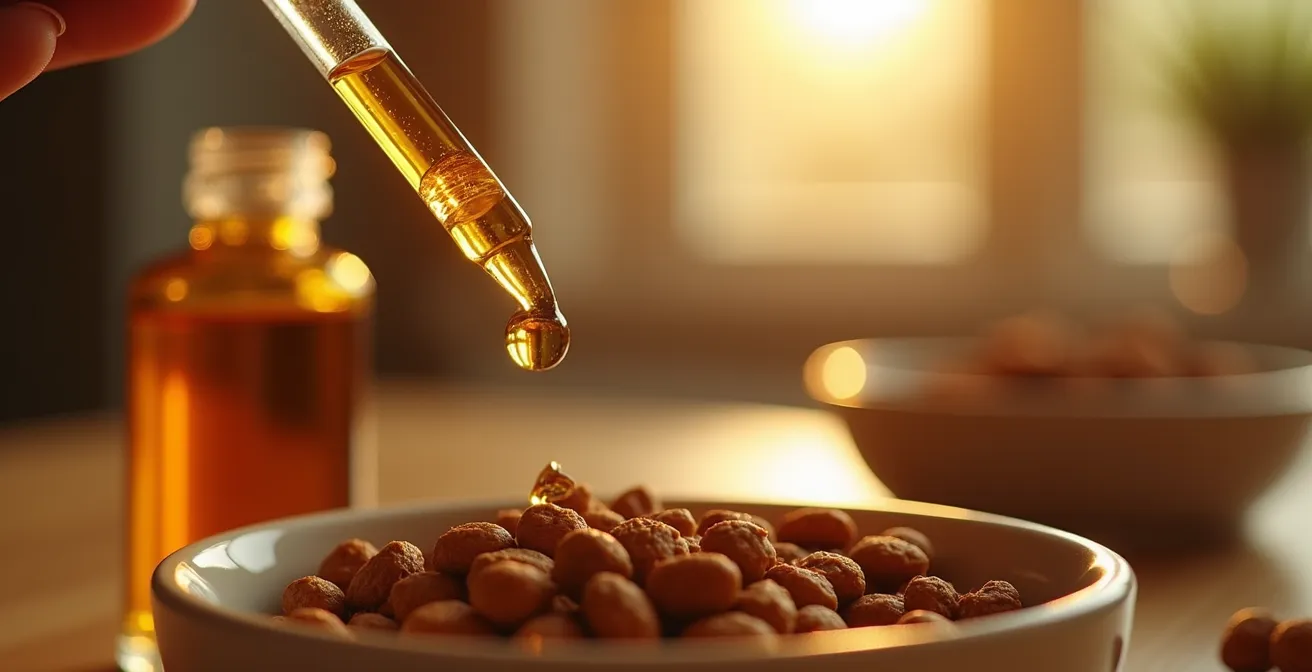
Successfully using fish oil for your pet’s itchy skin is less about the amount given and more about the *method* of delivery to maximize benefits and prevent serious side effects like pancreatitis.
- The type of omega-3 (marine-sourced EPA/DHA), its purity (low heavy metals), and its freshness (non-rancid) are critical for safety and efficacy.
- Splitting the total daily dose between two meals is the single most effective strategy to reduce the ‘fat bolus’ that can trigger pancreatitis.
Recommendation: Always administer fish oil with food, choose a high-purity source like krill oil, and cease all supplementation two weeks before any planned surgery or dental work.
Watching a beloved pet constantly scratch, lick, and chew at their skin is a frustrating experience for any owner. The persistent discomfort, known as pruritus, can lead to hair loss, skin infections, and a miserable quality of life. In the search for natural relief, fish oil supplements, rich in omega-3 fatty acids, have become a go-to recommendation. The promise is alluring: a simple oil that can calm the fires of inflammation and restore skin health. However, this seemingly simple solution is fraught with hidden complexities and significant risks if approached incorrectly.
The common advice to “just add some fish oil to their food” overlooks critical details. Many owners reach for plant-based oils, not realizing they are biochemically useless for pets. Others unknowingly administer rancid, toxic oil, or give a dose so high it triggers a dangerous inflammatory cascade in the pancreas. Pancreatitis is a severe, painful, and potentially fatal condition, often characterized by vomiting, lethargy, and severe abdominal pain. The very supplement intended to reduce inflammation can, through improper use, cause a life-threatening inflammatory crisis.
The key to unlocking the benefits of omega-3s is not found on the generic dosage chart on a supplement bottle. The true solution lies in a more precise, medical approach. This involves understanding the fundamental differences between omega-3 sources, recognizing the signs of product degradation, and, most importantly, implementing a strategic administration protocol that enhances absorption while actively minimizing the risk of pancreatitis. This guide moves beyond simplistic advice to provide a veterinary-level framework for using fish oil effectively and, above all, safely.
This article will provide a detailed roadmap for safely leveraging omega-3s. We will explore the science behind different oil types, identify key safety checkpoints for your supplement, and outline precise protocols for administration and pre-surgical planning. By the end, you will have the knowledge to make informed, safe decisions for your pet’s health.
Summary: A Precision Guide to Omega-3 Supplementation for Pet Health
- Why buying flaxseed oil is useless for your cat’s anti-inflammatory needs?
- How to tell if your fish oil pump has gone rancid and toxic?
- Wild Salmon vs Krill Oil: Which has fewer heavy metals and toxins?
- The Pre-Surgery Error: Why you must stop fish oil 2 weeks before dental work?
- When to administer the oil: With food or empty stomach for best uptake?
- Glucosamine vs Adequan Injections: Which actually rebuilds cartilage?
- Kangaroo or Cricket: Which novel protein is best for severe allergies?
- How to Protect Your Large Breed Puppy’s Joints Before Arthritis Even Starts?
Why buying flaxseed oil is useless for your cat’s anti-inflammatory needs?
In the quest for a natural anti-inflammatory, many pet owners are drawn to flaxseed oil, often marketed as a plant-based source of omega-3s. While it is rich in an omega-3 fatty acid called alpha-linolenic acid (ALA), this is where its utility for cats (and to a large extent, dogs) ends. The anti-inflammatory power of omega-3s comes from two specific long-chain fatty acids: eicosapentaenoic acid (EPA) and docosahexaenoic acid (DHA). In humans, the body can convert some ALA into EPA and DHA. However, pets are a different story.
Cats, as obligate carnivores, have evolved to get their EPA and DHA directly from their prey. Consequently, they have a profound metabolic block in this conversion pathway. The critical enzyme required for this process, delta-6 desaturase, is virtually inactive in felines. This means that no matter how much flaxseed oil you give a cat, their body simply cannot produce the anti-inflammatory compounds it needs from that source. Recent research confirms this minimal conversion rate of less than 4%, rendering flaxseed oil ineffective for therapeutic purposes.
For cats, providing ALA is like giving a construction crew a pile of raw timber when they need pre-fabricated walls. The necessary machinery to process the raw material is missing. To achieve any meaningful anti-inflammatory effect, you must provide the “pre-fabricated” components directly. This means sourcing omega-3s from marine life, such as fish or krill oil, which are naturally rich in the bioavailable EPA and DHA that your pet’s body can use immediately to combat inflammation associated with itchy skin, arthritis, and other inflammatory conditions. Choosing a plant-based oil is not just a less effective choice; for a cat, it is a futile one.
How to tell if your fish oil pump has gone rancid and toxic?
The potent anti-inflammatory benefits of fish oil are entirely dependent on its chemical stability. The very polyunsaturated fats (PUFAs) that make it so beneficial also make it incredibly fragile and susceptible to oxidation—the process of going rancid. When fish oil oxidizes, it not only loses all therapeutic value but also transforms into a pro-inflammatory, toxic substance that can cause cell damage, contribute to vitamin deficiencies, and lead to serious health issues, including organ damage and promoting the very inflammation you’re trying to treat.
One of the first signs of rancidity is the smell. A fresh, high-quality fish oil should have a mild, clean ocean scent. If your oil smells intensely “fishy,” acrid, or like stale cooking oil, it has likely oxidized. However, smell can be deceptive, especially with flavored products. A simple visual home test can offer a clue. You can place a drop of the oil on a clean, white paper towel.
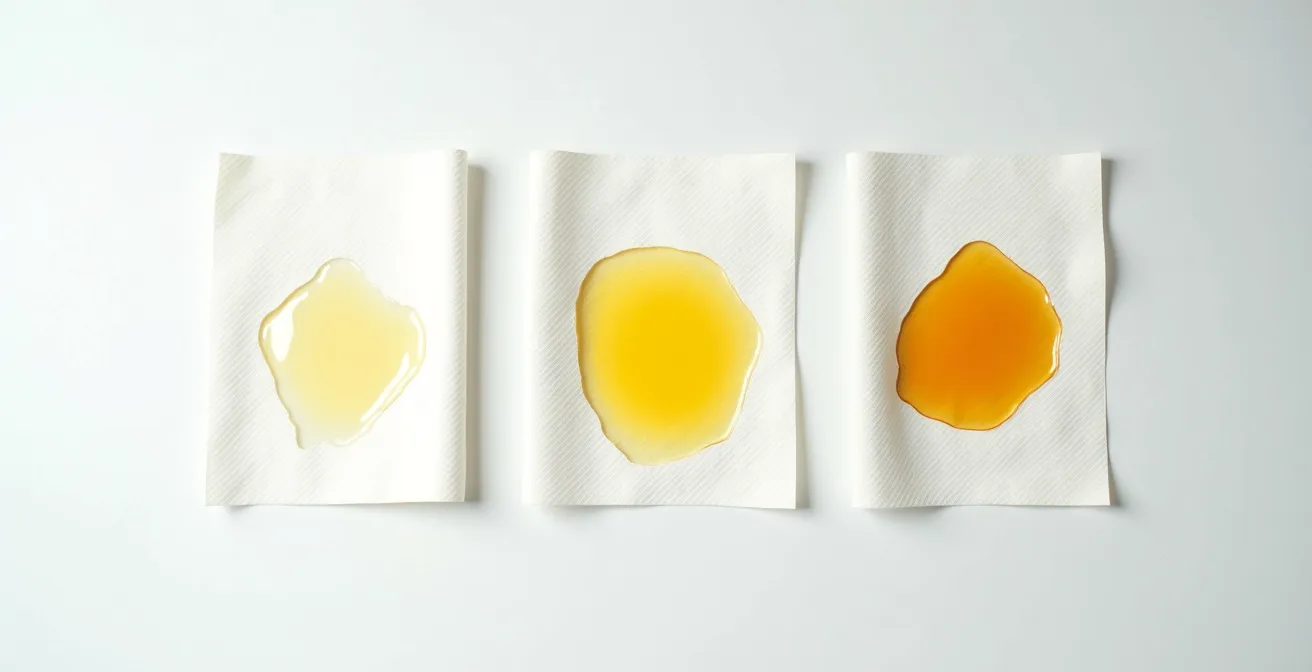
As shown in the test above, a fresh, pure oil will appear clear or very pale yellow and absorb without leaving a dark, sticky residue. An oxidized oil will often be a darker amber color and may feel tacky. While this is not a definitive laboratory test, it’s a useful screening tool. If the oil smells off or looks dark, it is safest to discard it immediately. The risk of giving your pet a pro-inflammatory, toxic substance far outweighs any potential benefit.
For guaranteed quality, look for brands that voluntarily test for oxidation and provide a certificate of analysis. They measure specific markers like Peroxide Value (PV), which indicates early oxidation, and Anisidine Value (AV), which measures secondary breakdown products. A combined TOTOX score gives an overall picture of freshness. Always buy from reputable brands, preferably in opaque, airtight pump bottles or capsules to minimize exposure to light, heat, and air—the three main drivers of oxidation.
Wild Salmon vs Krill Oil: Which has fewer heavy metals and toxins?
Once you’ve committed to a marine-based omega-3, the next critical decision is the source. Salmon oil is a popular choice, but its position higher up the marine food chain presents a significant safety concern: bioaccumulation. Heavy metals like mercury, as well as industrial toxins like PCBs and dioxins, become more concentrated at each step of the food chain. Salmon are predatory fish with a relatively long lifespan, consuming many smaller fish and accumulating their toxins over time.
In stark contrast, krill are tiny, shrimp-like crustaceans that sit near the very bottom of the food chain. They feed primarily on phytoplankton and have a short lifespan of about two years. This fundamental biological difference means krill have drastically less time and opportunity to accumulate environmental contaminants. As a result, studies consistently show that oil derived from Antarctic krill has significantly lower levels of heavy metals and other toxins. In many cases, mercury and PCB levels in krill oil are 10 to 50 times lower than those found in oils from predatory fish like salmon, making it an inherently purer and safer choice for long-term supplementation.
Beyond purity, krill oil offers a distinct advantage in bioavailability. A significant portion of its omega-3s are bound in a phospholipid structure, the same form used to build cell membranes in your pet’s body. This makes them more water-soluble and allows for more efficient absorption and utilization. In contrast, the omega-3s in fish oil are in a triglyceride form, which requires more processing by the digestive system. This superior phospholipid-bound bioavailability means a smaller dose of krill oil can often achieve the same or better therapeutic effect. Furthermore, krill oil naturally contains astaxanthin, a powerful antioxidant that not only provides its own health benefits but also helps protect the fragile omega-3s from oxidation, enhancing the oil’s stability and safety.
The Pre-Surgery Error: Why you must stop fish oil 2 weeks before dental work?
The same mechanism that makes EPA so effective at reducing inflammation—its ability to modulate inflammatory pathways—also has a significant and potentially dangerous side effect: it impairs blood clotting. This is a critical piece of information that is often overlooked by pet owners and even some veterinary professionals. Any pet undergoing a planned procedure that involves bleeding, including routine dental cleanings with extractions, spays, neuters, or lump removals, must have fish oil supplementation discontinued well in advance.
The reason for this is highly specific. As a leading veterinary nutritionist, Dr. Catherine Lenox, DVM, DACVN, explains, the effect is directly tied to platelet function. Platelets are the tiny blood cells responsible for forming the initial plug to stop bleeding at a wound site. Their ability to stick together is crucial. Dr. Lenox clarifies the mechanism:
Omega-3s (specifically EPA) interfere with the production of thromboxane A2, a lipid that causes platelets to become ‘sticky’ and form a clot.
– Dr. Catherine Lenox, DVM, DACVN, VetGirl Veterinary CE Blog
By reducing the “stickiness” of platelets, EPA essentially acts as a natural blood thinner. While this can be beneficial for certain cardiovascular conditions, it creates a significant risk of uncontrolled bleeding during and after surgery. This can complicate the procedure, prolong anesthesia time, and lead to life-threatening hemorrhage. The effect is not immediate and takes time to reverse as the body generates new platelets. Therefore, a strict withdrawal period is non-negotiable for patient safety.
Action Plan: Pre-Surgical Fish Oil Protocol
- 14 days before surgery: Discontinue all fish oil and omega-3 supplements completely. This provides enough time for the body to produce a new population of fully functional platelets.
- Day of surgery: Be explicit with the veterinary team. Inform them that your pet was on fish oil and confirm the exact date you discontinued it. This information is vital for their anesthetic and surgical planning.
- 7-10 days post-surgery: Do not restart the oil immediately. Consult with your veterinarian. If the incision is healing well with no signs of oozing or bruising, they may approve reintroducing it at a low dose (e.g., 25% of the original).
- 14-21 days post-surgery: If healing is progressing normally and has been confirmed by your vet, you can typically return to the full therapeutic dose. Never restart without veterinary clearance.
When to administer the oil: With food or empty stomach for best uptake?
The question of timing is crucial not only for maximizing the benefits of fish oil but also for minimizing its most significant risk: pancreatitis. The answer is unequivocal: fish oil must always be administered with a full meal, never on an empty stomach. Omega-3s are fat-soluble, meaning their absorption from the intestine is entirely dependent on the presence of dietary fat. Giving the oil with food stimulates the release of bile and digestive enzymes necessary to emulsify and absorb the fatty acids effectively.
More importantly, administering a concentrated dose of fat (the fish oil) on an empty stomach delivers a large, sudden “fat bolus” to the digestive system. This can overwhelm the pancreas, forcing it to release a massive surge of digestive enzymes. This event is a primary trigger for acute pancreatitis, a severe and painful inflammation of the organ. Giving the oil with food allows it to mix with the meal’s contents, slowing its entry into the small intestine and creating a much more gradual and manageable digestive load for the pancreas.

To further enhance safety, especially for breeds prone to pancreatitis (like Miniature Schnauzers) or pets with a history of GI sensitivity, the total daily dose should be split. A landmark dosing protocol from Colorado State University demonstrated that dividing the daily omega-3 dose between two meals reduces the fat bolus effect by 60%. According to their study on split-dose strategy, dogs receiving their total dose split into morning and evening feedings showed significantly better tolerance and fewer gastrointestinal side effects compared to those getting the same total amount in a single dose. This simple strategy of “split and mix” is the most powerful tool an owner has to prevent this serious complication while ensuring maximum therapeutic uptake.
Glucosamine vs Adequan Injections: Which actually rebuilds cartilage?
When joint health becomes a concern, many owners turn to glucosamine supplements, often in combination with chondroitin. These products are ubiquitous and marketed as a way to support cartilage. However, it’s crucial to understand what they are and what they are not. Glucosamine is a nutraceutical, legally classified as a food supplement. It provides the body with the basic “building blocks” of cartilage. The theory is that by supplying these raw materials, the body can repair and maintain its joints. However, the clinical evidence for its effectiveness is mixed, and a major limiting factor is its poor oral bioavailability, with estimates suggesting only 10-12% of an oral dose is actually absorbed.
Adequan® (polysulfated glycosaminoglycan) operates in a completely different league. It is not a supplement; it is an FDA-approved prescription drug, specifically a Disease-Modifying Osteoarthritis Drug (DMOAD). Its mechanism is not just to supply building blocks but to actively intervene in the disease process. Adequan works by inhibiting the destructive enzymes within the joint that are responsible for breaking down cartilage. It also stimulates the production of new hyaluronic acid, which improves the quality of joint fluid. Its administration via intramuscular injection bypasses the digestive system entirely, resulting in over 90% bioavailability, ensuring the drug reaches the joint tissues in therapeutic concentrations.
| Factor | Glucosamine | Adequan |
|---|---|---|
| Legal Classification | Nutraceutical supplement | FDA-approved DMOAD drug |
| Bioavailability | 10-12% oral absorption | 90%+ via IM injection |
| Mechanism | Provides building blocks | Inhibits cartilage-destroying enzymes |
| Evidence Level | Mixed clinical results | Proven efficacy in controlled trials |
The question of which one “rebuilds” cartilage is nuanced. Glucosamine provides materials, but its ability to stimulate meaningful repair is debated. Adequan, by halting the destructive process, creates an environment where the body’s natural, albeit limited, repair mechanisms can function. It is proven to preserve existing cartilage. In fact, FDA trials for Adequan demonstrated a significant disease-modifying effect, showing it can halt the progression of joint degeneration. While glucosamine may play a supportive role, Adequan is the only one of the two with proven, potent, disease-modifying action that directly protects cartilage from destruction.
Kangaroo or Cricket: Which novel protein is best for severe allergies?
For pets suffering from severe food allergies, a novel protein diet is often the cornerstone of management. The goal is to introduce a protein source the pet’s immune system has never encountered before, thereby preventing an allergic reaction. In recent years, sustainable options like cricket protein have gained attention. However, for a severely allergic dog, particularly one with multiple sensitivities, cricket protein carries a significant and often overlooked risk: antigenic cross-reactivity.
Insects like crickets are arthropods, and their exoskeletons contain a substance called chitin. This same compound is found in the shells of crustaceans (like shrimp) and in common environmental allergens like dust mites and cockroaches. A dog whose immune system is already sensitized to any of these common allergens may mistakenly identify cricket protein as a threat, triggering the very allergic reaction you are trying to avoid. A clinical analysis revealed that a staggering 31% of dogs with known allergies to shellfish or dust mites also reacted to cricket protein. This makes it a gamble for highly sensitive pets.
| Criteria | Kangaroo | Cricket |
|---|---|---|
| Cross-reactivity risk | Very low (less than 2%) | Moderate (31% with shellfish/mite allergies) |
| Digestibility | Excellent (94%) | Good (76-82%) |
| Chitin content | None | 5-7% (potential GI irritant) |
Kangaroo, on the other hand, stands out as a superior choice for these challenging cases. As a mammalian protein source from a geographically isolated continent, it has an extremely low probability of cross-reacting with common food allergens like chicken, beef, or dairy. The same clinical analysis showed a cross-reactivity risk of less than 2% with kangaroo protein. Furthermore, it is highly digestible (over 94%) and provides a complete amino acid profile similar to beef. While cricket is a sustainable protein, the potential for immune system confusion and the presence of chitin—which can also act as a gastrointestinal irritant in some dogs—makes kangaroo the far safer and more reliable choice for elimination trials and long-term management of severe food allergies.
Key Takeaways
- The anti-inflammatory benefits of omega-3s come from EPA and DHA, which are found in marine sources, not plant-based oils like flaxseed.
- Rancid fish oil is toxic. Check for a strong “fishy” odor or dark color, and always store it away from heat, light, and air.
- Splitting the daily dose between two meals given with food is the most effective way to improve absorption and prevent pancreatitis.
How to Protect Your Large Breed Puppy’s Joints Before Arthritis Even Starts?
For owners of large and giant breed puppies—such as Labradors, German Shepherds, and Great Danes—the fight against arthritis begins long before the first signs of stiffness ever appear. These breeds are genetically predisposed to developmental joint diseases like hip and elbow dysplasia, which inevitably lead to debilitating arthritis. The most critical factor in mitigating this risk is not a supplement, but rather the careful management of growth during their first 12 to 18 months of life.
The single most impactful strategy is to maintain a lean body condition. Rapid growth and excess weight place immense mechanical stress on a puppy’s soft, developing skeletal structure, causing damage to cartilage and promoting abnormal joint formation. The goal is to encourage slow, steady growth. As a powerful longitudinal study on the impact of growth rate on joint disease has shown, keeping puppies lean has a dramatic protective effect. Puppies maintained at a 25% lower body weight than their free-fed littermates had a nearly 40% reduction in the incidence of hip dysplasia. You should be able to easily feel your puppy’s ribs with light pressure, and they should have a visible waistline when viewed from above.
A comprehensive joint protection protocol involves several key pillars:
- Controlled Nutrition: Feed a high-quality, large-breed-specific puppy formula. These diets are carefully formulated with a controlled calcium level and a balanced calcium-to-phosphorus ratio (ideally 1.2:1 to 1.5:1) to support healthy bone development without accelerating it.
- Appropriate Exercise: High-impact activities like jumping from heights (e.g., out of a car), long-distance running, or repetitive, hard stops during fetch can damage a puppy’s open growth plates. A good rule of thumb is to limit structured exercise to five minutes per month of age, twice a day.
- Delayed Supplementation: While tempting, preventative joint supplements like glucosamine are generally not recommended for young, growing puppies unless prescribed by a veterinarian. The priority is a balanced diet; adding supplements can upset this delicate nutritional balance. They are more appropriate once the puppy is closer to skeletal maturity (over 6-8 months).
To effectively and safely manage your pet’s long-term health, implementing a precise, veterinarian-approved diet and supplement protocol is the essential next step.