
Contrary to popular belief, a homemade diet’s safety isn’t guaranteed by fresh ingredients but by precise biochemical formulation that prevents catastrophic, often silent, disease.
- Common recipes like “chicken and rice” create severe mineral imbalances, leading to skeletal deformities in growing animals.
- A “healthy-looking” pet can be in the early stages of organ failure due to nutrient deficiencies or excesses hidden in well-intentioned meals.
Recommendation: Shift your mindset from “cooking” to “formulating.” Before continuing any homemade diet, consult a board-certified veterinary nutritionist to perform a complete nutritional analysis.
The intention behind cooking for your pet is almost always rooted in love. You want to provide the freshest, most wholesome meal possible, free from the fillers and preservatives found in many commercial foods. You carefully select lean meats, fresh vegetables, and whole grains, believing you are offering superior nutrition. This approach, however, often overlooks a dangerous truth: nutritional science is not intuitive. A meal that looks healthy to the human eye can be a ticking time bomb of deficiencies and toxic excesses for a dog or cat.
The internet is rife with simplistic advice focusing on macronutrients—protein, fat, and carbohydrates. But the real danger lies in the micronutrients and their complex interactions. A slight imbalance in the calcium-to-phosphorus ratio, a lack of an essential amino acid like taurine, or an incorrect vitamin D level can go unnoticed for months or even years. By the time clinical signs like weakness, blindness, or seizures appear, irreversible organ damage has often occurred. This is the fundamental error of the DIY pet owner: confusing the quality of ingredients with the nutritional completeness of the final formulation.
This guide will not offer you another generic recipe. As a veterinary nutritionist, my purpose is to arm you with critical, non-negotiable scientific principles. We will move beyond the platitudes of “fresh is best” and dissect the most common, devastating formulation errors. We will examine why specific, popular homemade diet concepts are biochemically flawed and can lead to severe health consequences. The goal is to shift your perspective from that of a cook to that of a responsible formulator, ensuring the meal you serve with love truly supports a long and healthy life.
This article provides a detailed breakdown of the most critical nutritional considerations. The following sections will equip you with the knowledge to identify potential dangers in your pet’s diet and understand the scientific reasoning behind veterinary nutritional guidelines.
Summary: A Scientific Guide to Homemade Pet Diet Safety
- Why feeding just meat and rice causes skeletal deformities in puppies?
- How to rotate proteins without causing digestive upset or diarrhea?
- All-Life-Stages vs Puppy Food: Which is better for a Great Dane growth curve?
- The Vegetarian Cat Error: Why plant-based diets are fatal for felines
- When to feed a deep-chested dog to minimize the risk of bloat (GDV)?
- Grain-Free vs Grain-Inclusive: Which is linked to DCM heart issues?
- Why postponing blood work for a “healthy” pet hides stage 1 kidney failure?
- Why “Fresh Meat” as the First Ingredient Can Be Misleading in Dry Kibble?
Why feeding just meat and rice causes skeletal deformities in puppies?
One of the most pervasive and dangerous myths in homemade pet nutrition is that a simple diet of meat and a carbohydrate source like rice is sufficient for a growing puppy. This could not be further from the truth. Such a diet is catastrophically deficient in essential minerals, primarily calcium. Meat is extremely high in phosphorus and very low in calcium, creating a severely imbalanced biochemical ratio. For healthy bone development, a puppy’s diet must maintain a strict calcium-to-phosphorus ratio between 1:1 and 2:1. In a meat-only diet, this ratio is dangerously skewed; research shows meat-only diets fall below a 0.1:1 calcium-phosphorus ratio.
When dietary calcium is insufficient, the body is forced to maintain blood calcium levels by any means necessary for critical functions like muscle contraction and nerve transmission. It achieves this by activating hormones that pull calcium directly from the bones. This process, known as secondary nutritional hyperparathyroidism, effectively cannibalizes the skeleton. The puppy’s bones become soft, weak, and prone to spontaneous fractures, a condition known as “rubber jaw syndrome” in severe cases. This leads to irreversible skeletal deformities, painful joints, and a lifetime of orthopedic problems.
The visual evidence of this condition is stark, highlighting the critical difference between healthy and deficient bone structure. A well-formulated diet provides the building blocks for dense, resilient bones capable of supporting a growing body.
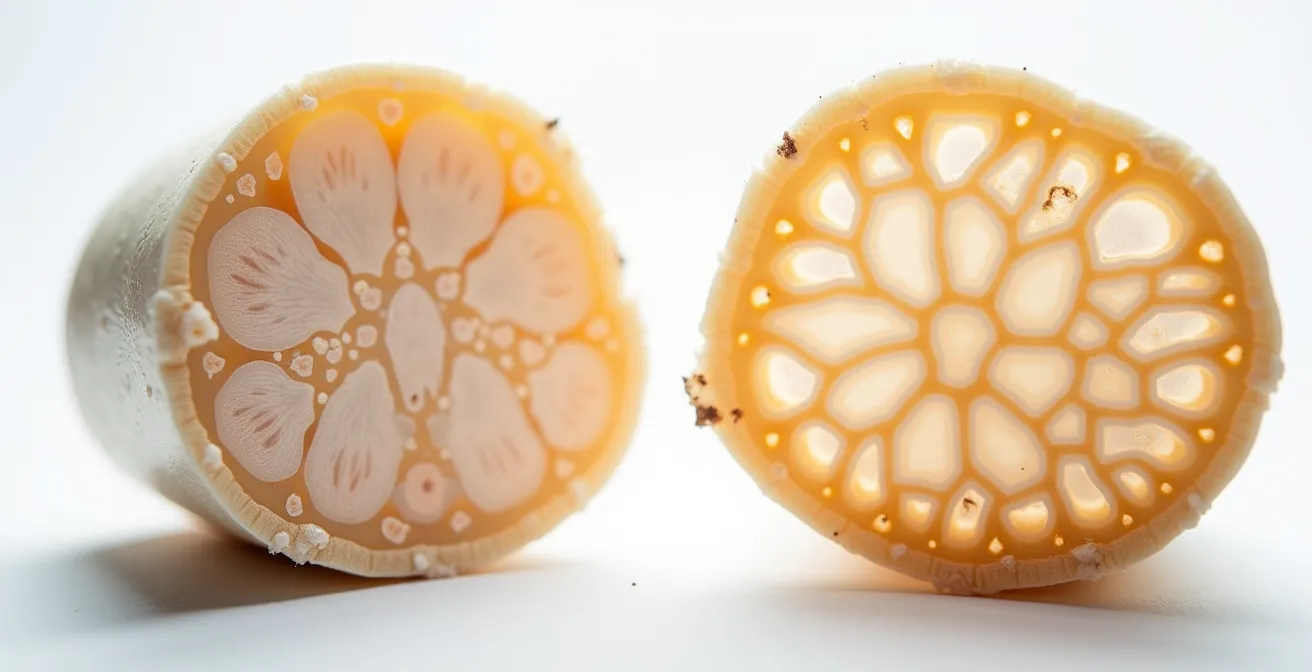
As the illustration demonstrates, the difference is not subtle. On the left, a healthy bone is dense and robust. On the right, a calcium-deficient bone is porous and fragile. This is not a matter of ingredient “quality”—even the most expensive organic chicken will cause this issue. It is a failure of nutrient formulation. Providing a balanced diet is a scientific necessity, not a culinary preference, especially during the critical growth phases of a puppy’s life.
How to rotate proteins without causing digestive upset or diarrhea?
Rotating protein sources in a pet’s diet can be beneficial, providing a wider range of amino acids and preventing the development of food sensitivities. However, an abrupt switch from one protein to another is a common cause of acute gastrointestinal (GI) upset, leading to vomiting, gas, and diarrhea. Each protein type has a unique composition that requires a specific enzymatic response from the digestive system. A sudden change overwhelms this system, resulting in poor digestion and inflammation.
The key to successful protein rotation is a gradual transition. The transition period allows the gut microbiome and digestive enzyme production to adapt slowly to the new food. The difficulty of this transition can vary depending on the proteins involved. Switching between closely related proteins, such as from chicken to turkey (both poultry), is generally easier than switching between vastly different families, like from beef to fish.
To help plan for these changes, a transition difficulty chart provides a practical guideline for how long the process might take. This data, based on veterinary experience, can help manage expectations and prevent digestive issues before they start.
| From Protein | To Protein | Difficulty Level | Transition Time |
|---|---|---|---|
| Chicken | Turkey | Easy | 5-7 days |
| Chicken | Duck | Easy | 5-7 days |
| Beef | Lamb | Moderate | 7-10 days |
| Chicken | Lamb | Difficult | 10-14 days |
| Beef | Fish | Difficult | 10-14 days |
A systematic protocol is the most effective way to manage the transition. The following steps provide a clear, phased approach to introducing a new protein source while minimizing the risk of GI upset. During this period, monitoring your pet’s stool consistency is critical. If at any point stools become loose, pause the transition for a day or two at the current ratio before proceeding.
- Day 1-2: Mix 75% of the current protein with 25% of the new protein source.
- Day 3-4: Adjust the ratio to 50% current and 50% new protein.
- Day 5-6: Shift the mixture to 25% current and 75% new protein.
- Day 7+ (or longer for difficult transitions): Complete the transition to 100% new protein source.
- Throughout the transition: Consider adding a source of soluble fiber, such as 1 teaspoon of psyllium husk or plain pumpkin puree per 20 lbs of body weight, to support stool quality.
All-Life-Stages vs Puppy Food: Which is better for a Great Dane growth curve?
The concept of an “All-Life-Stages” (ALS) food, formulated to meet the nutritional needs of animals from puppyhood to their senior years, is appealing in its simplicity. However, for large and giant-breed puppies like Great Danes, this one-size-fits-all approach can be dangerous. The nutritional requirements for controlled, healthy growth in these breeds are highly specific and differ significantly from those of a small-breed puppy or an adult dog. As veterinary nutrition guidelines state, an animal’s needs are highly dependent on its specific life stage.
Animals have different nutritional needs based on their life stage and lifestyle
– VCA Animal Hospitals, Veterinary Nutrition Guidelines
The primary danger for a Great Dane puppy on an inappropriate diet is an excessively rapid growth rate. ALS foods are required to meet the minimum nutritional needs for growth, but they may contain levels of calories, calcium, and phosphorus that are too high for a giant-breed puppy. This can fuel growth that is too fast for the skeletal system to properly develop, placing immense stress on joints and cartilage. This can lead to severe and painful developmental orthopedic diseases, such as panosteitis (inflammation of the long bones) and hypertrophic osteodystrophy (HOD).
A high-quality food formulated specifically for large-breed puppies is the superior choice. These diets are carefully calibrated to have a lower energy density to prevent excessive weight gain and a tightly controlled calcium and phosphorus content to support steady, even bone growth. The goal is not to slow growth, but to ensure the puppy reaches its genetic potential at a safe and sustainable rate. For a Great Dane, managing the growth curve is one of the most critical aspects of preventative healthcare. Sacrificing this precision for the convenience of an ALS diet is a risk that is not worth taking.
The Vegetarian Cat Error: Why plant-based diets are fatal for felines
The decision to feed a cat a vegetarian or vegan diet is perhaps the most egregious and harmful error an owner can make. This is not a matter of opinion or lifestyle choice; it is a biological imperative. Cats are obligate carnivores, meaning they are biologically required to consume animal tissue to survive and thrive. Their entire metabolic system is adapted to a meat-based diet, and they lack the ability to synthesize certain essential nutrients from plant sources.
A plant-based diet is fatally deficient in several key nutrients that are only found in animal tissues. The most critical of these is taurine, an amino acid vital for heart function, vision, and reproductive health. Unlike dogs and humans, cats cannot synthesize their own taurine and must obtain it directly from their food. A lack of taurine will unequivocally lead to a heart condition called dilated cardiomyopathy (DCM) and a form of retinal degeneration that causes irreversible blindness. Furthermore, cats also require pre-formed Vitamin A, arachidonic acid, and a higher overall protein content than omnivores, with research confirming that cats need above 26% animal protein on a dry matter basis.
The consequences of these deficiencies are not hypothetical; they are a certainty. The statement from veterinary experts on this topic is absolute: “If you don’t have enough taurine in a food formulated for your cat, it WILL get heart disease, and it WILL go blind.” Forcing a cat onto a plant-based diet is a form of slow, unintentional cruelty that stems from a fundamental misunderstanding of its biological nature.

This symbolic image illustrates the reality: a cat’s health is intrinsically linked to nutrients exclusively available from animal sources. Attempting to circumvent this biological fact through supplementation is fraught with risk and cannot replicate the complex nutrient synergy of a meat-based diet. There is no such thing as a healthy vegetarian cat.
When to feed a deep-chested dog to minimize the risk of bloat (GDV)?
Gastric Dilatation-Volvulus (GDV), commonly known as bloat, is a life-threatening emergency that primarily affects large, deep-chested breeds like Great Danes, Weimaraners, and Standard Poodles. The condition occurs when the stomach fills with gas and then twists on itself, cutting off blood supply to the stomach and spleen. Without immediate veterinary intervention, GDV is fatal. While the exact cause is multifactorial, feeding practices play a significant role in mitigating risk.
The primary goal of a GDV prevention strategy is to avoid rapid ingestion of large volumes of food and to minimize activity around mealtimes, which can contribute to stomach instability. Feeding one large meal per day is a major risk factor, as it forces the dog to eat quickly and distends the stomach significantly. Similarly, vigorous exercise before or after a meal can disrupt normal gastric motility and increase the likelihood of the stomach twisting.
Implementing a strict feeding schedule and management routine is the most effective preventative measure an owner can take. This involves not only *what* you feed, but *how* and *when* you feed. The following checklist outlines the essential steps for a GDV-aware feeding protocol.
Action Plan: GDV Prevention Feeding Schedule
- Divide Meals: Feed 2-3 smaller meals per day instead of one large meal to reduce stomach volume at any given time.
- Pre-Meal Calm: Prohibit vigorous exercise, such as running or rough play, for 1-2 hours before feeding.
- Post-Meal Rest: Enforce a strict rest period with no vigorous exercise for 2-3 hours after feeding to allow for calm digestion.
- Separate Water: Keep fresh water available at all times, but avoid adding large amounts of water directly to dry kibble, which can increase fermentation.
- Create a Calm Environment: Feed your dog in a quiet area, away from other pets or household chaos, to prevent stress and rapid eating.
For some giant breeds, using an elevated feeding station may be recommended to promote a more comfortable eating posture, though its role in GDV prevention is still debated. The most critical factors remain meal size, frequency, and activity management. Adherence to this protocol is a non-negotiable part of responsible ownership for any at-risk breed.
Grain-Free vs Grain-Inclusive: Which is linked to DCM heart issues?
For years, grain-free diets were marketed as a superior, more “ancestral” option for dogs. However, in 2018, the U.S. Food and Drug Administration (FDA) began investigating a potential link between these diets and a serious heart condition called non-hereditary dilated cardiomyopathy (DCM) in dogs. DCM is a disease of the heart muscle that results in an enlarged heart and decreased pumping ability, which can lead to congestive heart failure and death.
The investigation did not find fault with the absence of grains itself. Instead, the focus shifted to what was being used to replace them. The FDA investigation shows high concentrations of peas, lentils, and potatoes and other legume seeds (pulses) were being used as primary ingredients in the implicated diets. It is hypothesized that these ingredients may interfere with the absorption or metabolism of taurine, an amino acid crucial for heart health, or that they may be deficient in other key nutrients. The exact mechanism remains under investigation, but the correlation is strong enough to warrant extreme caution.
Veterinary cardiologists have identified a pattern in the reported cases, leading to the coining of an acronym for the most commonly associated diets. This helps owners identify potentially problematic foods.
BEG diets – Boutique companies, Exotic ingredients, Grain-free – are most frequently associated with DCM cases
– Veterinary Cardiology Research, DCM Investigation Report
This does not mean all grain-free diets are dangerous or all grain-inclusive diets are safe. The critical factor is formulation by qualified experts. Diets from large, well-established companies with board-certified veterinary nutritionists on staff, who conduct extensive research and feeding trials (like those that meet WSAVA guidelines), are considered the safest choice. Unless a dog has a medically diagnosed grain allergy—which is very rare—there is no scientific reason to avoid grains. Given the potential link to a fatal heart condition, the “grain-free” trend should be abandoned in favor of diets with a proven track record of safety and nutritional adequacy.
Why postponing blood work for a “healthy” pet hides stage 1 kidney failure?
One of the most dangerous assumptions a pet owner can make is that a pet who “looks healthy” is truly healthy on the inside. Many chronic diseases, particularly chronic kidney disease (CKD), develop silently over months or years. By the time external symptoms like increased thirst, weight loss, or vomiting appear, significant and irreversible organ damage has already occurred. This is especially true for kidney function.
Traditional blood tests for kidney health measure values like Blood Urea Nitrogen (BUN) and creatinine. These are waste products that the kidneys are supposed to filter from the blood. However, these markers only begin to rise above the normal range after extensive damage is done. In fact, veterinary studies demonstrate that up to 75% of kidney function must be lost before BUN and creatinine levels become elevated. Relying solely on these tests and a visual assessment means you are only detecting the disease in its late stages (Stage 3 or 4), when treatment options are limited to palliative care.
Fortunately, a more advanced diagnostic tool now exists: the SDMA (Symmetric Dimethylarginine) test. SDMA is a biomarker that is released into the bloodstream as the kidneys function, and it elevates much earlier in the disease process—when as little as 25-40% of function is lost. This allows for the detection of Stage 1 or 2 kidney disease, often years before traditional markers change or clinical signs appear.
The following table clearly illustrates the critical difference in detection thresholds between these tests, highlighting why proactive screening with SDMA is essential for long-term health management.
| Test Type | Detection Threshold | Stage Detected | Intervention Window |
|---|---|---|---|
| BUN/Creatinine | 75% function loss | Stage 3-4 | Limited |
| SDMA Test | 25-40% function loss | Stage 1-2 | Years earlier |
| Urinalysis | Variable | All stages | Supportive data |
Early detection through an SDMA test opens a wide window for intervention. Dietary changes, such as a therapeutic renal diet, and other medical management can significantly slow the progression of CKD, adding years of quality life for the pet. Forgoing annual wellness blood work, including an SDMA test, in a “healthy” adult or senior pet is a gamble against a silent disease.
Key Takeaways
- Nutritional balance is a science of precise biochemical ratios (like calcium:phosphorus), not just a mix of “fresh” ingredients.
- A pet’s nutritional needs are non-negotiable and change drastically based on species (cat vs. dog), life stage (puppy vs. adult), and size (Great Dane vs. Chihuahua).
- Proactive health screening with modern tests like SDMA is critical, as many diet-related diseases remain hidden until irreversible damage has occurred.
Why “Fresh Meat” as the First Ingredient Can Be Misleading in Dry Kibble?
Pet food marketing heavily promotes the idea that “real, fresh meat” as the first ingredient is the hallmark of a high-quality food. While it sounds appealing, this can be a deceptive practice due to a concept known as pre- and post-extrusion weight. Pet food ingredients are listed on the label by weight *before* the cooking process. This is a critical distinction.
The issue lies in water content. According to pet food analysis, fresh chicken contains approximately 75% water. In contrast, a rendered protein source like “chicken meal” has already had most of its water and fat removed, leaving a highly concentrated protein powder that contains only about 10% moisture. During the extrusion process—the high-heat, high-pressure cooking that creates kibble—most of that 75% water from the fresh meat evaporates.
As a result, an ingredient that was heaviest before cooking (fresh chicken) becomes much lighter after. If the ingredient list shows “Chicken, Corn, Chicken By-Product Meal,” it is highly likely that after cooking, the corn is actually the most plentiful ingredient in the final product. This practice, sometimes called “ingredient splitting,” allows manufacturers to list a desirable ingredient first while the bulk of the food is actually composed of less expensive carbohydrates. A more honest label would feature a high-quality “meal” as the first or second ingredient, as it provides a more accurate representation of the final protein content.
To become a more savvy consumer, you can learn to “reverse engineer” an ingredient label to better estimate the true composition of the food. This involves looking at the first five ingredients as a group and accounting for water loss.
- Examine the first 5 ingredients: This group represents the bulk of the food’s formulation.
- Identify fresh meat: If the first ingredient is a fresh meat (e.g., “Chicken,” “Beef,” “Deboned Salmon”), be skeptical.
- Count the following carbohydrates: Note how many carbohydrate sources (e.g., “peas,” “potatoes,” “corn gluten meal”) appear directly after the fresh meat and before any “meal” ingredient.
- Estimate the true dominant ingredient: If two or more carbohydrate sources follow the fresh meat, it is almost certain that carbohydrates, not protein, are the primary component of the finished kibble.
- Look for protein “meals”: A high placement of a named “meal” (e.g., “Chicken Meal,” “Lamb Meal”) is a better indicator of high protein content in the final product.
Frequently Asked Questions About Homemade Pet Nutrition
Should I soak dry kibble before feeding?
Avoid adding large amounts of water directly to kibble as this increases stomach volume and fermentation. Provide water separately.
How does stress affect bloat risk?
Stress hormones like cortisol negatively impact gastric motility. Always feed in a calm environment.
What time of day is best for feeding?
Feed when your household is quietest, typically morning and early evening, avoiding peak activity times.
Ultimately, ensuring the long-term health of a pet on a homemade diet is not a hobby; it is a significant scientific undertaking. The evidence is clear: well-intentioned but improperly formulated diets cause real, preventable harm. This is not a failure of love, but a failure of knowledge. The path to a truly balanced diet requires humility and a deep respect for veterinary science. The only way to guarantee nutritional completeness and safety is to work directly with an expert. For any owner serious about home-cooking for their pet, the next and most critical step is to schedule a consultation with a board-certified veterinary nutritionist to have your current recipe professionally analyzed or to have a custom, balanced recipe formulated for your pet’s specific needs.