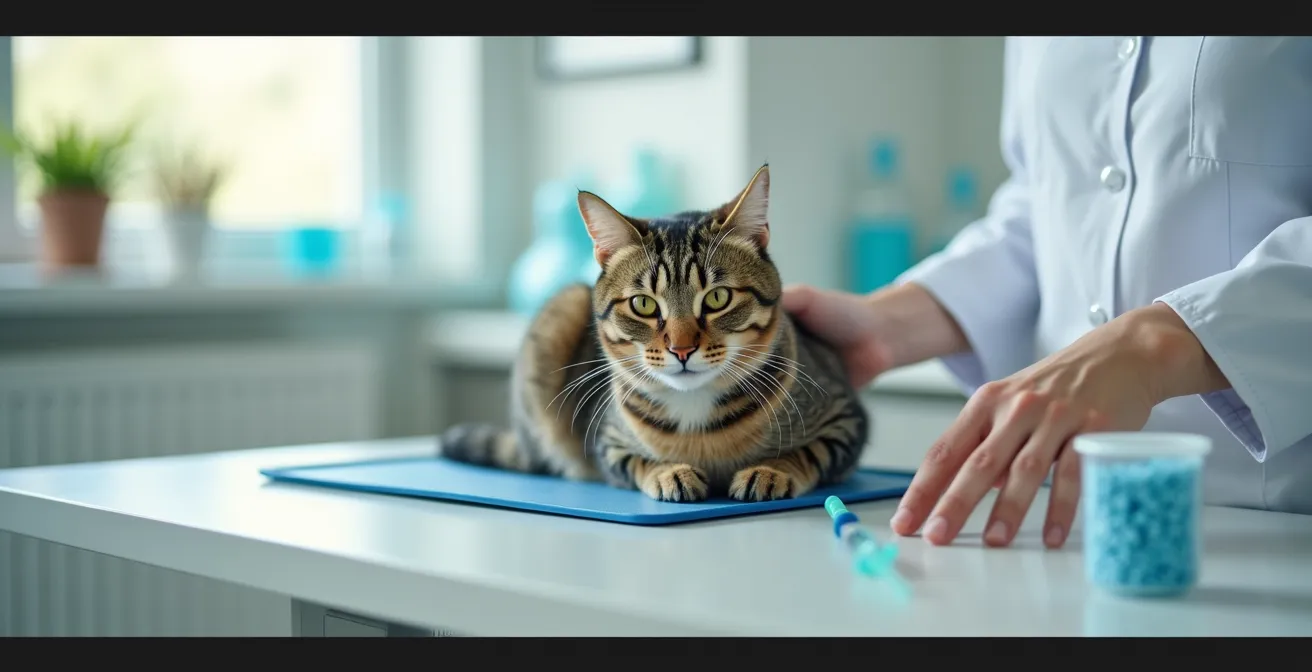
The dreaded request for a urine sample doesn’t have to end in a costly, stressful vet visit for a needle poke (cystocentesis).
- You can become a diagnostic partner by learning low-stress, at-home collection techniques that provide a “good enough” sample for initial screening.
- Understanding the “why” behind collection methods helps prevent contamination, which avoids false diagnoses and unnecessary antibiotic treatments.
Recommendation: Start by setting up a clean litter box with non-absorbent beads or a dedicated collection kit before your pet’s next vet visit to be prepared.
Your veterinarian utters the words every pet owner dreads: “I’ll need you to bring in a urine sample.” Immediately, your mind races. You picture yourself chasing your dog around the yard with a ladle or trying to slide a saucer under a squatting cat. It feels awkward, impossible, and messy. The common advice to “just catch it mid-stream” is profoundly unhelpful, and the alternative—having the vet perform a cystocentesis (drawing urine directly from the bladder with a needle)—can be stressful for your pet and add a significant fee to your bill.
This is a major hurdle for many owners, especially those on a tight budget who are trying to be proactive about their pet’s health. The frustration often leads to giving up, potentially allowing a minor issue to become a major, expensive emergency. But what if there was a different approach? What if the goal wasn’t a perfectly sterile, lab-grade sample, but a “good enough” sample collected with minimal stress and cost, turning you into a key diagnostic partner for your vet?
The secret lies in understanding the veterinary science behind the collection process. It’s not just about catching the liquid; it’s about contamination control, observation, and recognizing the subtle signs that differentiate a simple urinary tract infection from something far more serious. By mastering a few practical, vet-tech-approved techniques, you can provide valuable information that guides diagnosis, saves money, and protects your pet’s well-being.
This guide will walk you through the entire process from a practical, money-saving perspective. We’ll explore how to interpret your pet’s urinary signs correctly, the best tools for the job, how to manage urinary health through diet and hydration, and crucially, how to recognize a true emergency. By understanding these principles, you’ll not only save on vet bills but also build a deeper, more observant relationship with your pet.
Contents: A Practical Guide to At-Home Urinalysis
- Why frequent urination doesn’t always mean infection (it could be stones)?
- How to adjust urine pH through diet to dissolve struvite crystals?
- Clumping vs Crystal Litter: Which helps monitor urinary output better?
- The “Clean Litter” Rule: Why a dirty box triggers stress cystitis in cats?
- When to rush to the ER: The difference between straining and blockage
- Why cats prefer moving water over stagnant bowl water biologically?
- The Permethrin Error: Why using dog flea meds on cats is fatal within hours?
- Why Spending on Preventive Veterinary Medicine Saves You $2,000 in Long-Term Emergency Costs?
Why frequent urination doesn’t always mean infection (it could be stones)?
One of the most common mistakes owners make is assuming that frequent, strained, or bloody urination automatically equals a urinary tract infection (UTI). While a UTI is a possibility, these symptoms are classic signs for at least three distinct conditions: bacterial infection, bladder stones (uroliths), and feline idiopathic cystitis (FIC), which is inflammation from stress. Each requires a completely different treatment plan, and getting it wrong can prolong your pet’s suffering and cost you more in the long run. This is why a proper diagnosis is not a luxury; it’s a necessity. A simple visual inspection of the symptoms is not enough, as a urinalysis is essential for proper diagnosis since three different conditions can present with identical symptoms.
This is where you, as a diagnostic partner, come in. Before you even collect the sample, your observations are invaluable. Is your pet producing any urine when they strain, or are the attempts completely non-productive? Is the blood bright red (indicating active inflammation) or dark and brown (suggesting older bleeding)? Did these symptoms appear after a stressful event, like a new pet in the house or a change in routine? These details provide crucial context for your veterinarian.
A true UTI is caused by bacteria and requires antibiotics. Bladder stones, like struvite or calcium oxalate crystals, may require a special diet or even surgery. Stress-induced cystitis, particularly common in cats, requires environmental enrichment and stress reduction, not antibiotics. Giving antibiotics for a sterile, stress-related condition is not only ineffective but contributes to antibiotic resistance. A urinalysis is the only way a vet can look under a microscope to see the tell-tale signs: bacteria, white blood cells (inflammation), or the specific crystal shapes that confirm stones. Without it, treatment is just a guess.
How to adjust urine pH through diet to dissolve struvite crystals?
If your veterinarian’s urinalysis confirms the presence of struvite crystals, the good news is that these can often be managed or even dissolved through diet. Struvite crystals form in alkaline urine (high pH). The strategy, therefore, is to feed a prescription diet specifically formulated to make the urine more acidic (lower pH). This acidic environment prevents new crystals from forming and can slowly dissolve existing ones, potentially avoiding the need for surgery. This is a powerful, non-invasive treatment, but it is not a DIY project.
While the goal is to acidify the urine, over-acidification is a serious risk. As one problem is solved, another can be created. This is a delicate balancing act, and it’s why professional guidance is critical. While acidifying diets effectively dissolve struvite crystals, they can paradoxically promote the formation of calcium oxalate stones, which cannot be dissolved medically and often require surgical removal. This is a classic example of why ongoing monitoring is essential during any dietary therapy. Regular urinalysis checks allow your vet to ensure the pH is in the target range and to screen for any new, unintended crystal types.

Your vet will recommend a specific therapeutic diet and a monitoring schedule. This typically involves re-checking a urine sample a few weeks after starting the new food to confirm the pH is shifting correctly. Home monitoring with pH strips can be a useful tool between vet visits, but they should not replace a full urinalysis. A change in diet is a medical treatment, and as with any treatment, it requires professional supervision to be both safe and effective. While veterinary monitoring is crucial as normal urine pH ranges from mildly acidic to mildly alkaline, small changes can have big consequences.
Clumping vs Crystal Litter: Which helps monitor urinary output better?
For cat owners, the litter box is a daily diagnostic tool, and your choice of litter can significantly impact your ability to monitor urinary health. While your first priority for sample collection is using a non-absorbent material, your day-to-day litter choice matters for long-term observation. Both clumping and crystal litters offer unique advantages for monitoring urine output, volume, and frequency.
Clumping clay litter is excellent for monitoring the volume of urination. The size of the clump gives you a tangible, visual baseline. A sudden shift from large, solid clumps to numerous small, “crumbly” clumps can be an early warning sign of a UTI or other bladder irritation. The cat is straining to go frequently but only passing small amounts. Crystal (silica gel) litter, on the other hand, often excels at indicating chemical changes. Some brands incorporate pH indicators that change color to alert you to abnormalities, providing an early warning system before clinical signs even appear. However, they are less effective at showing the precise volume of each urination.
The ideal system combines ease of monitoring with practicality for collection. For daily monitoring, clumping litter is often the most cost-effective way to track frequency and volume. When it’s time to collect a sample, you can either temporarily switch the entire box to non-absorbent beads or simply place a small, clean, empty litter box alongside the regular one. Many cats, preferring a clean spot, will use the empty box, giving you a perfect, pooled sample. The table below, drawing from advice by organizations like the PDSA, breaks down the options.
| Litter Type | Monitoring Capability | Collection Ease | Cost |
|---|---|---|---|
| Clumping Clay | Shows clump size changes | Difficult – absorbs sample | Low |
| Crystal/Silica | Color change indicators available | Moderate – less absorption | Medium |
| Non-absorbent beads | No monitoring | Excellent – sample pools | High (specialty) |
| Paper/Magazine | Limited | Good – temporary solution | Very Low |
Your Action Plan: Establishing a Baseline Clump Monitoring System
- For one week, photograph each litter box after scooping daily to create a visual diary of normal clump size and number.
- Use a ruler to measure the diameter of a typical “normal” clump for your cat to establish a quantitative baseline.
- Keep a simple log of the number of urine clumps per day to track frequency.
- Note any changes in clump consistency, such as if they become unusually hard or soft.
- Alert your veterinarian if you notice a consistent trend of clumps becoming significantly smaller but more numerous, as this can be a key sign of straining.
The “Clean Litter” Rule: Why a dirty box triggers stress cystitis in cats?
The single most important, and often underestimated, factor in a cat’s urinary health is litter box hygiene. It’s not just about odor control; it’s a fundamental pillar of medical and behavioral well-being. A dirty litter box is a primary trigger for Feline Idiopathic Cystitis (FIC), a painful inflammation of the bladder caused by stress. The mechanism is both physical and psychological.
Physically, cats are fastidious animals. If their toilet is soiled, they will avoid it and hold their urine for extended periods. This has dangerous consequences. As the veterinary team at VCA Hospitals explains, this behavior leads to a cascade of problems.
A dirty box causes the cat to hold its urine, the urine becomes more concentrated, concentrated urine is more irritating to the bladder wall
– VCA Hospitals Veterinary Team, VCA Hospitals Urinalysis Guide
This highly concentrated, irritating urine can directly cause the bladder lining to become inflamed, leading to the classic symptoms of straining and pain, even without any bacterial infection. Psychologically, being forced to use a dirty space is a significant source of stress for a cat. This stress elevates cortisol levels, which is a known trigger for FIC flare-ups in susceptible individuals. The “clean litter rule” — scooping at least once daily and providing one more box than the number of cats in the home — is a medical necessity, not a suggestion.
Case Study: The Multi-Cat Household Stress Factor
In homes with multiple cats, a single dirty litter box can become a flashpoint for conflict and resource guarding. Dominant cats may block access to the only clean box, forcing more timid cats to either use a soiled box or hold their urine. This combination of social stress from the conflict and physical discomfort from the dirty box is a documented trigger for Feline Lower Urinary Tract Disease (FLUTD). The stress is compounded, dramatically increasing the risk of a painful and expensive emergency vet visit for stress cystitis.
For owners trying to save money, maintaining impeccable litter box hygiene is one of the highest-return investments you can make. It costs nothing but time and directly prevents one of the most common reasons for emergency vet visits in cats. It is a cornerstone of preventive care that puts you in control of your cat’s environment and health.
When to rush to the ER: The difference between straining and blockage
This is the most critical distinction every pet owner must learn: the difference between straining to urinate (stranguria) and a complete urinary blockage (obstruction). While both can look similar—a pet hunched over, crying, and making frequent attempts—one is a problem that needs a vet appointment, and the other is a life-or-death emergency that requires an immediate trip to the ER, day or night. A blocked urethra, most common in male cats and dogs, is fatal if not treated. Without the ability to pass urine, toxins build up in the bloodstream, leading to kidney failure, cardiac arrest, and death. The timeline is terrifyingly short; emergency veterinary care is critical within 24-48 hours of blockage.
So, how do you tell the difference? The key question is: Is any urine coming out? A pet with a UTI or cystitis will be straining but will usually produce small, frequent drips or drops of urine. A pet with a complete blockage will strain repeatedly and produce absolutely nothing. They may howl in pain, their abdomen may feel hard and distended like a water balloon, and they may start vomiting or become lethargic. Do not wait. This is not a “wait and see” situation. If you suspect a blockage, especially in a male cat, go to an emergency vet immediately.
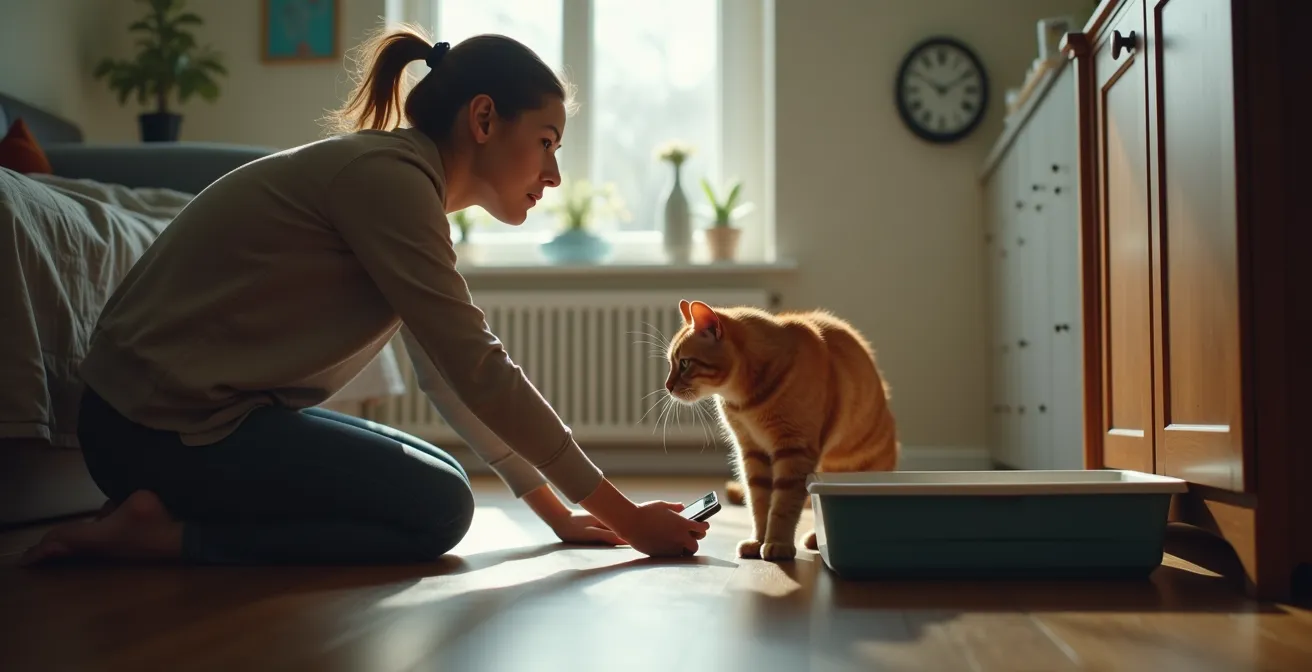
Every owner should be familiar with the emergency assessment checklist. If your pet meets these criteria, do not delay.
- Productivity: Is any urine being produced at all, even a few drops? (A consistent “No” is an emergency).
- Vocalization: Is there howling or extreme, unusual crying during attempts? (A “Yes” strongly suggests the intense pain of a blockage).
- Abdomen: Does the lower belly feel unusually hard, tight, or bloated? (A “Yes” indicates an overfull, non-emptying bladder).
- Timeline: Has it been more than 12 hours since you last confirmed your pet urinated? (A “Yes” warrants an urgent call to the vet).
Why cats prefer moving water over stagnant bowl water biologically?
Increasing water intake is one of the most effective strategies for preventing almost all forms of urinary tract disease. More water leads to more dilute urine, which is less irritating to the bladder wall and less likely to form crystals. As Dr. Shannon Barrett, a veterinary expert, states, “Increased water intake leads to more dilute urine, significantly lowering risk of crystals and inflammation.” For cats, whose ancestors were desert animals with a low thirst drive, encouraging them to drink is a proactive health measure. One of the best ways to do this is by appealing to their instinctual preferences.
Biologically, cats are hardwired to be suspicious of still, stagnant water. In the wild, stagnant water is more likely to be contaminated with bacteria and parasites. Moving water, like a stream or river, is perceived as fresher, cleaner, and safer. This deep-seated instinct is why so many cats are fascinated by dripping faucets or prefer to drink from a running tap. A pet water fountain taps directly into this instinct, providing a constant source of filtered, aerated, moving water that is far more appealing than a bowl.
However, simply buying a fountain is not a guarantee of success. Strategic placement and maintenance are key. Studies have shown that cats drink significantly more when their water sources are placed away from their food bowls and along their regular “patrol routes” through the house. The material also matters; ceramic or stainless steel fountains are often preferred as they don’t retain odors like plastic can. A silent motor is also a major factor, as some cats are bothered by the hum of cheaper models. The goal is to create multiple, appealing watering stations throughout the home to constantly entice your cat to drink.
- Position fountains and water bowls at least 6 feet away from food bowls to avoid instincts about contaminated water sources.
- Choose ceramic or stainless steel materials over plastic to prevent odor retention.
- Clean fountains at least weekly to prevent the buildup of slimy biofilm.
- Provide multiple water sources, following the “n+1” rule (number of cats plus one).
The Permethrin Error: Why using dog flea meds on cats is fatal within hours?
Part of being a responsible, cost-conscious pet owner is practicing comprehensive preventative care, which means avoiding all preventable emergencies, not just urinary ones. One of the most tragic, costly, and entirely avoidable emergencies seen in veterinary clinics is permethrin toxicity in cats. This occurs when a well-meaning owner applies a “dog-only” flea and tick medication to their cat, often to save a few dollars by splitting a larger tube. This is a fatal mistake.
Cats lack a specific liver enzyme necessary to metabolize permethrin and related pyrethroid compounds. While dogs can process these chemicals safely, they are extremely toxic to felines. The frightening reality is that dog products contain 45-65% permethrin, whereas the only safe level for a cat is zero. Even indirect exposure, such as a cat cuddling with a dog who has just been treated, can be enough to cause signs of toxicity. The cost of treating this poisoning—which involves intensive care, anti-seizure medications, and round-the-clock monitoring—can easily run into the thousands, with no guarantee of survival.
The symptoms of permethrin poisoning are severe and appear rapidly, often within hours. They include severe muscle tremors, seizures, drooling, high fever, and incoordination. It is a horrific and painful condition. Protecting your cat is simple: never, ever apply a product labeled “for dogs only” to a cat. Always read the label of any flea and tick product carefully. If you have both dogs and cats, store their medications in separate locations to prevent accidental mix-ups in the middle of the night or when you’re in a hurry.
- NEVER Use on Cats: Permethrin, Phenothrin, Cyphenothrin, or any ingredient ending in “-thrin”.
- Cat-SAFE Options Include: Fipronil, Selamectin, Imidacloprid.
- Action If Exposed: If you realize you’ve made a mistake, immediately bathe your cat in lukewarm water with dish soap to wash off the product and rush them to the nearest emergency veterinarian. Do not wait for symptoms to appear.
Key Takeaways
- At-home monitoring of litter box habits (clump size, frequency) is your most powerful, no-cost tool for early detection of urinary issues.
- A urinary blockage is a life-or-death emergency; if your pet is straining but producing no urine, go to an ER immediately.
- Preventive care, including proper diet, hydration, and product safety, is the most effective way to avoid thousands of dollars in emergency veterinary bills.
Why Spending on Preventive Veterinary Medicine Saves You $2,000 in Long-Term Emergency Costs?
The entire philosophy of this guide boils down to a simple financial and medical truth: prevention is vastly cheaper than reaction. When it comes to your pet’s urinary health, the cost of proactive monitoring and management is a tiny fraction of the cost of emergency surgery for a blockage or intensive treatment for advanced kidney disease. The numbers are not an exaggeration; they are the reality faced by pet owners in emergency clinics every single day.
Consider the direct cost comparison. An investment in preventive care might include a $75 annual urinalysis to screen for underlying issues, perhaps a $20 box of pH monitoring strips for at-home checks, and an extra $60 for a bag of prescription urinary diet if needed. The total annual investment is minimal. In stark contrast, an emergency visit for a urinary blockage starts with a hefty emergency fee ($200-$500), followed by the cost of anesthesia and catheterization ($800-$1,500), and often requires several days of ICU hospitalization at $500-$1,000 per day. As data from pet insurance claims shows, a $75 annual urinalysis can prevent a $2,000 emergency surgery, showcasing a staggering return on investment.
The following table illustrates just how quickly emergency costs can dwarf the price of simple, routine care. The emotional cost of seeing your pet in a crisis is immeasurable, but the financial cost is very real and very preventable.
| Preventive Care (Annual) | Cost | Emergency Alternative | Cost |
|---|---|---|---|
| Routine urinalysis | $75 | Emergency blockage surgery | $2,000-4,000 |
| Prescription diet | $60/bag | ICU hospitalization | $500-1,000/day |
| pH monitoring strips | $20 | Emergency catheterization | $800-1,500 |
| Regular vet checkups | $150 | After-hours emergency fee | $200-500 |
By embracing your role as a diagnostic partner—monitoring litter habits, ensuring proper hydration, and working with your vet on a preventive plan—you are not just “spending money on the vet.” You are making a smart financial decision that protects both your wallet and the animal you love. You are choosing to pay a small, predictable cost now to avoid a catastrophic, unpredictable cost later.
Frequently Asked Questions About Pet Hydration and Urinary Health
Why does my cat ignore the expensive fountain I bought?
There are several common reasons for fountain rejection. The motor may produce a high-frequency noise that is inaudible to you but irritating to your cat. The fountain might be made of plastic, which can retain smells your cat dislikes. Its placement could be too close to their food bowl, triggering their instinct to avoid contaminated water. Finally, some fountains have narrow drinking areas that can cause “whisker fatigue,” an uncomfortable sensation when their sensitive whiskers repeatedly brush against the sides.
Can I just add water to dry food instead?
Absolutely. Adding warm water or low-sodium chicken or beef broth to your pet’s dry kibble is an excellent and easy way to increase their daily water intake. While many pets will consume more water overall with a high-quality wet food diet or an appealing water fountain, supplementing dry food is a great step in the right direction and far better than feeding dry food alone.
How many water sources should I provide?
The general veterinary rule of thumb is to provide “n+1” water sources, where “n” is the number of cats in your household. So, if you have two cats, you should provide a minimum of three fresh water sources. These should be placed in different rooms and along your cats’ normal daily travel paths, not clustered together. This increases the chances they will encounter a water source and be tempted to drink throughout the day.