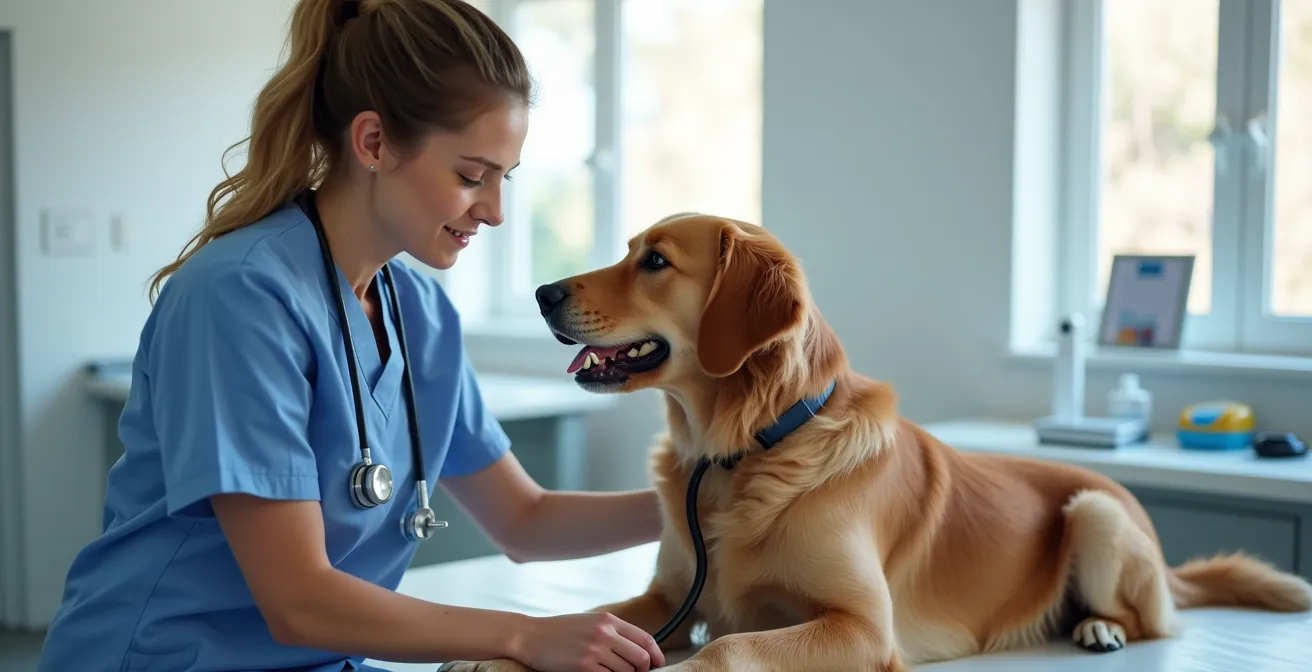
Viewing preventive veterinary care as an ongoing expense is a financial miscalculation; it is one of the highest-ROI investments you can make in your pet’s long-term health and your own financial stability.
- Early detection of chronic conditions like kidney disease through routine bloodwork can avert treatments costing thousands of dollars.
- Neglecting dental care creates a direct pathway to systemic diseases, turning a $500 cleaning into a $2,500 extraction and ongoing organ management costs.
Recommendation: Shift your mindset from “paying to see if my pet is sick” to “investing to certify they are healthy,” and use a structured wellness plan to budget for this essential asset protection.
The annual wellness exam for a pet that appears perfectly healthy often feels like a frustrating expense. You walk out with a lighter wallet, a list of recommendations, and a nagging thought: “Was that really necessary?” For budget-conscious owners, the temptation to skip these appointments and save a few hundred dollars is powerful. We are often told the platitude that “an ounce of prevention is worth a pound of cure,” but this vague advice rarely feels compelling when faced with an immediate, tangible bill.
But what if we fundamentally reframe this decision? What if preventive care is not a recurring cost, but a calculated financial strategy? The most significant financial risks in pet ownership do not come from routine check-ups. They come from catastrophic, unexpected emergencies that were quietly developing beneath a surface of apparent health. The key is to understand the information asymmetry: the dangerous gap between what you can see (a happy pet) and what a veterinarian can detect (the first cellular signals of disease).
This article will not repeat tired adages. Instead, we will conduct a financial audit. We will analyze your pet’s health as a portfolio of assets, demonstrating with data and case studies how small, regular investments in diagnostics and maintenance produce a massive return on investment (ROI) by preventing the five-figure “market crashes” of emergency surgery, chronic disease management, and shortened lifespans. We will replace financial hope with a concrete, proactive strategy.
This guide provides a complete financial breakdown of proactive veterinary care. It details the hidden costs of delay, compares financial planning tools, and offers actionable strategies to protect both your pet’s health and your bank account. Explore the sections below to build your pet’s health portfolio.
Summary: A Financial Breakdown of Proactive Veterinary Care
- Why postponing blood work for a “healthy” pet hides stage 1 kidney failure?
- How to structure a wellness calendar for a multi-pet household without missing deadlines?
- Pet Insurance vs Savings Account: Which Covers Preventive Medicine Costs Better?
- The Self-Diagnosis Error That Turns Minor Infections into Major Surgeries
- When to increase preventive screening frequency: The signs 90% of owners miss
- Why your new pet insurance won’t cover the condition listed in the shelter paperwork?
- Why periodontal disease causes kidney failure in cats over age 10?
- Which Core Vaccinations Are Legally Required for Apartment Pets Who Never Go Outside?
Why postponing blood work for a “healthy” pet hides stage 1 kidney failure?
The single most dangerous assumption in pet ownership is that a “healthy-looking” pet is a healthy pet. Chronic diseases, particularly kidney failure, are masters of disguise. They develop silently, causing irreversible damage long before any outward signs like increased thirst or weight loss appear. By the time you notice symptoms, the disease is already in an advanced, expensive, and often life-limiting stage. This is the information asymmetry that preventive care is designed to overcome.
Routine blood work is not a test to see *if* your pet is sick; it’s an investment to confirm they are healthy and to establish a baseline. A veterinarian tracking your pet’s blood values over time can spot a subtle, year-over-year creep in a key indicator that signals the very beginning of a problem. Traditional creatinine tests, for example, only flag kidney issues after significant function is already gone. However, modern tests can be far more sensitive. For instance, research shows the SDMA test can detect kidney disease when only 40% of function is lost, compared to 75% for older methods. This can be years earlier.
Catching kidney disease at Stage 1 doesn’t just add years to your pet’s life; it averts a financial catastrophe. Early intervention often involves a simple, relatively inexpensive prescription diet. In contrast, managing late-stage kidney failure involves frequent vet visits, subcutaneous fluid administration at home, and a cocktail of medications to manage secondary symptoms like high blood pressure and anemia. The cost of managing this advanced state can easily exceed $2,00- to $4,000 annually, dwarfing the cost of the routine blood panel that could have changed the outcome.
How to structure a wellness calendar for a multi-pet household without missing deadlines?
Managing the health of one pet is a challenge; for a multi-pet household, it can feel like a logistical nightmare. Juggling vaccination schedules, parasite prevention doses, and annual exams for different animals of different ages and species often leads to missed appointments and lapses in care. This organizational chaos is a significant hidden risk. A missed heartworm dose or a delayed senior wellness check can open the door to precisely the expensive, preventable illnesses we aim to avoid.
The solution is to move from a reactive, “appointment-as-it-comes” approach to a proactive, structured system. Treat your household’s pet care like a project manager would. A centralized wellness calendar provides a single source of truth, allows for strategic financial planning, and transforms overwhelming chaos into manageable tasks. By staggering major appointments, you can smooth out vet bills over the year, avoiding the budget shock of multiple large expenses in the same month. This organized approach is the foundation of a financially sustainable multi-pet home.
This image of an organized desk shows how a clear system with a calendar and dedicated records can bring order to your pet’s health management, turning a stressful task into a controlled process.

To implement this, you don’t need complex software. A simple wall calendar, a digital spreadsheet, or a dedicated app can work. The key is consistency and centralization. Each pet should have their own track, but all tracks must be visible in one place. This dashboard view allows you to see the big picture, plan your budget, and ensure no critical health milestone is ever overlooked again.
Your Action Plan: Create a Multi-Pet Wellness Calendar
- List all pets with their birth dates and current vaccination/parasite prevention schedules.
- Stagger major appointments (annual exams, dental cleanings) quarterly to balance costs throughout the year.
- Set up a dedicated pet savings account with automatic monthly transfers to build funds for planned expenses.
- Use digital calendar reminders set 30 days before each appointment for budget planning and scheduling.
- Track key wellness indicators monthly for each pet: weight, water intake, energy levels, and any behavioral changes.
Pet Insurance vs Savings Account: Which Covers Preventive Medicine Costs Better?
Once you accept the financial wisdom of preventive care, the next question is how to pay for it. The two most common strategies are purchasing a pet insurance plan with a wellness rider or diligently contributing to a dedicated pet savings account. Neither is universally superior; the optimal choice depends on your financial discipline, your pet’s age, and your tolerance for risk. Understanding the specific mechanics of each is crucial to building a robust financial safety net.
A dedicated savings account offers the most flexibility. You decide how much to save, and the funds can be used for anything—routine care, emergencies, or even pet-related expenses your vet doesn’t cover. The money is yours, and if you have a healthy pet, the balance grows over time. The major drawback is that it requires immense self-discipline. It also offers no leverage; if a $5,000 emergency happens when you’ve only saved $500, you are on your own for the difference.
Pet insurance with a wellness add-on forces commitment through a monthly premium. The wellness portion is a reimbursement-based system for a set menu of preventive services like exams, vaccines, and blood work, up to an annual limit. It is not “insurance” in the traditional sense but rather a budgeting tool. It works best for owners who struggle to save and for puppies/kittens who have a high number of predictable upfront costs. A hybrid strategy, combining emergency-only insurance with a separate savings account for routine care, often provides the most balanced approach. Ultimately, this proactive financial planning is a powerful investment; some analyses show the average pet owner can save between $5,000 to $10,000 over a pet’s lifetime through consistent preventive care.
The following table breaks down the core differences to help you decide which financial instrument best suits your family’s needs. This comparison highlights how each strategy manages predictable wellness costs.
| Factor | Wellness Insurance Add-on | Dedicated Savings Account | Hybrid Strategy |
|---|---|---|---|
| Monthly Cost | $15-30 wellness rider | $50-100 self-directed | $25-50 combined |
| Annual Coverage | $200-450 maximum | $600-1200 saved | Emergency coverage + savings |
| Best For | Young puppies/kittens | Healthy adult pets | All life stages |
| Financial Discipline | Forced commitment | Self-discipline required | Balanced approach |
The Self-Diagnosis Error That Turns Minor Infections into Major Surgeries
One of the costliest mistakes a pet owner can make is indulging in wishful thinking. When a pet shows a minor symptom—a slight limp, occasional vomiting, a bit of head shaking—the natural, budget-conscious impulse is to “wait and see.” Owners often turn to the internet, diagnosing a simple sprain or a minor stomach bug, and hope it resolves on its own. This act of self-diagnosis is a high-stakes gamble that frequently backfires, creating a medical and financial domino effect.
What might seem like a minor ear flap could be a deep-seated infection that, left untreated, can damage the ear canal, require surgical intervention, and lead to permanent hearing loss. A “tummy bug” could be the first sign of a gastrointestinal obstruction that becomes a life-threatening emergency requiring a $5,000+ surgery. The cost of delay is exponential. As the Canine Journal Editorial Team aptly puts it:
Trying to save $100 today can become a $1,000 emergency next week
– Canine Journal Editorial Team, Can’t Afford Vet Bills? Money-Saving Tips
The initial consultation fee you are trying to avoid is payment for a professional differential diagnosis. A veterinarian is trained to distinguish between the benign and the potentially catastrophic. This diagnostic expertise is the most valuable service you can buy. Waiting until a condition is undeniable means you have forfeited the chance for a simple, low-cost intervention. As with kidney disease, this delay is devastating because for many conditions, serum concentration of substances does not increase significantly until approximately 75% of organ function is already lost. Waiting for obvious signs is waiting for failure.
When to increase preventive screening frequency: The signs 90% of owners miss
Pets are masters at hiding pain and illness, a survival instinct inherited from their wild ancestors. This ability, however, is a major liability for the modern pet owner, as it masks developing problems until they are severe. While annual wellness exams are the baseline, there are subtle behavioral shifts—micro-changes—that should act as triggers to increase screening frequency or schedule a consultation, even if the annual check-up is months away. Recognizing these signs is a critical skill that separates proactive owners from those who are caught by surprise.
These are not the obvious signs of sickness like crying in pain or refusing all food. They are subtle deviations from your pet’s personal norm. A shift in a preferred sleeping spot could indicate a search for a cooler surface to soothe a fever or a warmer one to ease arthritic joints. A slight hesitation before jumping on the couch might be the first sign of hip dysplasia or back pain. These are whispers of a problem, and the financially astute owner learns to listen.
Ignoring these whispers is a gamble. Waiting for a more “obvious” sign is simply waiting for the problem to become more advanced and more expensive to treat. Documenting these changes and presenting them to your veterinarian provides invaluable data that can guide diagnostic decisions. You are the expert on your pet’s normal; leveraging that expertise is key to early detection. Here are some of the most commonly missed micro-behavioral changes that warrant a call to your vet:
- Hesitation before jumping on or off familiar furniture.
- Drinking just 10% more water than usual (best measured with a marked bowl).
- A sudden shift in a preferred sleeping spot to a much cooler or warmer area.
- A change in social hierarchy or interaction with other household pets.
- Subtle, gradual weight loss, even just 5% over a two-month period.
- Taking noticeably longer to finish regular meals without a change in appetite.
Why your new pet insurance won’t cover the condition listed in the shelter paperwork?
Adopting a pet from a shelter or rescue is a wonderful act, but it introduces a significant variable into your financial planning: the pre-existing condition. Pet insurance is a powerful tool for managing unexpected costs, but its single biggest limitation is that it will not cover any health issue that existed—or showed symptoms of existing—before the policy’s start date. This is where many well-intentioned adopters get a nasty financial shock.
The shelter’s intake paperwork is a legal document that the insurance company will request when you file your first major claim. Any condition mentioned in that report, no matter how minor or resolved it seems, can be flagged as pre-existing. A note of “mild skin irritation” can lead to a lifetime exclusion for all allergy-related care. A comment on “occasional limping” can result in both hind legs being excluded from coverage for orthopedic issues, even if the future problem is an unrelated ligament tear. This is a standard practice that owners must anticipate.
Case Study: The Pre-existing Condition Coverage Gap
Insurance companies often apply broad exclusions based on initial records. For example, a phenomenon known as a “bilateral condition” exclusion is common. If a shelter vet notes a mild issue like a luxating patella in the right knee, the insurance company may permanently exclude coverage for *both* the right and left knees, arguing the condition is likely to manifest on the other side. This means that a future, costly surgery like a cruciate ligament repair on the “good” leg would be denied, leaving the owner responsible for the full bill.
This doesn’t mean you shouldn’t adopt or get insurance. It means you must be strategic from day one. The most important step is to schedule an exam with your own independent veterinarian within 48-72 hours of adoption. This creates a new, third-party baseline health record. Ask your vet to specifically document which, if any, of the shelter-noted conditions have resolved. This “clean” bill of health from your vet can be invaluable evidence in a future insurance dispute. Proactive documentation is your best defense against coverage gaps.
Why periodontal disease causes kidney failure in cats over age 10?
Of all the “minor” issues owners are tempted to ignore, dental health is perhaps the most dangerous. The notion that “doggy breath” is normal or that cats will be fine without dental care is a costly misconception. Periodontal disease is not a cosmetic issue; it is a chronic, painful infection that creates a direct pathway for bacteria to enter the bloodstream and attack vital organs, with the kidneys being a primary target.
When plaque hardens into tartar, it pushes the gums away from the teeth, creating pockets. These pockets become breeding grounds for harmful bacteria. Every time the pet chews, this bacterial swarm is released into the bloodstream in a process called bacteremia. The kidneys, whose job is to filter the blood, are placed under constant siege. This chronic inflammation and bacterial load steadily damages the delicate filtering structures (nephrons) of the kidneys. Over years, this relentless, low-grade assault leads directly to chronic kidney disease (CKD) and eventual kidney failure.
This medical domino effect has a clear and devastating financial parallel. Ignoring preventive dental care sets off a chain reaction of escalating costs, transforming a manageable expense into a life-altering financial burden.
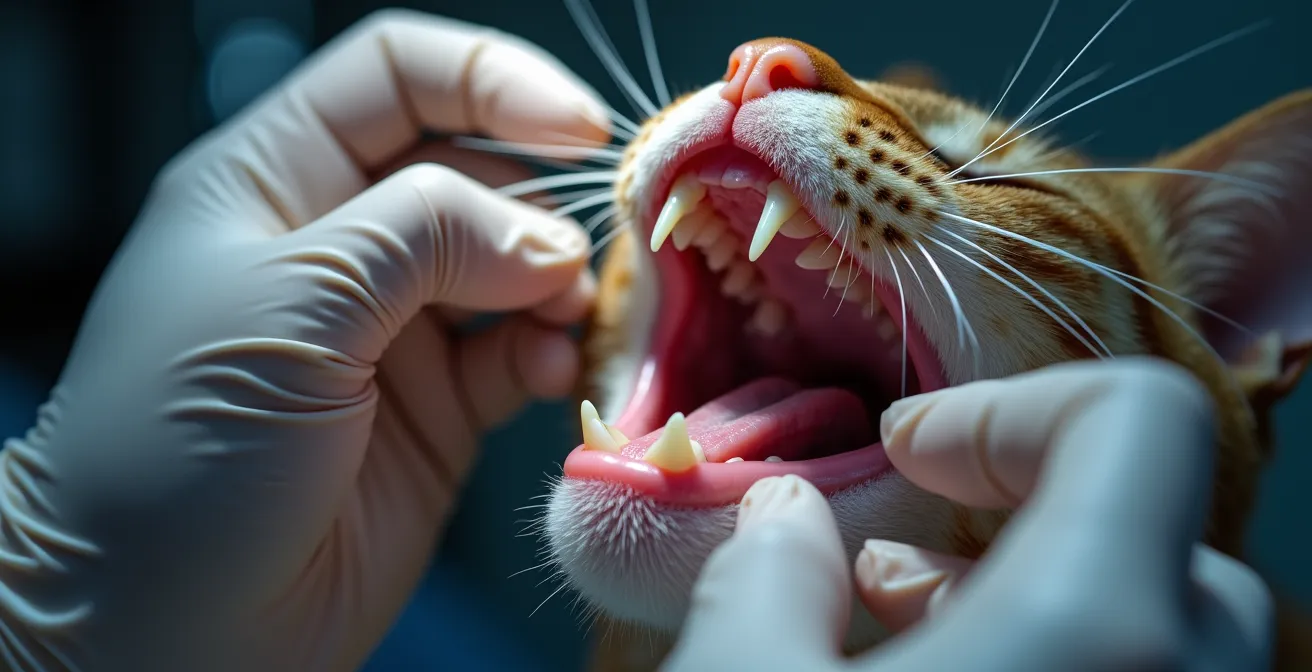
The financial escalation of neglecting dental care is not theoretical; it is a predictable progression. The following table illustrates the cost-of-delay, showing how each skipped step multiplies the final bill.
| Stage | Treatment | Cost | Consequence if Skipped |
|---|---|---|---|
| Prevention | Annual dental cleaning | $300-700 | Progresses to periodontal disease |
| Early Disease | Deep cleaning + antibiotics | $1,050 average | Multiple tooth extractions needed |
| Advanced Disease | Multiple extractions | $1,500-2,500 | Kidney disease development |
| Organ Impact | Kidney disease management | $800/year ongoing | Kidney failure, shortened lifespan |
Key Takeaways
- Proactive care is an investment, not an expense, with a quantifiable ROI in averted emergency costs.
- The cost of delay is exponential; waiting for obvious symptoms guarantees a higher vet bill.
- Your pet’s health should be managed like a financial portfolio, with strategic, planned investments in maintenance and early detection.
Which Core Vaccinations Are Legally Required for Apartment Pets Who Never Go Outside?
A common point of hesitation for owners of indoor-only pets, especially those in apartments, is the necessity of vaccinations. The logic seems sound: “If my pet never goes outside and never interacts with other animals, why do they need protection from diseases?” This thinking, while understandable, overlooks two critical factors: the surprising ways diseases can enter a home and the legal requirements mandated by public health law.
First, the “indoor-only” bubble is more permeable than you think. You can bring pathogens into your home on your shoes, clothing, and hands after being in a park or interacting with another animal. Insects like mosquitoes (carrying heartworm) or fleas can enter through open windows or screens. A bat, a primary carrier of rabies, could get into an apartment. Finally, the risk of a pet escaping, even for a few minutes, is never zero. The brief, panicked chase through the apartment complex is precisely when an unvaccinated pet is most vulnerable.
Second, and most importantly from a legal standpoint, some vaccinations are not optional. Rabies vaccination is mandated by law in most municipalities for all dogs and cats, regardless of their lifestyle. This is not for your pet’s protection, but for public health. Rabies is 100% fatal in unvaccinated animals and nearly always fatal in humans once symptoms appear. The law does not differentiate between a barn cat and a high-rise apartment cat because the public health risk is considered absolute. Failing to comply can result in fines and, in the event of a bite incident, the potential for your pet to be quarantined or even euthanized for testing.
Core vaccines are designated as such because they protect against diseases that are widespread, highly contagious, or have serious public health implications. The investment in these vaccines is minuscule compared to the potential cost of treating the diseases they prevent, not to mention the legal jeopardy of non-compliance.
Frequently Asked Questions about Preventive Pet Healthcare
Are rabies vaccines required for indoor-only cats?
Yes, rabies vaccination is often legally mandated regardless of lifestyle due to its 100% fatality rate and public health risk.
How can indoor pets get exposed to diseases?
Through your shoes and clothes, insects, brief escapes, vet visits, or wildlife entering through windows.
What’s the difference between core and lifestyle vaccines?
Core vaccines like Rabies and FVRCP are essential for all pets, while lifestyle vaccines depend on specific exposure risks.