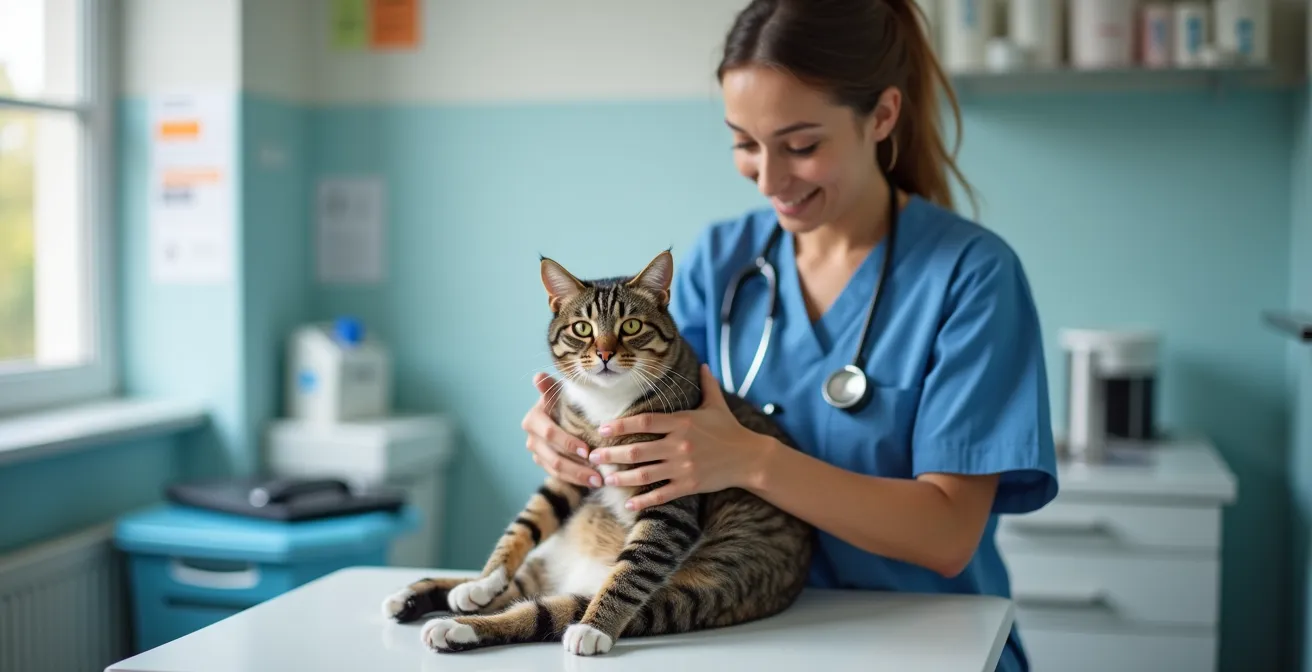
Contrary to popular belief, an “indoor-only” lifestyle does not grant a pet full immunity or a pass on all vaccinations.
- Legal mandates, particularly for Rabies, are often non-negotiable and based on public health law, not your pet’s individual exposure risk.
- True risk is determined by your “risk topography”—indirect exposures like an open window, a bat in the attic, or pathogens brought in on your shoes.
Recommendation: Shift from a ‘one-size-fits-all’ mindset to a strategic partnership with your veterinarian, using this guide to build a vaccination plan that balances legal requirements, real-world risks, and your pet’s unique health profile.
As a responsible owner of an indoor pet, you’ve curated a safe, controlled environment, free from the obvious dangers of the outside world. This leads to a logical question that many in your position ask: if my cat never leaves my fifth-floor apartment, or my dog only goes out for brief, leashed walks, are annual vaccinations truly necessary? Many owners worry about the potential for over-vaccination, weighing the perceived low risk of exposure against the discomfort and potential side effects of the shots themselves.
The common advice often falls into two camps: rigid checklists that ignore your pet’s lifestyle, or vague assurances that your vet “knows best.” While consulting your veterinarian is paramount, a truly productive conversation requires an informed owner. The key isn’t to simply follow a generic schedule, but to understand the fundamental principles behind it. Effective pet vaccination is not about a universal checklist; it’s a dynamic risk assessment balancing three critical pillars: non-negotiable legal mandates, your home’s unique environmental exposure, and your pet’s individual immunity.
This approach allows you to prevent both disease and unnecessary medical intervention. This guide will provide you with the immunologist’s perspective, moving beyond simple “yes” or “no” answers. We will dissect the “why” behind each core vaccine, explore tools like titer testing for gauging existing immunity, and clarify the real-world scenarios where even the most secluded pet can be at risk. Our goal is to empower you to become a proactive partner in your pet’s health, ensuring they are protected precisely as much as they need to be—no more, and no less.
To help you navigate this complex topic, this article breaks down the essential considerations into clear, manageable sections. From legal requirements to emergency protocols, the following summary outlines the key areas we will explore to build a complete picture of modern, responsible pet vaccination.
Summary: A Strategic Guide to Pet Vaccinations
- Why your indoor cat needs the Rabies shot even if you live on the 5th floor?
- How to assess if your dog needs the Leptospirosis vaccine based on your local climate?
- Titer Testing vs Annual Boosters: Which is the smarter choice for immune-compromised pets?
- The “Puppy Series” Error: Why stopping at 12 weeks leaves your dog unprotected
- What to do immediately if your pet swells up 30 minutes after a vaccine injection?
- The Parvo Protocol: Why you can’t touch puppies during your first shelter visit?
- How to quarantine a foster kitten in a bathroom to protect your resident cats?
- Why Spending on Preventive Veterinary Medicine Saves You $2,000 in Long-Term Emergency Costs?
Why your indoor cat needs the Rabies shot even if you live on the 5th floor?
The most common objection to vaccinating an indoor cat is the perceived lack of exposure. However, the requirement for the rabies vaccine is not based on your cat’s lifestyle, but on public health law. Rabies is a fatal zoonotic disease, meaning it can be transmitted to humans, and its control is a matter of state and local jurisdiction. As the American Veterinary Medical Association notes, many local and state laws require that household pets—including those kept exclusively indoors—be vaccinated. This legislative baseline is non-negotiable; “indoor-only” status does not provide a legal exemption.
Beyond the legal mandate, the “zero exposure” assumption is a dangerous fallacy. Your home is not a hermetically sealed bubble. Unexpected exposure can happen in numerous ways. A bat, a common rabies carrier in urban and suburban areas, can enter through an open window or a small gap in the attic. Cats are also notorious for being escape artists, potentially slipping out an open door for even a brief, unmonitored period. Furthermore, exposure can be indirect; viruses can be tracked indoors on shoes and clothing.
Finally, consider unplanned events. If your pet has a medical emergency and needs to be hospitalized, or if you need to board them unexpectedly, proof of rabies vaccination is almost universally required. During a natural disaster requiring evacuation, your indoor pet could suddenly be exposed to wildlife or other unvaccinated animals. The rabies vaccine is not just about protecting your cat from a disease it’s unlikely to encounter; it’s a critical legal requirement and a vital safeguard against unpredictable, low-probability but high-consequence events.
How to assess if your dog needs the Leptospirosis vaccine based on your local climate?
Unlike rabies, the leptospirosis vaccine is typically considered “non-core,” meaning its necessity is based on a lifestyle and environmental risk assessment. Leptospirosis is a bacterial disease spread through the urine of infected animals, which can contaminate water and soil. The decision to vaccinate depends entirely on your dog’s specific “risk topography”—the unique environmental factors they are exposed to daily.
Historically viewed as a rural disease affecting dogs who swim in ponds or hike in the wilderness, the epidemiology of leptospirosis is changing. Urban environments now present a significant risk. The primary carriers in cities are often rats, whose urine can contaminate puddles, standing water in alleyways, and even damp soil in city parks. A dog simply walking through a contaminated puddle on a city sidewalk can be exposed. Therefore, a dog living in a rainy, dense urban area with a high rodent population may be at higher risk than a dog in a dry, suburban area.

As the visual above demonstrates, everyday urban scenery can hold hidden risks. The key is to analyze your local environment with your veterinarian. Do you live in an area with heavy rainfall? Is there a known population of wildlife like raccoons or rodents? Does your dog frequent dog parks where water bowls are shared or puddles form? This detailed analysis helps determine if the risk of exposure justifies the vaccine.
The following table breaks down the differing risk factors between urban and rural settings, helping to illustrate that risk is about the environment, not just a “country vs. city” label.
| Risk Factor | Urban Environment | Rural Environment |
|---|---|---|
| Primary Exposure Source | Reports of leptospirosis-infected dogs living in cities has been documented via contact with puddles of water containing rat urine | Wildlife urine in natural water sources |
| High-Risk Activities | Walking through city puddles, urban dog parks | Dogs that spend a lot of time outdoors hiking, camping, or swimming |
| Primary Carriers | Rats and urban wildlife | Various wildlife species |
| Water Sources | Standing water in alleys, contaminated puddles | Ponds, streams, lakes |
Titer Testing vs Annual Boosters: Which is the smarter choice for immune-compromised pets?
For owners of pets with a history of vaccine reactions, autoimmune diseases, or other health sensitivities, the prospect of an annual booster can be daunting. This is where an “immunity audit” becomes a critical tool. Titer testing is a blood test that measures the level of antibodies a pet has against a specific disease. It provides a snapshot of their current level of protection, helping you and your veterinarian make an evidence-based decision about whether a booster is truly necessary.
A high titer level indicates that the pet still has a robust immune memory and is likely protected, suggesting a booster can be safely postponed. A low or negative titer, on the other hand, indicates that the pet’s immunity may have waned, and a booster is advisable to restore protection. This approach moves away from a one-size-fits-all annual schedule and towards a personalized protocol based on the individual pet’s immunological status. It is a powerful way to avoid over-vaccination in sensitive animals while ensuring they are never left vulnerable.
The decision to use titer testing should be a collaborative one. Factors to discuss with your vet include your pet’s age, vaccination history, and any previous adverse reactions. It’s also important to understand that titer testing is not a perfect solution for every disease or every pet. For some diseases, the correlation between antibody levels and true protection is not as clearly established. Furthermore, some vaccines are licensed for a three-year duration, which may already be a suitable option for healthy pets. Titer testing is most valuable as a decision-making tool for at-risk or immune-compromised animals when considering more frequent boosters.
In the vast majority of animals, the benefits of vaccination greatly outweigh the risks. Always talk with your veterinarian who can help you make the best choice for your pet.
– Colorado State University Veterinary Teaching Hospital, Core and non-core vaccines for dogs and cats guidelines
The “Puppy Series” Error: Why stopping at 12 weeks leaves your dog unprotected
The initial series of puppy vaccinations is one of the most critical procedures in a young dog’s life. However, a common and dangerous misunderstanding exists regarding the timing. Many owners believe that once a puppy has had a couple of shots, they are fully protected. This leads to the “Puppy Series Error”: stopping the vaccination series too early, often around 12 weeks, which can leave the puppy in a state of high vulnerability.
To understand why, we must look at the concept of the “immunological window.” A newborn puppy receives passive immunity from its mother through her colostrum (first milk). These maternal antibodies are life-saving, but they also interfere with the puppy’s ability to mount its own immune response to a vaccine. As the weeks go by, these maternal antibodies wane, but the exact timing varies from puppy to puppy. The goal of the vaccine series is to provide a dose at the precise moment the maternal antibodies have dropped low enough for the vaccine to be effective, closing this window of vulnerability.
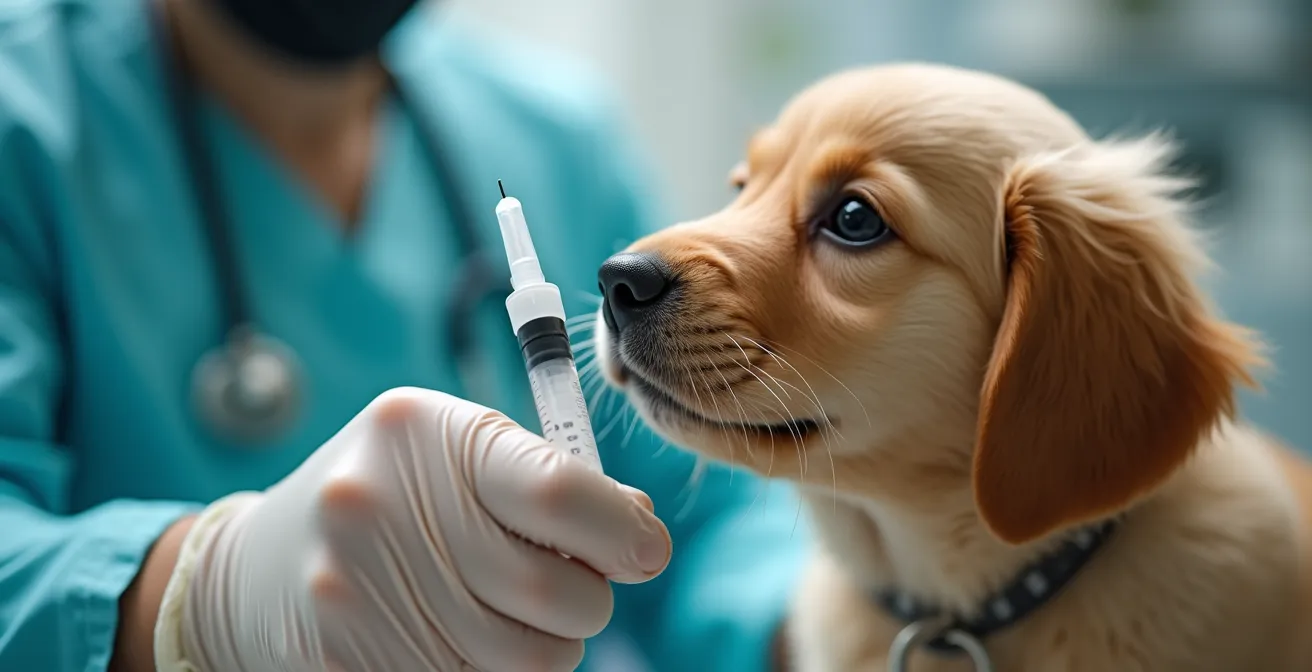
Because this timing is unpredictable, a series of shots is administered every three to four weeks. If the series is stopped at 12 weeks, the maternal antibodies might still have been present and could have neutralized that final vaccine dose. According to ASPCA vaccination guidelines, it is crucial to continue the series until the puppy is older, stating that the final dose should be administered at 16 weeks of age. By this age, it is virtually certain that all maternal antibodies have disappeared, allowing the puppy’s own immune system to respond fully and build lasting protection.
Action Plan: Ensuring Complete Puppy Protection
- Initiate the vaccination series when the puppy is between six and eight weeks of age.
- Ensure your veterinarian administers a minimum of three vaccinations at intervals of three to four weeks.
- Commit to continuing boosters until the puppy reaches at least 16 weeks of age to overcome any maternal antibody interference.
- Schedule the critical one-year booster shot, which acts as the final “lock-in” for long-term, durable immunity.
- Maintain meticulous records of all vaccinations, as they will be required for boarding, grooming, training classes, and apartment living.
What to do immediately if your pet swells up 30 minutes after a vaccine injection?
While vaccines are overwhelmingly safe, adverse reactions can occur. Being prepared to recognize and respond to a reaction is a key part of responsible pet ownership. It’s important to first contextualize the risk: reactions are rare. Studies have estimated that vaccine reactions occur in approximately 0.52% of cats, or about 52 in every 10,000. Though uncommon, these reactions can range from mild, local soreness to, in very rare instances, life-threatening anaphylactic shock.
The most common type of severe reaction is an allergic one, which typically happens soon after the vaccination is administered, often within 30 minutes to a few hours. This is why many veterinarians recommend waiting at the clinic for 15-30 minutes post-vaccination. The classic signs of an allergic reaction include:
- Facial swelling (especially around the muzzle, eyes, and ears)
- Hives or bumps on the skin
- Vomiting or diarrhea
- Itchiness
- Lethargy
More severe, life-threatening signs include difficulty breathing (due to swelling of the airway) or pale gums, which indicate a drop in blood pressure and the onset of shock.
If you observe any of these signs, especially facial swelling or breathing difficulties, this is a medical emergency. You must contact your veterinarian or the nearest emergency veterinary hospital immediately. Do not “wait and see.” Prompt intervention with antihistamines, steroids, and sometimes epinephrine can reverse the reaction and save your pet’s life. Once your pet is stable, ensure the reaction is thoroughly documented in their medical record. This information is critical for future vaccination decisions, as your vet may recommend pre-medicating with antihistamines or forgoing certain non-essential vaccines in the future.
The Parvo Protocol: Why you can’t touch puppies during your first shelter visit?
Walking into an animal shelter and seeing a litter of playful puppies is an experience that melts hearts. The natural instinct is to reach out and cuddle them. However, you will likely be met with a firm but polite “please don’t touch” from shelter staff. This isn’t because they are unfriendly; it’s a critical component of the shelter’s “Parvo Protocol,” a biosecurity measure designed to protect the most vulnerable animals.
Canine parvovirus, or “parvo,” is a highly contagious and often deadly viral disease. It is exceptionally resilient and can survive in the environment for months, on surfaces like floors, food bowls, and even on people’s hands and clothing. The virus attacks the gastrointestinal tract and immune system, leading to severe vomiting, bloody diarrhea, and profound dehydration. Puppies younger than 4 months old and unvaccinated dogs are the most at risk, with a high mortality rate without intensive and expensive veterinary care.
Because the virus is spread through contact with contaminated feces or the environment, a visitor to a shelter is a potential vector. You could have unknowingly stepped on a contaminated spot in the park or have been in contact with another dog and could be carrying the virus on your hands or shoes. By touching a litter of puppies, you could inadvertently introduce the virus into their “clean” space, with devastating consequences. Shelters enforce a strict no-touch policy for new visitors to create a firewall, preventing the outside world from contaminating the puppy nursery. It’s a fundamental principle of bio-containment: control what comes in to protect those inside.
How to quarantine a foster kitten in a bathroom to protect your resident cats?
Bringing a new foster kitten home is a rewarding experience, but it also introduces potential health risks to your resident pets. Even a kitten that appears perfectly healthy can be an asymptomatic carrier of contagious diseases. To protect your existing cats, a strict quarantine, or bio-containment, protocol is not just recommended—it’s essential. The bathroom is an ideal quarantine space because it’s easy to clean and typically has non-porous surfaces.
The minimum quarantine period should be 14 days. This allows enough time for the incubation period of most common feline illnesses to pass. During this time, the foster kitten must have no contact with your resident cats. This means no shared air space if possible, and absolutely no shared items. The kitten must have its own dedicated food and water bowls, litter box, bedding, and toys that remain in the bathroom.
The most critical element of the protocol is you. You are the bridge between the quarantine room and the rest of your house, and a potential vector for disease. To prevent cross-contamination, always care for your resident cats first, then the foster kitten. After leaving the quarantine room, wash your hands thoroughly with soap and water, and ideally, change your clothes or wear a dedicated “smock” or large shirt over your clothes that you only use when interacting with the foster. These steps prevent you from carrying viruses like Feline Panleukopenia (feline distemper) on your hands or clothing. This virus is extremely contagious and severe, and as experts from Riverstone Veterinary Group note, “Direct contact isn’t necessary, which makes it highly contagious.”
Key Takeaways
- Law Over Lifestyle: Rabies vaccination is a legal public health mandate that supersedes a pet’s indoor-only status.
- Risk is Environmental: Assess real-world exposure (your “risk topography”), not just whether your pet goes “outside.” Urban puddles or a bat in the attic can be significant risks.
- Finish the Series: Puppy and kitten vaccine series must be completed until at least 16 weeks of age to ensure maternal antibodies don’t interfere with their own immunity.
Why Spending on Preventive Veterinary Medicine Saves You $2,000 in Long-Term Emergency Costs?
The decision to vaccinate is not just a health decision; it’s also a profound financial one. While the upfront cost of a vaccine series may seem like a discretionary expense, it is one of the most effective investments you can make in your pet’s long-term health and your financial stability. Preventive medicine, by its very nature, is designed to stop a catastrophic problem before it starts. The cost of a vaccine is a tiny fraction of the cost to treat the disease it prevents.
Core vaccines are designated as such because they protect against diseases that are widespread, severe, and potentially fatal. Treating a puppy with parvovirus, for example, is an intensive, expensive ordeal. It often requires several days of hospitalization in an isolation unit, intravenous fluids, antibiotics, and extensive supportive care. The final bill can easily run into thousands of dollars, with no guarantee of a positive outcome. Similarly, treating a cat for panleukopenia (feline distemper) is a costly, uphill battle.
When you compare the cost of prevention to the cost of treatment, the financial argument becomes overwhelmingly clear. A course of vaccines costs a fraction of a single emergency vet visit, let alone a multi-day hospitalization. The following table, based on data provided by PetMD, starkly illustrates this financial reality.
This data from a comparative analysis of veterinary costs shows the dramatic difference between proactive and reactive care.
| Preventive Care | Cost | Treatment if Unvaccinated | Cost |
|---|---|---|---|
| FVRCP Vaccine Series | $15 to $40 for cat vaccinations | Panleukopenia Treatment | $2,000-$5,000 hospitalization |
| Rabies Vaccine | $15-$25 annually | Post-exposure quarantine/testing | $1,000-$4,000 plus legal fees |
| Parvovirus Vaccine Series | $75-$200 | Parvo hospitalization | $2,500-$7,000+ |
Ultimately, a strategic vaccination plan is an act of love and responsible financial planning. By working closely with your veterinarian to assess legal mandates, real-world risks, and your pet’s individual needs, you protect not only their health but also your peace of mind. Schedule an appointment today to discuss creating a personalized and effective preventive care plan for your beloved companion.