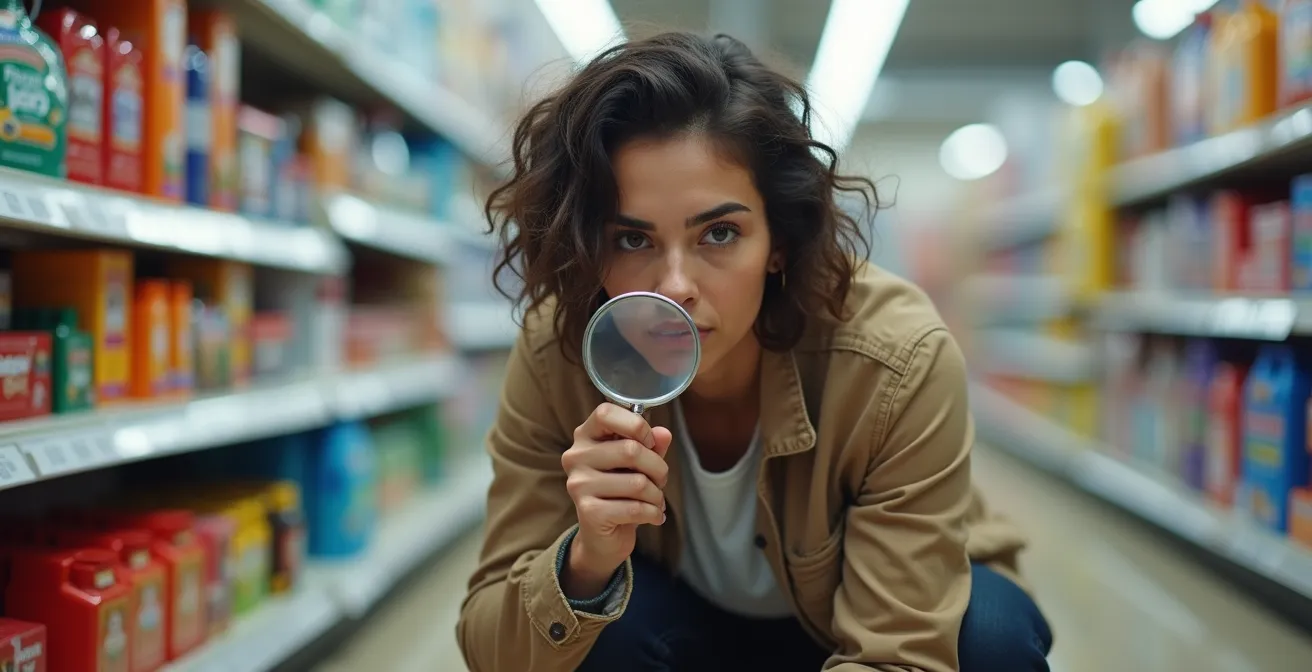
Most “ethical” pet product claims are marketing tactics, not verifiable truths.
- Labels like “Made in USA” or “Cruelty-Free” often hide unethical sourcing and testing loopholes.
- Your purchasing habits, from pet store “rescues” to donations, have direct economic consequences for animal welfare.
Recommendation: Become an auditor of your own consumption, moving from trusting labels to verifying entire systems.
You stand in the pet store aisle, faced with a wall of choices. Bags and bottles proclaim their virtues: “Cruelty-Free,” “All-Natural,” “Ethical,” “Made in the USA.” As a conscious consumer, you want to make a choice that aligns with your values and supports animal well-being. The conventional advice is to look for reassuring logos and read the ingredient list. You pick the product that makes you feel the best, confident you’ve done your part.
But what if that feeling of confidence is exactly what marketers are selling? What if the labels are designed not to inform, but to pacify? This is the core of “ethicalwashing”—the practice of using misleading claims to create an undeserved image of ethical responsibility. The platitudes we’ve been taught to trust are often just the surface of a complex and frequently opaque global system.
The key to truly ethical consumption isn’t found in trusting a bunny logo or a “human-grade” sticker. It lies in adopting an auditor’s mindset. It requires you to look past the packaging and investigate the supply chain, question the economic incentives, and understand the real standards behind the certifications. This guide is your toolkit for that investigation. It will teach you to dissect the claims, identify the red flags, and transform yourself from a passive consumer into a proactive guardian for animal welfare.
This article provides an auditor’s framework to scrutinize the claims you encounter every day. By exploring the hidden realities behind manufacturing labels, testing certifications, and even your own purchasing psychology, you will gain the skills to make genuinely informed decisions.
Summary: An Auditor’s Guide: How to Expose “Ethicalwashing” in Pet Product Marketing
- Why “Made in USA” doesn’t mean the ingredients were sourced ethically?
- How to spot hidden animal testing in shampoo brands that claim “Cruelty-Free”?
- Yak Cheese vs Rawhide: Which supports sustainable farming communities?
- The Pet Store Purchase: Why buying a puppy “to save it” funds the next litter?
- Where to donate: Local shelter supplies vs Large NGO marketing budgets?
- The “Human Grade” Myth: What does it actually mean for your dog’s health?
- Why Viewing Yourself as a Guardian Improves Your Pet’s Life Expectancy?
- Are You Meeting the Five Freedoms? A Self-Audit for Modern Pet Owners
Why “Made in USA” doesn’t mean the ingredients were sourced ethically?
The “Made in USA” label is one of the most powerful marketing tools in the pet industry, evoking images of local farms, strict quality control, and national pride. However, an auditor knows that this claim refers to where a product was assembled or processed, not where its ingredients originated. A pet food can be mixed and packaged in Ohio using ingredients sourced from countries with questionable labor practices or minimal animal welfare standards, and still legally bear the label. The pet food industry is a massive global enterprise, with combined dog and cat food sales projected to hit $60.6 billion in 2024, built on intricate and often hidden supply chains.
This complexity makes a simple country-of-origin label an unreliable indicator of ethical sourcing. A company might have its headquarters in New Jersey, but as investigations have shown, its products could be manufactured in China. The “ethical” branding on the package is meaningless without a transparent supply chain audit. To get a true picture, you must look beyond the flag on the bag and investigate the company’s commitment to full supply chain transparency.

As this visualization suggests, the journey from raw ingredient to pet bowl is a global web. The real ethical test is whether a brand is willing to map out this web for you. Vague assurances about “ethical guidelines” are not enough. A truly transparent company can trace its ingredients back to their source farms and is willing to share that information. Without this proof, “Made in USA” is little more than a marketing slogan.
Your Action Plan: Decoding Pet Food Labels
- Verify Manufacturing Location: Go beyond the headquarters address listed on the package. Search for information on where the product is actually manufactured; remember that a US headquarters does not guarantee US manufacturing.
- Research the Parent Company: Investigate the parent company’s full supply chain transparency. Do they publish sourcing maps or provide details on their ingredient origins?
- Look Beyond Branding: Be skeptical of vague “ethical” claims. Factory guidelines don’t guarantee ethical sourcing or a reduced carbon footprint without independent verification.
- Check for Third-Party Certifications: Look for meaningful, third-party certifications for ingredient sourcing (e.g., Global Animal Partnership, Marine Stewardship Council) that go beyond basic government compliance.
- Contact the Manufacturer: Email or call the company and ask direct questions about the origin of specific ingredients, like their chicken or fish meal. A transparent company will have an answer.
How to spot hidden animal testing in shampoo brands that claim “Cruelty-Free”?
The “Cruelty-Free” label is another area ripe for ethicalwashing. Many consumers believe any product with a bunny logo is free from animal testing, but the reality is far more complex. There are different tiers of certification, and some are significantly weaker than others. PETA’s “Beauty Without Bunnies” program, for example, primarily relies on a company’s self-declaration without requiring independent audits. This creates a loophole where a company can claim cruelty-free status while its parent company or ingredient suppliers may still be involved in animal testing.
A true auditor digs deeper to understand the rigor behind the logo. The gold standard is the Leaping Bunny certification. To be certified, companies and their ingredient suppliers must not conduct, commission, or be party to animal testing for any of their products or ingredients after a fixed cut-off date. Most importantly, Leaping Bunny requires brands to undergo independent audits every 12 months to ensure ongoing compliance. This commitment to verification is what separates a meaningful certification from a simple marketing claim.
The key is to differentiate between passive claims and actively verified standards. The following table breaks down the differences between major certification bodies, revealing why an audited process is the only trustworthy sign of a truly cruelty-free commitment.
| Certification | Supply Chain Coverage | Audit Frequency | Parent Company Policy |
|---|---|---|---|
| Leaping Bunny | Strict standards beyond laws, independent audits, full supply chain checks | Annual | Must include all brands |
| PETA | Self-declaration based | No audits required | Can exclude parent |
| Choose Cruelty-Free | Supplier verification | Periodic | Brand-specific |
Yak Cheese vs Rawhide: Which supports sustainable farming communities?
Choosing an ethical dog chew goes beyond simple ingredient safety; it’s an audit of the entire production system. Let’s compare two popular options: traditional rawhide and yak cheese chews. Rawhide is typically a byproduct of the global leather industry. It undergoes intensive chemical processing, often involving bleach and artificial preservatives, to become a chew. Its supply chain is opaque, commodified, and rarely offers any benefit to local communities. It represents a model of industrial efficiency where the end product is divorced from its origin.
Yak cheese chews, often marketed as Himalayan dog chews, present a different model. Traditionally, they are made from yak and cow milk by farmers in the mountains of Nepal. The process is simple: milk is boiled, mixed with a small amount of lime juice and salt, then pressed and dried for weeks. When sourced from ethical suppliers who engage in fair trade practices, these chews support sustainable, small-scale farming communities. The purchase directly contributes to the livelihood of the people who make the product, representing a traceable and transparent system.
This contrast highlights a core principle of ethical auditing: evaluating the community and environmental impact. Is your purchase funding a massive, anonymous industrial complex, or is it supporting a sustainable, community-based economy? As the publication Causeartist notes, conscious choices can redirect a significant portion of consumer spending. They state, “By selecting sustainable pet products, a hefty chunk of that $100 billion can go toward options that treat people and the planet more gently.” To make this choice, you must apply a scorecard based on traceability, transparency, animal welfare (pasture-raised vs. industrial byproduct), community impact, and processing methods.
The Pet Store Purchase: Why buying a puppy “to save it” funds the next litter?
Walking past a pet store and seeing a sad-looking puppy in a small glass box triggers a powerful emotional response. The desire to “rescue” that puppy is overwhelming. It feels like a profoundly ethical act. However, an auditor must look beyond the emotion and analyze the economic incentive. That single purchase, however well-intentioned, is the final, profitable step in the puppy mill pipeline. You are not “rescuing” one puppy; you are funding the breeding of the next litter.
The financial trail is stark. Commercial breeders (puppy mills) sell puppies to brokers, who then transport and resell them to pet shops at a significant markup. The financial pipeline reveals that brokers may buy puppies for as little as $50-$150, sell them to stores for $200-$400, which then retail the same puppy for $1,000 or more. Each sale validates this business model and signals demand for another puppy to fill the now-empty cage. Furthermore, data from an HSUS investigation reveals that the vast majority of these puppies come from large-scale commercial breeders, not small, responsible ones. The system is designed to profit from impulse buys driven by emotion.

This image perfectly captures the cycle. The empty cage in the foreground is not a victory; it’s a vacancy waiting to be filled. The only way to break this cycle is to eliminate the demand at the retail level. Supporting local shelters and breed-specific rescues, who are overwhelmed with the downstream consequences of this industry, is the true ethical alternative. It dismantles the profit motive that keeps puppy mills in business.
Where to donate: Local shelter supplies vs Large NGO marketing budgets?
The desire to help homeless animals often translates into a desire to donate. But just as with product purchases, an auditor must ask: where will my contribution have the most impact? The choice often boils down to supporting a local shelter directly or donating to a large, national non-governmental organization (NGO). There is no single “right” answer, as they operate on different theories of change and have vastly different overhead structures.
Donating a specific item from a local shelter’s wishlist (like blankets, food, or cleaning supplies) offers the most direct impact. 100% of your donation goes to a specified, immediate need. A cash donation to a local shelter is also highly effective, providing flexibility for urgent medical care or operational costs, with typical administrative overhead between 5-15%. This approach focuses on immediate, life-saving relief for animals in your community.
Large NGOs, in contrast, focus on systemic change. Their work involves lobbying for stronger animal welfare laws, running national awareness campaigns, and conducting large-scale investigations. This long-term work is crucial for addressing the root causes of animal suffering, but it comes with higher overhead, often ranging from 15-35% to cover marketing, fundraising, and administrative staff. Your donation has a less direct, but potentially broader, long-term impact.
| Donation Type | Direct Impact | Overhead | Immediate vs Long-term |
|---|---|---|---|
| Local Shelter Wishlist Item | 100% goes to specified need | 0% | Immediate life-saving |
| Cash to Local Shelter | Flexible use for urgent needs | 5-15% typical | Immediate |
| Large NGO Donation | Systemic change programs | 15-35% typical | Long-term policy impact |
A strategic approach might involve splitting your donations: a majority portion for immediate, local needs and a smaller portion for long-term, systemic reform. Before giving cash, use tools like Charity Navigator to check an organization’s overhead ratios and financial health. This ensures your generosity is channeled effectively, whether your goal is immediate relief or lasting change.
The “Human Grade” Myth: What does it actually mean for your dog’s health?
In the quest for the best for our pets, the term “human-grade” has become a powerful marketing buzzword. It implies a level of quality and safety equivalent to the food on our own plates. The problem? The term is not officially defined or regulated by the FDA or AAFCO in the context of finished pet food. It is primarily a marketing claim designed to appeal to pet owners’ emotions and health concerns. Consumer research confirms this, showing that health benefits and natural ingredients are main decision factors for pet parents when choosing food, right after price.
For a product to legally use the claim, all of its ingredients must be human edible, and it must be manufactured in a facility licensed for producing human food. While this can indicate a higher standard of facility hygiene, it says nothing about the nutritional balance or appropriateness of the diet for a dog or cat. A “human-grade” cookie made of flour, sugar, and butter is technically human-grade, but it would be a terrible diet for a dog. The term is a classic example of ethicalwashing, using an appealing but ultimately hollow phrase to imply a health benefit that may not exist.
This tactic is part of a broader trend of “greenwashing” in the pet industry. As Jim Lamancusa, an expert on sustainability in pet food, stated, “Sustainability can be a catch-all term, which makes it ripe for greenwashing and has led to consumer skepticism.” An auditor’s job is to maintain that skepticism. Instead of being swayed by the “human-grade” myth, focus on what matters: a clear ingredient list, a statement of nutritional adequacy from AAFCO, and a company’s transparency about their sourcing and formulation philosophy.
Why Viewing Yourself as a Guardian Improves Your Pet’s Life Expectancy?
The most profound shift in ethical consumption is an internal one: moving from the mindset of a pet “owner” to that of a “guardian.” The term “owner” implies property, a passive relationship of possession. “Guardian,” however, implies a proactive responsibility for the well-being of another living being. This is more than just semantics; this psychological shift fundamentally changes behavior and has a direct, measurable impact on a pet’s health and longevity.
This guardian mindset is becoming the norm. A recent report revealed that almost 97% of U.S. owners describe pets as family members, a viewpoint that directly fuels increased spending on premium, health-oriented products and services. A guardian doesn’t just provide food and shelter; they actively manage their pet’s health. This translates into concrete actions that extend life expectancy. These behaviors include:
- Scheduling bi-annual wellness checks instead of only visiting the vet when the pet is visibly sick, allowing for early disease detection.
- Investing in preventative care like regular dental cleanings, which can prevent systemic health issues linked to periodontal disease.
- Proactively researching and questioning veterinary recommendations to make truly informed decisions about their pet’s care.
- Prioritizing premium products and services, including medicine and specialized veterinary treatments, when necessary.
- Keeping detailed records of health patterns and behavioral changes to identify potential issues before they become critical.
Adopting a guardian mindset transforms you from a consumer into an advocate. It makes you an active participant in your pet’s health, driving you to question, to audit, and to seek the best possible outcomes. This proactive stance is the foundation upon which all other ethical choices are built, as it provides the motivation to look past misleading labels and demand true accountability from the industry.
Key Takeaways
- Question the Origin: “Made In” refers to assembly, not ingredient sourcing. Always investigate the full supply chain.
- Verify Certifications: Not all “cruelty-free” logos are equal. Prioritize third-party audited standards like Leaping Bunny over self-declarations.
- Follow the Money: Your purchases create economic incentives. Buying a pet store puppy funds the puppy mill industry, and donations have different impacts based on overhead and goals.
Are You Meeting the Five Freedoms? A Self-Audit for Modern Pet Owners
The ultimate tool for a pet guardian is the ability to perform a self-audit. The foundational framework for animal welfare is the “Five Freedoms,” originally developed for livestock but now widely applied to companion animals. However, the guardian mindset requires us to adopt a modern, enriched interpretation of these freedoms. It’s not just about preventing negatives (like hunger or pain) but actively providing positives (like enrichment and choice).
This modern interpretation transforms the Five Freedoms from a passive checklist into an active blueprint for providing a high quality of life. For instance, “Freedom from Hunger and Thirst” is no longer just about providing any food; it’s about providing species-appropriate, optimized nutrition tailored to your pet’s specific needs. “Freedom from Discomfort” evolves from providing basic shelter to creating an enriched environment with vertical spaces for cats, puzzle feeders for dogs, and opportunities to express natural behaviors.
Many experts even advocate for a “Sixth Freedom”: the freedom of agency and choice. This involves allowing pets to have control over their own lives where possible, such as choosing their walking path, indicating a preference for a certain game, or participating cooperatively in their own grooming and medical care. This final audit ties together all the principles we’ve discussed, moving from what you buy to how you live with and care for your companion.
| Traditional Freedom | Modern Interpretation | Action Items |
|---|---|---|
| Freedom from Hunger/Thirst | Species-appropriate, optimized nutrition | Research breed-specific needs, rotate proteins |
| Freedom from Discomfort | Enriched environment for natural behaviors | Create climbing spaces, puzzle feeders |
| Freedom from Pain/Disease | Preventive care and wellness monitoring | Bi-annual checkups, dental care, supplements |
| Freedom to Express Behaviors | Structured enrichment activities | Training, socialization, appropriate play |
| Freedom from Fear/Distress | Positive reinforcement, anxiety management | Fear-free handling, calming protocols |
By regularly auditing your pet’s life against these modern standards, you fulfill your role as a true guardian, ensuring not just their survival, but their ability to thrive.
Start your journey as a pet-welfare auditor today. The next time you shop, don’t just read the label—investigate the system behind it. Your pet’s well-being, and that of countless other animals, depends on your willingness to ask the tough questions.